
OSCE on cyber crimes of the Belarusian regime
28- 19.06.2012, 18:35
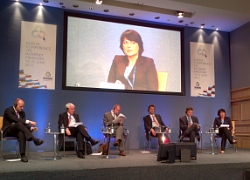
The OSCE conference on Internet freedom took place in Dublin on 18-19 June.
The conference was attended by OSCE Chairperson-in-Office, Ireland’s Foreign Minister Eamon Gilmore; Estonian President Toomas Ilves; Deputy Assistant Secretary of State in the Bureau of Democracy, Human Rights and Labor Thomas Melia; OSCE Special Commissioner for Freedom of Speech Dunya Miyatovich; ODHIR OSCE director Janez Lenarcic; ambassadors of most of OSCE country-members; representatives of Google and Twitter; IT-specialists; human rights activists; bloggers and journalists from all over the world.
When delivering his opening speech, Eamon Gilmore said: ”The Internet and other networked technologies have provided people all over the world with a new platform for exercising their right to freedom of opinion and expression. It has become an indispensable tool for all citizens to seek, receive and impart information. We, in government, have an obligation to enable our citizens to access the Internet unhindered. Yet some governments are increasingly resorting to a variety of measures to restrict such freedoms, contrary to OSCE commitments and to international human rights law.
In bringing together this diverse group of panellists, our hope is to inform, to stimulate discussion, and, ultimately, to guide OSCE participating States and other key stakeholders to make informed choices.”
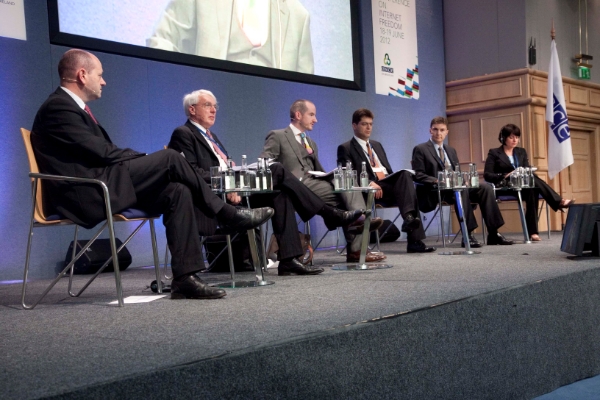
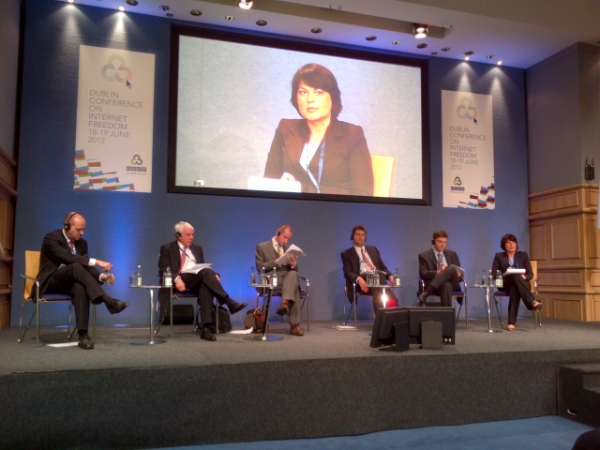
During the panel “Internet management and human rights” the participants of the conference discussed the situation in Belarus. The panel presidium included NATO Deputy Assistant Secretary General for Emerging Security Challenges Jamie Shea; ODHIR OSCE director Janez Lenarcic; editor-in-chief of the Belarusian website www.charter97.org Natallia Radzina; Vice President of the US Freedom House Daniel Calingart; Front Line Defenders Deputy Director Andrew Andersson.
Speaking at the event, Natallia Radzina said: “When I have an opportunity to talk about the situation in Belarus, the first thing I always say is that this is Europe’s last dictatorship. A dictator has been ruling the country during the last 20 years, basically illegally. Elections are faked, people are kidnapped and murdered, political prisoners are in jails. But since the topic of today’s discussion is the Internet, I’d like to point out that on the day of the presidential election in Belarus, 19 December 2010, I was arrested only because I am the editor of the major Internet-resource www.charter97.org. When my colleagues and I were in the KGB jail, the KGB were trying to recruit us in order to gain control over the website. The criminal cases against all political prisoners, including presidential candidates, were based on the recordings from bugged phones, hacked email and Skype accounts.
Even before I was arrested, several criminal cases had been initiated against www.charter97.org; they had searched the office five times, confiscated 20 computers. The website’s founder Aleg Biabenin had been murdered.
All these horrible repressions against us demonstrate the uniqueness of the situation with the Internet in Belarus, where no other media can compete in popularity with independent online media, including those specialized in human rights.
www.charter97.org gets about 100 000 unique visitors daily, and according to the statistics from Google Analytics, about 1 000 000 unique visitors monthly. These numbers are similar to those of the entire official media, and we are a strong peer of the Belarusian state television. This reflects the lives of the Belarusians. In Belarus, people have no access to independent objective information.
There is no independent television or radio in the country. Those few newspapers that haven’t been shut down yet have a very poor circulation. It’s no surprise that people seek information online.
Having realized how effective www.charter97.org can be, the special security services now use plain criminal methods to fight the Internet freedom. The website can spread information among a large number of people (www.charter97.org has had a significant part in the huge demonstration on the 2010 election day). The special services use virus, DDoS attacks and phishing.
These methods took a new form for www.charter97.org. In Belarus, only one provider – Beltelekom –has an access to the external network. Users were sent to a fake website www.charter97.org contaminated with viruses. Neither users, nor us could do anything about this type of attack. However, it was made known to the public, and the special services didn’t want any independent investigation of their criminal activity, so the powers had to stop using this method. Nevertheless, Belarusian special services can hack into anyone’s private life via a computer.
The attack on the computers of www.charter97.org journalists who had already fled abroad is basically criminal. It took several months before we could identify the contamination and carry out an independent investigation. We have gathered a sufficient amount of facts that prove the attack had been made by the Belarusian special services. A criminal case has been initiated in Lithuania, and an investigation is being carried out,” the journalist said.
NATO Deputy Assistant Secretary General for Emerging Security Challenges Jamie Shea was talking about the need for a thorough discussion around cyber crimes. According to him, cyber attacks are happening in specific countries, mostly often in Eastern Europe, which raises suspicion. But the governments of these countries neglect the problem. www.charter97.org editor remarked to the NATO’s official representatives that in countries like Belarus, cyber-attacks against independent websites are carried out by the special services, or basically by the government itself, which means that effective measures of international responding to cyber crimes committed by governments are necessary apart from protests from human rights activists.
Front Line Defenders Deputy Director Andrew Andersson said that the OSCE should confront those businesses from the OSCE country members that provide technical assistance to authoritarian governments, and don’t bear any responsibility for doing so. “It is necessary to regulate the routines of supply routines for technology that can have a limiting effect on human rights. We all have heard of the scandal with the Swedish company that cooperated with the Belarusian special services. We must struggle against governments persecuting democratic activists via their email and Skype accounts.”
Vice President of the US Freedom House Daniel Calingart said speaking about the situation in Belarus: “The website Charter97 is an organization that critiques the government and unmasks power abuses. There, the regime shuts the mouth of every opponent. The OSCE’s support of democratic activists is not enough. You should find courage to challenge the governments who treat the activists this way.”
Speaking about the technological support that businesses give to authoritarian states, Calingart emphasized that ”it is not enough that these companies have internal ethics; we need international norms that would not let businesses to cooperate with dictatorships.”
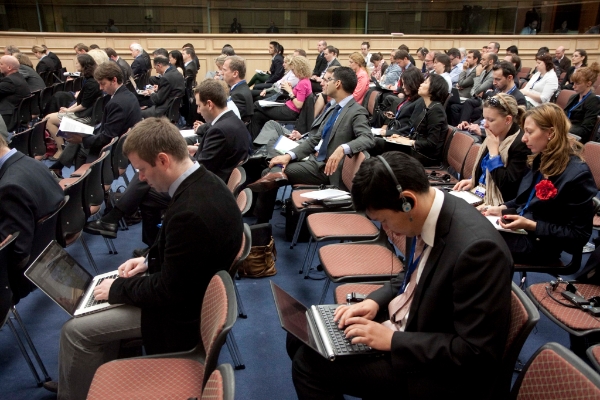
During the discussion, someone from the audience asked a question about the OSCE’s potential to influence the situations in countries like Belarus. The editor of www.charter97.org said that, unfortunately, today the OSCE has no tools to change the situation in the country. “The last free election in Belarus took place in 1994. ODHIR OSCE Director Janez Lenarcic can confirm that since then the results of every voting in the country have been falsified. OSCE Commissioner Dunya Miyatovich who is also here in this audience cannot come to Belarus since she is included to the list of people declared persona non grata. Despite all appeals and resolutions, there are still political prisoners in Belarusian jails. Meanwhile, Belarus is still an OSCE member which violates all obligations that this membership implies. However, if there is a crime, there should be a punishment,” the journalist said.
By the way, representatives of OSCE national delegations were more responsive to the statements of their fellow countrymen. For example, during the discussion of the situation in Azerbaijan, the official delegation was eager to start a debate with the dissidents who took the floor. Nevertheless, the Belarusian representative who was thoroughly taking notes didn’t say a word during Natallia Radzina’s speech.
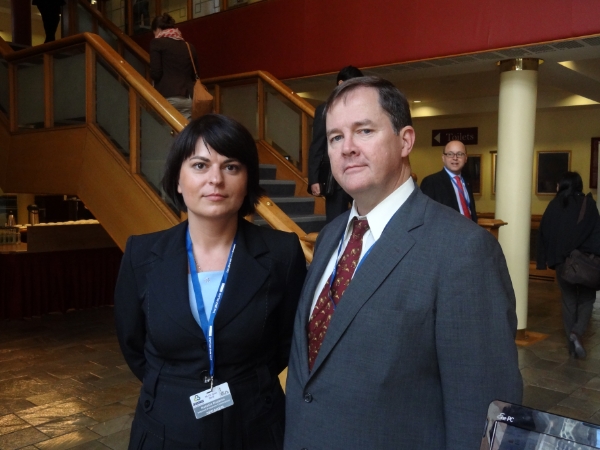
During the press-conference of the OSCE, the editor of www.charter97.org met with Estonian President Toomas Ilves; Deputy Assistant Secretary of State in the Bureau of Democracy, Human Rights and Labor Thomas Melia; US Representative to OSCE Ian Kelly; OSCE Special Commissioner for Freedom of Speech Dunya Miyatovich; ODHIR OSCE director Janez Lenarcic. At the meetings, Natallia Radzina told them in particular about the Belarusian political prisoners.