Martin Uggla: “I and Ambassador Eriksson are the only Swedes who talk Belarusian between ourselves”
- Kastus Lyashkevich, ТUT.BY
- 2.12.2009, 14:59

Changes in the political line of the Belarusian government are too irrelevant and far from system level, Swedish human rights activists believe.
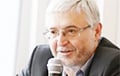
“When we meet with Swedish Ambassador to Belarus Stefan Eriksson, we speak Belarusian among ourselves. We are the two for the entire Sweden,” laughs Martin Uggla, the leader of Östgruppen, a Swedish initiative for democracy and human rights.
“Task number one – to excite interest to Belarus”
- Martin, were does your interest to Belarus comes from?
- Everything started around year 2000, when I met Belarusian human rights activists. It was a great discovery for me, as I knew almost nothing about Belarus then. When I learnt about it, I immediately fell in love with the country and the people with whom I got in touch with. It nudged me to deeper interest in Belarusian culture, history and political situation. Since that time I closely follow the events in Belarus, especially in the sphere of human rights. I regularly communicate with Belarusian colleagues and friends,
- How many people in Östgruppen are involved in work with Belarus and what are your aims?
- We have two aims. The first one is support of the human rights movement inside Belarus. The second one is to influence the policy of Sweden towards Belarus, and also to excite interest to your country and disseminate information about what is going on in your country. The main sphere of our activities is human rights. About 10 persons are actively involved in this issue.
- It t has been my experience that the Swedish community takes little interest in Belarus. How do you manage to “reach” people?
- The problem is that in general the Swedes know little about Belarus. For a long time your nation was forgotten by world history, and after the collapse of the Soviet Union information about sovereign Belarus unfortunately was spread very slowly. No wonder that many people still think it’s a part of Russia. That is why we try to spread information by all possible methods. We analyze the political situation, prepare reports and familiarize Swedish politicians with our reports. It order to arouse interest of the public, we organize cultural events. Among our latest projects I would like to mention publishing of a CD of modern Belarusian music “Messages from Belarus” (for reversal of Article 193-1 of the Criminal Code of Belarus), and a number of YouTube video clips, in which 12 Belarusian experts inform the Swedes about how the 12 recommendations of the European Union are implemented in Belarus.
Summing up, the primary aim today is to excite general interest to the country. If we succeed in that, many other questions would be solved much easier.
“A bridge between cultures is needed”
- Can Belarus and Belarusian culture be interesting to the Swedes at all?
- Naturally! I am sure that there is a likeness between Belarusian and Swedish traditions, our mentalities, there are common historical periods. And in terms of population our countries are almost identical… In general, the Swedes are a nation rather open for foreign cultures, they want to know more about other nations. The only thing needed for that is to build a bridge between the cultures. That’s what I see as a task for our organisation and the Belarusians with whom we cooperate.
- Recently Lithuanian culture has gained significant prominence in Sweden, firstly thanks to a purposeful policy of the Lithuanian government, certainly. The state is not interested in these issues in Belarus. What could be a foundation of the bilateral dialogue then?
- Firstly, there are state programs form the Swedish side, they promote exchange of experience. I certainly wish they were more numerous, but there are no such programs at all from the Belarusian side. That’s why today many things are possible due to personal contacts.
As for the Baltic States, as compared to Belarus, they started from much better takeoff position. Back in early 1990ies many Swedish resources were concentrated on development of bilateral relations with Lithuania, Latvia and Estonia. Besides, we were interwoven rather close historically, and there quite a lot of descendants of migrants from the Baltic states in Sweden, who stay in close contact with their relatives in mother country.
“In Belarus you can be imprisoned, and murdered in Russia”
- A question for you as for a main expert of Sweden in relations with the civil society of Belarus. What strong and weak points of the Belarusian third sector do you see?
- Your main advantage is people who work in this direction selflessly and determinedly. Even in extremely difficult conditions created by the state, they have managed to preserve organisations and continue their work. The unfavourable conditions inside the country certainly influence the effectiveness of the work of non-governmental organisations. What is to talk about if the Article 193-1 of the Criminal Code which has evoked much response, which bans activities on behalf of non-registered organisations, has made many organisations work in underground? The threat of imprisonment naturally has an effect on readiness of people to participate in independent initiatives, express their thoughts openly.
- What is the situation of Belarusian NGOs as compared to Russian and Ukrainian, for instance?
- There is no such law as Article 193-1 either in Russia or in Ukraine. On the other hand, the situation with safety of human rights activists in Russia is much worse. That is, you can be imprisoned in your country for such activities, while in Russia people are often murdered… As for Ukraine, it has incomparably more favourable conditions for the work of the civil society. However the question suggests itself there: to what extent the NGOs there could influence the political life?
I see capabilities of the third sector in Belarus, I observe the process of consolidation and hope that its participants would receive opportunities for further development. In this context existence of independent mass media where thoughts can be freely expressed, is extremely important. The regime must understand that only in such a climate good ideas emerge, that help the country to make headway. In a system where all the thoughts are under control, nothing fruitful could appear. It is a dead-end road of development. So personally I am sure that the future of a strong and independent Belarus is created inside the independent community. It’s true, it is little still, but it is to grow with the time.
European Union’s losing strategy
- Martin, to your mind, can the Eastern Partnership (in the framework of which the Civil Forum is realised as well) in some way change the situation with Belarus’ democratisation?
- Nobody knows still where the Partnership program would lead. If the initiative would contribute to improvement of the situation with human rights in Belarus, it has potential. That’s what we are fighting for now, as there is a presentiment that European officials want to see progress in the dialogue with Belarus too much, want growing contacts and economic cooperation, and seem to be ready to obscure human rights issues for that.
In spring 2008 we know that discussion on this strategy was taking place concerning Belarus. In summer, after political prisoners were released, we felt subtle hints that the policy should be changed, as there had been certain progress. When after the parliamentary election in 2008 lifting sanctions against Belarusian officials was discussed, we stated that we are not against the change of the political line but it should not be represented as a result of positive changes in Belarus, as they were too irrelevant and of non-system level at all. One cannot be awarded for what hasn’t been done. But officials were looking for a reason and didn’t want to admit that they are changing the strategy as the previous one, the policy of isolation, failed.
- What countries of the EU are supporters of the unambiguous rapprochement with Belarus (even when democracy and human rights issues would be ignored then)?
- They are Italy and Spain, that were rather active in proposing total lifting of the sanctions. On the other side are the Netherlands, the Great Britain and sometimes Sweden, that take a principled stand and are against rapprochement as an end in itself. As France and Germany hesitate in this issue apparently. Especially Germany, which is trying to pursue a very pragmatic policy due to abundant economic ties with Belarus.
Former countries of the Socialist bloc (Poland, Lithuania and the Czech Republic) are in a rather difficult situation. On the one hand, they understand nuances of the Belarusian situation very well, and have firm personal position, but at the same time they have to take into account national and neighbourly interests.
Speaking about Sweden, which worked very actively for Belarus and Europe’s becoming closer, which was an initiator of the Eastern Partnership, our politicians maintain a principled stand on that. It is a good approach, but big countries not always defer to it.
- Is the decision to extend the moratorium on sanctions against officials adopted in November an optimal decision today?
- On the one hand, as I have said, it is not a good idea to reward achievements that hadn’t taken place. On the other hand, I see that the present situation is, for example, a possibility for the third sector to work a little bit more peacefully. The regime is trying to be master of itself after all.
It is hard to predict what would happen next, but the real situation would be clear closer to the presidential election. But even now it is obvious that if the current situation is preserved, Belarusian president won’t be changed in the next election.
What should we do with all that? To support the civil society and independent mass media of Belarus more actively, to influence the authorities to make them understand that is not enough to make one step in half a year, exactly on the eve of the new decision of the Council of Europe.
About authoritarianism of Belarusian opposition
- Western experts are always saying that the regime is bad. And do you understand that the problem is not only in them, but in opposition and independent society as well, as they remind Swan, Pike and Crawfish from Krylov’s fable (“When partners can't agree/Their dealings come to naught”)?
- Yes, I have an impression that different oppositional forces do not want to agree, and instead of trying to understand each other, they are trying to pull the carpet away from under feet. Many have ambitions, and nobody wants to share status or powers for the common cause… maybe the reason is absence of tradition of handover of power in your parties and public associations, as most of the leaders now are people who once founded them. Besides, I am not sure that leaders of all democratic organisations in Belarus are very democratic people. It is important for Sweden as well, as democracy should be renewed and discussed. In our country authoritarian leaders stay in power too long sometimes. The essence of democracy is lost then: everybody should have a possibility to influence the policy. It is especially important to understand when you want to reach out to people.
- Martin, what is the future of Belarus in 20-30 years as you see it?
- I believe Belarus is inseparable part of Europe, and I really wish your country to become a member of the European Union. However, considering the present position of the EU concerning further enlargement, it is distant prospect. I am convinced that Belarusians like other people want to live free. The current situation is not easy, but it is to improve gradually, as you have potential. It is very important that the young generation can travel rather freely, in the real and virtual world, which opens opportunities unachievable ever before.
Stockholm – Minsk
The text was prepared as a part of a journalistic research organised by the Johannes Rau International Educational Centre, Minsk, with the support of the OSCE office in Minsk