
The Kremlin’s «Soft Power» Toward Lukashenko
- By Aleksandr Martsinkevich, Belarusian Analytical Workroom
- 11.10.2012, 10:21
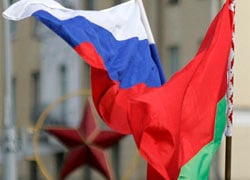
The events held in Moscow in early September, which were attended by representatives of governments and aimed to hone foreign policy instruments for promoting Russia’s interests abroad.
It is increasingly obvious that Moscow will continue to promote Putin’s Eurasian Union Project along various foreign policy lines. And if until now, as a rule, only economic tools have been mentioned with which Putin intends to promote the Russian capital’s interests within the post-soviet space (acquisition of banks, enterprises, ideas for introducing the Russian ruble as a single currency), now other areas are also being declared. Thus, a meeting for leaders of representations and representatives of ‘Rossotrudnichestva’ (a federal agency for CIS issues, compatriots living abroad and international humanitarian cooperation) was convened at the Ministry of Foreign Affairs. The meeting’s main topic was to define the agency’s perspectives for working in the political and humanitarian spheres. Particular attention was paid to the capacity for using new methods for introducing political-diplomatic activity with an emphasis on the humanitarian sector. It was recognized that it would be logical if general humanitarian issues were the responsibility of several national entities (from among EurAsEC states, including observers). This coordinated approach would allow an overall sum of interests to be developed in specific programs and for cooperation with several groups at once in diaspora abroad in third countries. Drawing on the experience in the use of ‘soft power’ in promoting their interests around the world by countries such as the USA, China, France, the initiators for the growth of Russia’s peaceful influence emphasize that it will be done for the benefit of other countries and the global community as a whole. And, judging by everything, not only with the help of the Federal Agency for CIS affairs, Compatriots Living Abroad, and International Humanitarian Cooperation, which is headed by Konstantin Kosachev – former chairperson of the Duma committee on international affairs.
Various reports about the appointment of Sergei Vinokurov as first deputy director of Russia’s Foreign Intelligence Service (SVR), broadly discussed in the media, did not escape experts’ attention. From July 2008 to April 2012 he headed the Office of the President for Inter-Regional and Cultural Ties with foreign countries. Today almost no-one remembers that among the core documents during the establishment of the Commonwealth of Independent States (CIS) there were also agreements to exclude bodies such as the SVR of one or another country if they were acting against one another. After Russia’s war with Georgia, which left the CIS, the state of war between Azerbaijan and Armenia, and Ukraine’s increasing level of independence from Russia in recent years, these agreements made within the CIS have become defunct. It should also be added that the foreign intelligence service that was set up within the Russian FSB was designed to legitimize its work in CIS countries. For this purpose, Putin issued a secret decree back in his first presidential term. Despite all the historical optimism of the declarations which, from time to time, could be heard from Minsk to Moscow, Russia’s efforts to ramp up external intelligence also concerns close allies such as Belarus. There were times when the Belarusian side, attempting to counteract the activity of Russian intelligence officers under diplomatic cover in Belarus, even ran to the measure of sending them home forcibly. But both sides were able to keep this spy scandal secret to a large measure and did not allow information to be disseminated in the media. There are grounds to assume that the economic aspects for carrying out intelligence work will now be supplemented more and more by humanitarian ones. Referring to the experience of other countries, Moscow prefers not to publically discuss methods of Russian ‘soft power’. In light of this, the concept project which is currently being reviewed by the governmental commission for compatriots abroad is interesting. It talks about a clearer delineation of power – what the embassy is responsible for, what the Federal Agency headed by Kosachev is responsible for, and what the Foundation for the Protection of Compatriots’ Rights Abroad, set up following a presidential decision, is responsible for. According to some information, a clear description of this agency’s duties has already been created and, what is most important, the distribution of resources. It is fully foreseeable that such a situation may arise in which the engagement of such Russian agencies and foundations may be perceived as ambiguous, and even hostile, by authorities in post-soviet and other countries. But far from all the actions of civil engagement can always be explained by intrigues of western special agencies. It is not only, for example, in Kiev, that the search for new ideas to be quickly implemented within the context of new large scale tasks for implementing the Russian Federation’s course of foreign policy, set out by the Kremlin, may be viewed warily. In his article ‘Russia and the Changing World’ Vladimir Putin clearly articulates this course: ‘the Russian cultural and educational presence in the world should increase several times, and where Russian is spoken, it should be on a high level.’ Despite the fact that almost everyone in Belarus speaks Russian, the expansion of Russian presence in humanitarian spheres may also be perceived as a growth in political influence which threatens Lukashenko losing genuine authority. Moreover, wary, and sometimes negative attitudes toward ‘new ideas’ of Russian expansion may appear not only among some of the national-democratic opposition, but also among the ruling class.
If anyone in Minsk is treating the emerging Russian ‘soft power’ seriously, he should understand that its practical application will be accompanied by activization, with various formally non- governmental structures being set up in Belarus. And here it is worth considering the role which various security entities of the ruling regime will play, which in previous years have been able to liquidate or place under tight control the activity of various non-governmental organizations. These include representations of foreign public foundations on the territory of Belarus. It is hardly worth doubting that this practice will not also concern the new instruments of Russian influence.
How much do strategies in the Kremlin take into account the likelihood of Russian ‘soft power’ being perceived in Belarus? So far, there is no simple answer to this question.
In addition, it is recognized that Russian foreign policy very often falls into a vacuum. It does not receive social resonance. That is why, considers Konstantin Kosachev, the head of the Federal Agency for CIS Affairs and Compatriots Living Abroad, in order to be successful in its foreign policy, Russia needs to create and construct a resonant environment not using artificial, but completely natural methods, that will regard Russia with sympathy, There is not a word in the musings of high-ranking government officials about the fact that for the world today there is not only Putin’s Russia, but also another Russia, which the world views with sympathy. As far as the Belarusian ruler is concerned, who is tightly clinging to power in Belarus – one of two parts of the declared Union State, he simply lacks a feeling of sympathy both toward the Putin leadership and even more to the other, pro-western Russia. Lukashenko only sees the donor of his regime’s authority in Russia.
It may be recalled that, in the past, Lukashenko has tried, at times with some success, to turn Russian communists, some national patriots, into his lobbyists in Russia. Since Putin’s return to the Kremlin, the content of relations between the two parts of the Union State has dynamically transformed. And today an imperial mood dominates in the Russian ruling class, despite multiple assurances about honouring the sovereign rights of the Belarusian ally. Even in Putin’s first presidential term, the unchanging Belarusian president stopped being a reliable and predictable strategic ally for the Kremlin. In his second term, which could last for quite a long time, Putin has decided that the reliability of allies such as Lukashenko can be ensured not by their physical replacement, but through a whole range of instruments, many of which he has borrowed from the experiences of countries such as the USA, some other countries from today’s western world, and also from contemporary China, which is rapidly expanding its influence around the world, recently also with the help of ‘soft power’.
It should be noted that the Kremlin’s recognition of the necessity to tolerate co-habiting with inconvenient, problematic allies such as Lukashenko does not at all rule out such aims, objectives of Russian ‘soft power which should ‘soften up’ the upper level of Belarusian nomenclatura for the benefit of sympathy towards the Kremlin’s policies. Some experts saw one of the signals of such sympathies in the clear divergence of opinions, unusual for Belarusian realia, on investment policy between the president and the prime minister, which happened recently.
According to Lukashenko, the hunger for investment which the Belarusian economy continues to experience should be satisfied not by attracting foreign investment, but domestic investment. That is, to base on national capital, which, judging by Lukashenko’s speeches, is already able to make major investments in the Belarusian economy. And in attracting Russian investors, the Belarusian authorities should be guided by ‘honest-dishonest’ concepts. As we know, the diagnosis of such investors is made personally by Lukashenko. It is precisely this kind of Belarusian approach that regulates the President’s decrees, which have priority over laws, it does not only significantly hinder the investment flow, but also enables the outflow of capital from the country.
And so, with Lukashenko’s single-handed ruling in mind, one of Prime Minister Myasnikovich’s recent announcements about the priority of Russian investment is quite notable. In particular, he said that this priority will be observed while implementing plans to attract $4.5 billion net of direct foreign investment in the coming year. It was the Belarusian side that recognized the priority for Russian capital as a condition for receiving credits and subsidies.
Most likely, Aleksandr Lukashenko insisted on meeting with Vladimir Putin on 15 September in Sochi as he is expecting a serious deterioration in the economic situation. It is worth noting that at the meeting Putin talked about the possibility of introducing a fee for the use of foreign-produced agricultural machinery, and the construction of a nuclear power station on Belarusian territory but he did not publically react at all to Lukashenko’s proposal to set a date for holding a meeting of the Supreme State Council of the Union State. In a list of meetings that have been announced for the CIS, CSTO, and the Customs Union, due to take place on 19 December in Moscow, the topic of the Union State is not mentioned.
Furthermore, a meeting is slated for September 28 between the Belarusian Prime-Minister, Mikhail Myasnikovich, and his Russian counterpart, Dmitry Medvedev. There are plans to look at several interesting macro-economic issues during the meeting, said the Belarusian Prime Minister. He also noted that two groups of issues will be examined: within the CIS and the EurAsEC. If this is the case, then the bilateral relations within the Union State which is on the agenda for the meeting of the Prime Ministers, is somehow also lacking. Nevertheless, it can be assumed that high-ranking officials from Belarus and Russia will talk about scandalous solvents, about privatization projects, and about the Russian ruble, which, according to Putin’s Eurasian plans should become the single currency of the Eurasian Union. These are the main topics in Belarusian-Russian relations for this autumn during which the new concept of Russian ‘soft power’ is likely to be increasingly present.
By Aleksandr Martsinkevich, Belarusian Analytical Workroom