"Sanctions Are Setting Belarus Back, It Could Take 10 Years To Lift Them"
6- 25.10.2025, 11:49
- 8,772
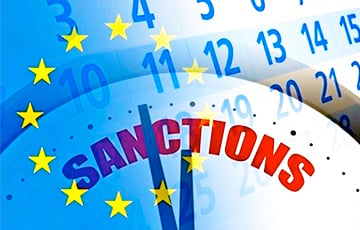
The Economist assessed the implications.
On October 23, the European Union approved another strengthening of sanctions imposed on Belarus for participation in the Russian aggression against Ukraine. Radio Svaboda tells how it will work and who will be affected.
The European Union has imposed another set of restrictions on Belarus, which affected banks, cryptocurrencies, software, technology and certain individuals. These measures are included in the 19th package of sanctions, approved on October 23.
EU residents are banned from all financial and business transactions with three more banks: Alfa Bank (Belarus), Sber Bank (Belarus) and VTB Bank (Belarus). According to the decision, published on October 23, 2025 in the Official Journal of the EU, the ban will take effect from December 2, 2025.
This means that European financial institutions will not be able to make payments through these banks, open accounts in them, issue loans or pay accounts serviced through these banks.
At the same time, there is a transitional period for already signed contracts: operations in contracts concluded before October 24, 2025 are allowed until April 25, 2026. So far, Belinvestbank, Belagroprombank, Dabrabyt Bank and Development Bank have fallen under the EU sanctions.
"The new sanctions are point"
In the opinion of the head of the project "Kosht Uradu" Vladimir Kovalkin, the current sanctions are more directed against Russian banks, rather than Belarusian ones.
"They are directed against the use of the Belarusian jurisdiction to circumvent sanctions. The daughters of Russian banks have come under the ban. The EU and the US see that Russia is trying to circumvent sanctions through Belarus. Businesses, on the other hand, are more used to sanctions. For businesses engaged in foreign trade, this will be a deterioration of the situation, for businesses engaged in trade for the Russian military-industrial complex, this is an even greater deterioration. For other businesses that do not work with the EU, nothing will change," explains Vladimir Kovalkin.
According to economist Valentin Sokolovsky, the fact that Alfa Bank and Sber Bank have fallen under sanctions is not good for business, but it will affect the possibility of circumventing the sanctions.
"It is important that contracts concluded before October 24 will still be in force for some time. Banks could have reinsured themselves and signed something in advance, knowing about the sanctions. Small businesses will be shocked for some time, but serious business and business, working in the gray zone, have been insured, they may have backup options," said the interlocutor.
The sanctions also provide for other restrictions on cryptocurrencies and software, namely - a ban on access of citizens and companies of Belarus to cryptocurrencies, electronic money and a number of payment services. Belarusians will also be banned from holding senior positions in EU companies involved in crypto-assets.
Economist Valentin Sokolovsky points out that it was cryptocurrencies that allowed the Belarusian Hi-Tech Park to grow.
"A lot of sanctions were imposed on Russian crypto-structures: crypto-exchanges, crypto-exchanges, which are used to circumvent sanctions. The Belarusian Hi-Tech Park also largely grew at the expense of Russian cryptostructures," notes Valentin Sokolovsky.
As for cryptocurrencies, they were used to circumvent the sanctions. The new package of sanctions has made it harder to circumvent them because of cryptocurrencies, adds Vladimir Kovalkin.
"These restrictions are more point-by-point, they are more grounded in analyzing what Russia is doing. This goes in addition to the policy of negotiating with Russia to end the war. That is, on the one hand, some kind of negotiation process, on the other - pressure," said the interlocutor.
"The restrictions are throwing Belarus back"
The package of sanctions for Belarus includes restrictions on software and technology: computer systems for enterprise management, software for industrial design and manufacturing, banking and financial programs, as well as services in the field of artificial intelligence, high-performance computing, quantum technologies and commercial satellites fall under the sanctions These include tire and rubber products, metals and alloys, electronic components, optical devices, construction materials, vehicles and ships.
A total ban would include imports of all acyclic hydrocarbons (these chemical compounds make up the bulk of natural gas and oil). This, according to Brussels, should reduce foreign exchange earnings in the budget of Belarus.
According to Vladimir Kovalkin, each restrictive measure taken against Belarus throws back the country's economy. It may take a dozen years to recover.
"Each package of sanctions throws Belarus back further and further, and these sanctions will be difficult to remove later. If we remember the USSR, after its end it took about 10 years to remove all the imposed restrictions. It will be the same with Belarus and Russia after the war, when everything ends in peace. This will affect people, as people are looking for work, and if a business cannot develop, there is no work."
Some individuals also fell under the new package of sanctions:
Ilya Ikan, head of Belneftekhim,
Yuri Pryadko, CEO of Horizon,
and enterprises:
Closed Joint-Stock Company "Holographic Industry";
Scientific Research Unitary Enterprise "Institute of Digital Television "Horizon"";
Holding "Horizon".

Bank's name: Bank Millennium S.A.
Address: ul. Stanislawa Zaryna, 2A, 02-593, Warszawa
IBAN: PL97116022020000000216711123
SWIFT: BIGBPLPW
Name of the account holder: Fundacja “KARTA ‘97”
Purpose/title of payment: Donation for statuary aims
You can contact us by the e-mail charter97@gmail.com