Robert Tyszkiewicz: Authorities of Belarus must stop repressions against their own people
- 9.07.2015, 10:59
- 4,491
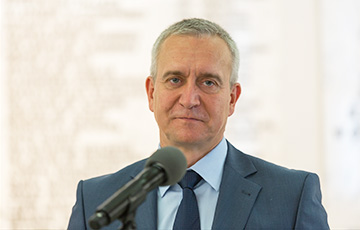
PHOTO: CHARTER97.ORG
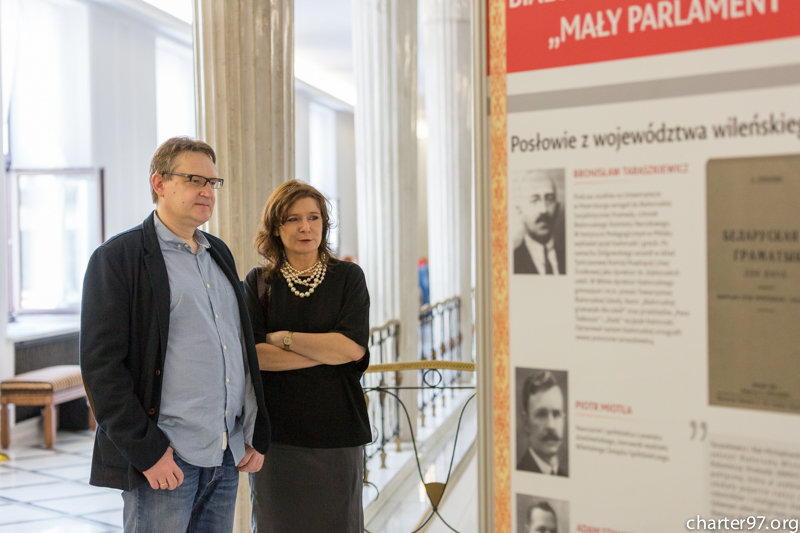
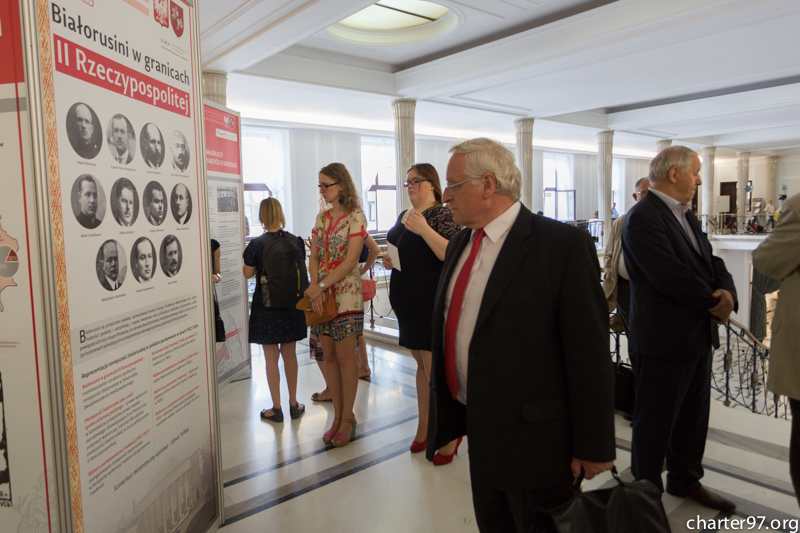
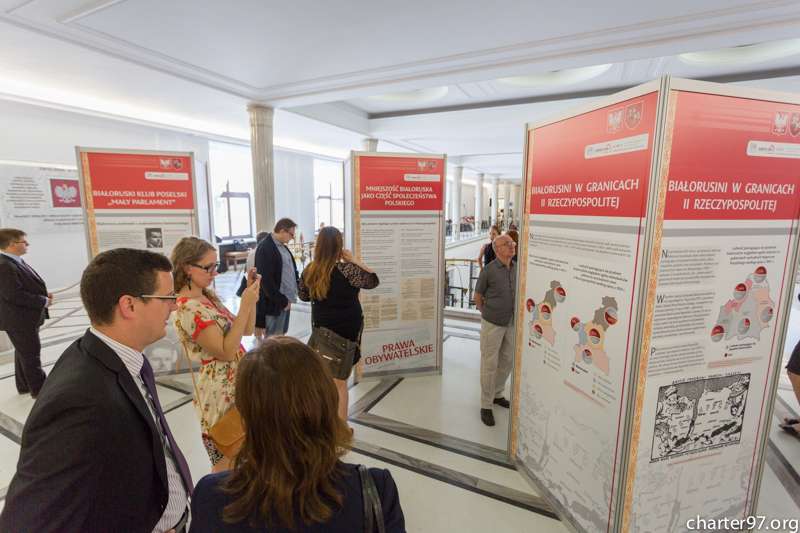
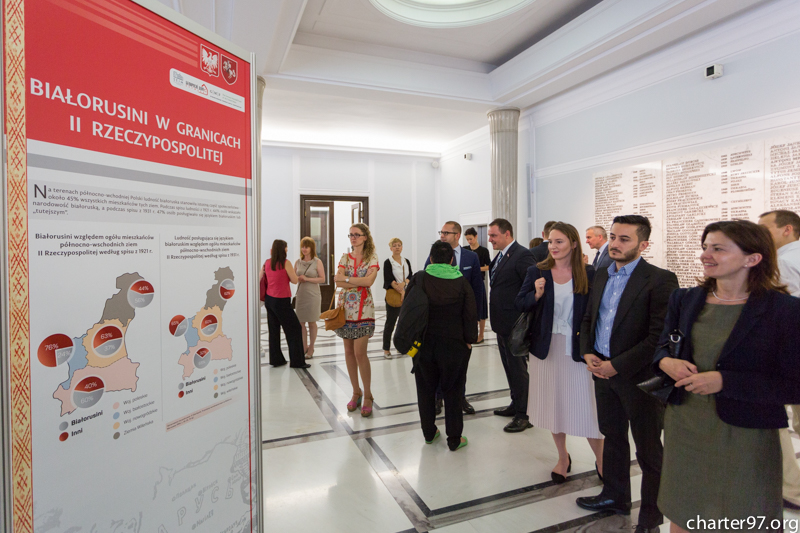
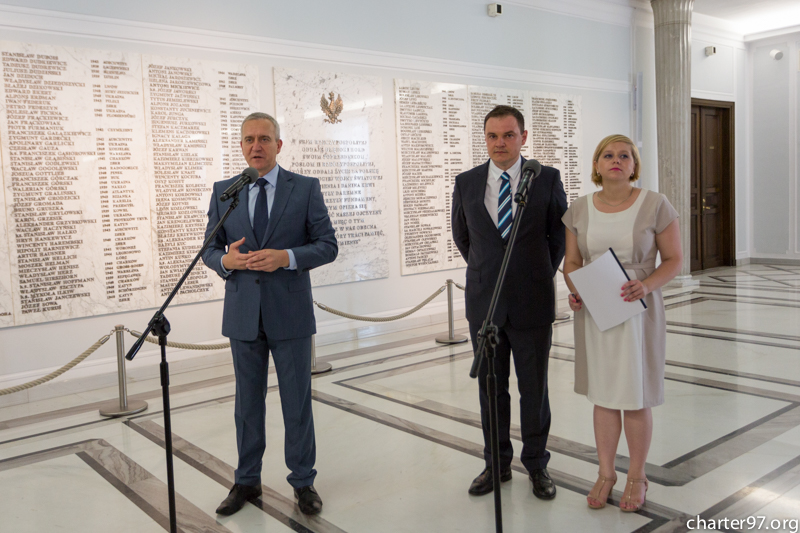
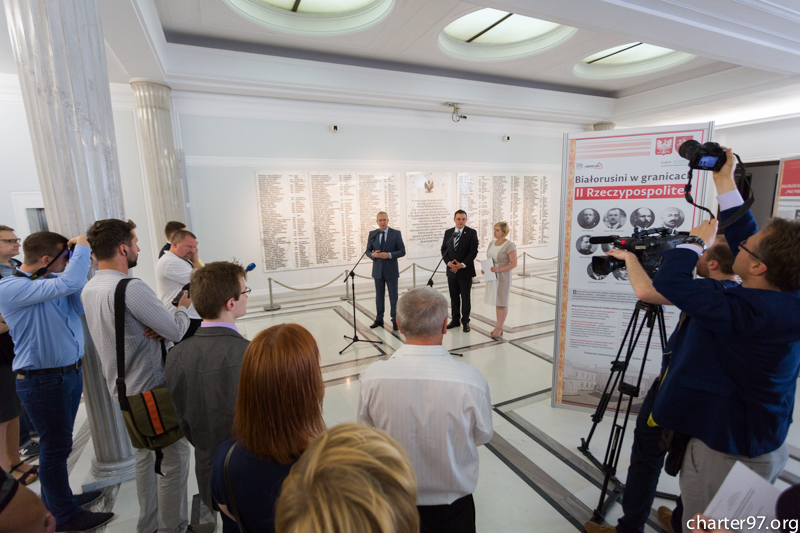
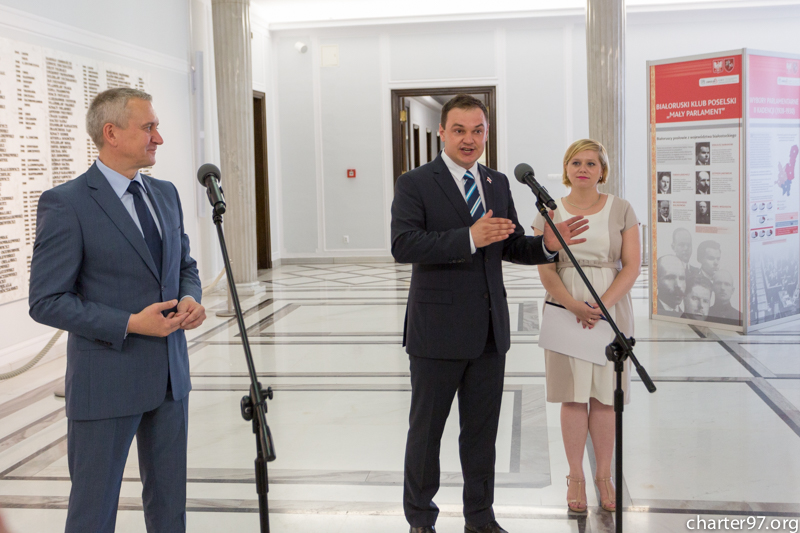
Yesterday an exhibition “Representatives of the Belarusian minority in the parliament of the Second Polish Republic” was held in Polish Sejm.
The exhibition was organised by the head of the Sejm Commission for Foreign Affairs Robert Tyszkiewicz and “the Belarusian House in Warsaw”. The concept and materials of the exhibition had been developed basing upon scientific research of an expert in the history of the Belarusian minority in Poland, Sylwia Tofiluk.
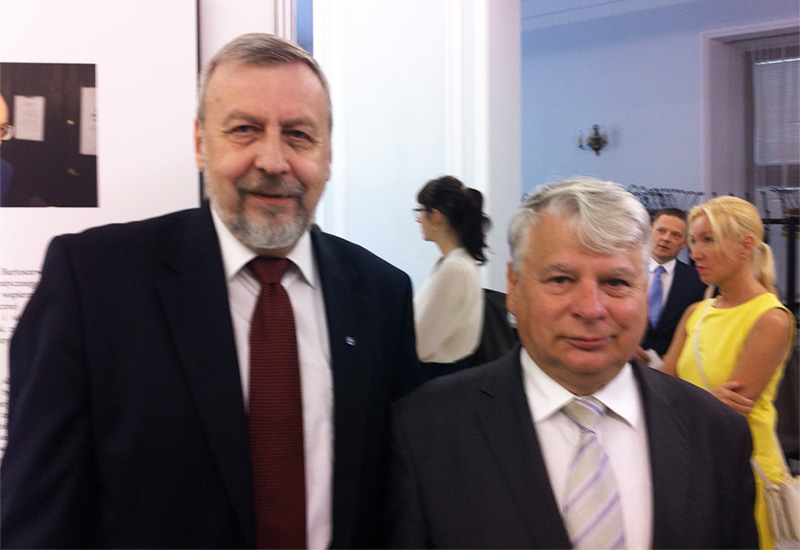
MPs of the Polish Sejm, Polish and Belarusian politicians and public leaders were present at the opening ceremony. Among them were the Speaker of the Polish Senate Bogdan Borusewicz, the head of the Sejm Commission for Foreign Affairs Robert Tyszkiewicz, the leader of the European Belarus civil campaign, a former presidential candidate in Belarus in 2010 Andrei Sannikov, leaders of the Belarusian House in Warsaw Uladzimir Kobets and Ales Zarembyuk, the deputy head of the Freedom and Democracy foundation (Poland), the former secretary of the Polish Embassy in Minsk Marek Bucko, a researcher of the Belarusian minority’s history in Poland Sylwia Tofiluk.
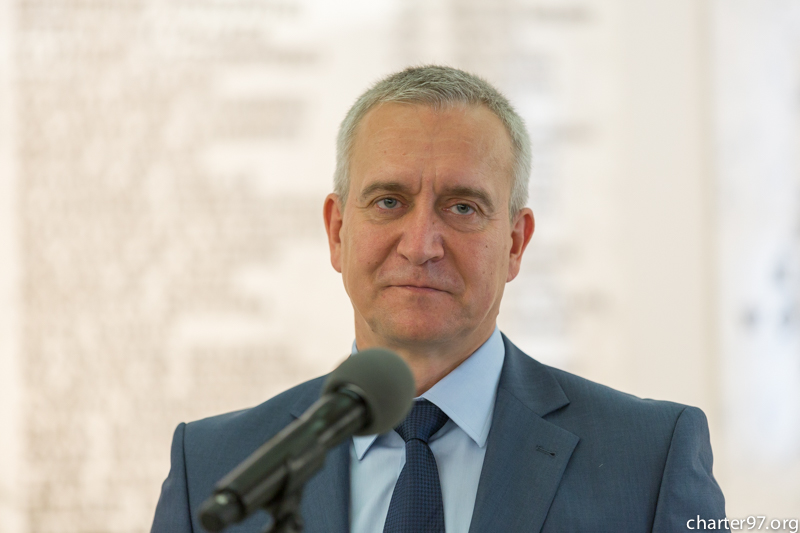
In the opening speech Robert Tyszkiewicz underlined a historical value and today’s relevance of the event.
“It is a very symbolic exhibition, and it is quite telling that it is held in the Polish Sejm. It is also telling that one of its organisers is “the Belarusian House in Warsaw”, which unites representatives of the democratic Belarus here in Poland.
On this occasion I would like to stress that in the twenty years between the wars, when Belarus was deprived of its statehood, representatives of the Belarusian minority in Poland, represented by their parliamentarians in the Sejm, laid down the foundations of the modern political movements in Belarus.
The Belarusian group of deputies, which was conventionally called “the little parliament”, had both its left wing, Hramada, and the right wing, the Belarusian Christian Democratic party. These two political lines, which are of key importance in the modern political system of Belarus as well, were formed by representatives of the Belarusian population of the Second Polish Republic in the Sejm and Senate.
That is why it should be remembered that the history of the Polish Parliament is a part of the political history of Belarus. And we are united not only by a geographical closeness, but also by the common experience of parliamentarianism and political activities.
I also wish that the modern Belarusian parliament to finally become truly elected in a free democratic election. I wish the political parties which had been founded by the Belarusian minority in Poland in the inter-war period, to be present there and be able to decide the destiny of the independent Belarusian state. I wish that to all who are fighting for a free and democratic Belarus,” Robert Tyszkiewicz said.
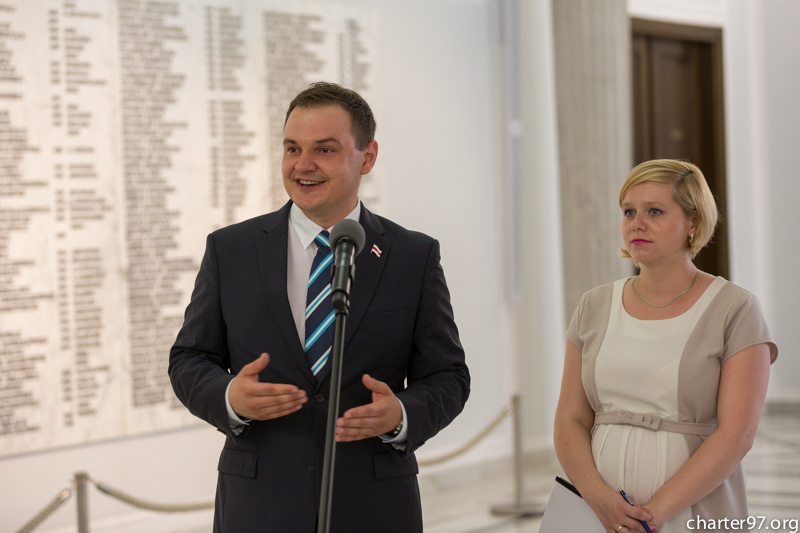
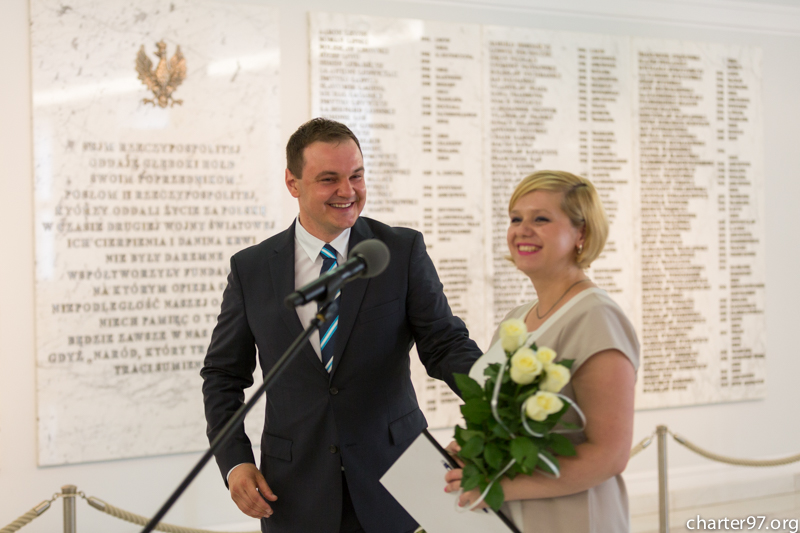
The co-chairman of the Belarusian House in Warsaw Ales Zarembyuk told about the history how the exhibition was created, and expressed a hope that such an event would be possible to organised in a free democratic Belarus one day.
“I would like to say a few words about how the idea of such an exhibition started up. About a year ago we talked to Ms Sylwia Tofiluk, who was born in the border zone between Poland and Belarus, in Siemiatycze, and researched the history of the Belarusian ethnic minority in Poland. We came to a conclusion that in the political history of the 20th century there were interesting personalities, common for our nations.
Less than a year has passed, and now we are happy to present to the public this exhibition, which makes it possible to learn that in the 1920-ies Belarusians were taking an active part in the political life of Poland. Thanks to democracy in the interwar Poland, Belarusian politicians were able to gain a valuable experience of parliamentary, democratic activities.
Many Belarusians, both in our state and in Poland, still know little about this invaluable experience of the budding Belarusian democracy, gained back in the 1920-ies. The exhibition sheds light on personalities of Belarusian deputies and senators, elected by the Belarusian nation to the representative agencies of the Second Polish Republic.
Unfortunately, we cannot reciprocate by doing the same to the Polish minority in Belarus now, which is rather big as well, but is not represented in the Belarusian “chamber of representatives” in any way. But I think we should wait a little more, and we would be able to hold an exhibition in Belarus, dedicated to representatives of the Polish nation in Belarus, who are taking an active part in the political life of the Belarusian democratic state.
Such exhibitions unite us, and let us build our good-neighbourly future based upon a firm historical foundation and facts of common participation in the parliamentary life. Remembering that, together we should strive for ideals of independent, democratic Belarus, where such facts are going to become possible,” Ales Zarembyuk noted.
Ales Zarembyuk aslo told about the intention to hold the next exhibition, dedicated to the fates of the Belarusian national revival figures, who were MPs of the Polish Sejm and Senators of the Polish Repubilc, in the later period. And after West Belarus was incorporated into the Soviet Union, fates of many of them were tragic.
The author of the concept and materials of the exhibition, the researcher of the Belarusians’ history in Poland Sylwia Tofiluk stressed that “knowledge about the Belarusian deputies of the Polish parliament is an integral part of the Polish national and historical memory.”
“Belarusians were a considerable part of the population in the inter-war Poland, and over these 20 years they were represented by 30 MPs in the Polish parliament,” Sylwia Tofiluk underlined. She also said to charter97.org website that she was going to expand her scope of research on the prominent figures of the Belarusian minority which are important for Belarus, and include not only well-known parliamentarians and national revival leaders, like Branislau Tarashkevich or Symon Rak-Mikhajlouski, but also “lesser characters”, whose contribution to the political and cultural history of Belarusian is little known still.
“These are to be the biographies of people who were engaged in interests and national development of Belarusians in their local communities, in concrete districts,” the researcher said.
The head of the Sejm Commission for Foreign Affairs Robert Tyszkiewicz, who in 2005 initiated the resolution on human rights violations in Belarus, commented the political situation in our country to charter97.org website.
“As to the human rights situation, over these years it has not changed in any way. As to the level of crackdown, it has lowered a little, as compared to the situation after the elections in 2006 and 2010. But now it is important for us that the absence of repression should be guaranteed by the law, and not be just the result of the “good will” of the ruler.
Now Belarus has neither democratic election legislation, nor legislation guaranteeing freedom of assembly, parties and opinions. The only guarantor of freedom could be a law, not a will of this or that person.
At present it is noticeable that in the issue of repressions the Belarusian authorities are using selective strategy, which is related to expecting the presidential election. For how long they are going to hold to this tactics, we are to see after the election. I strongly hope that after the election crackdown won’t return to the level of 2010. But I can only hope, as there are no legal guarantees for that,” Robert Tyszkiewicz said.
He laid a special emphasis on the principles, on which the policy of Poland and the European Union should be based upon in relations with Belarus, proceeding from this evaluation of the legal situation.
“It could be said that the relations between the European Union and Belarus stay “frozen” for today. There are no serious full-fledged political contacts. There are only contacts in narrow matters – such as economy, near-border movement. But even there little progress is observed.
The Belarusian people are paying the price for that. Belarus remains closed and does not use the opportunities given by the neighbourhood of the European Union – European investments, modern technologies and economic achievements.
And we are following the same policy as in all previous years. We are saying to Minsk: if you want full partnership with Europe, you should abandon the policy of crackdown on your nation and implement democratic reforms.
Until it happens, our policy is based upon support of the civil society, democratic opposition and free media in Belarus. It is the policy we had been pursuing all recent years, and which should help Belarusians in their fight for freedom and democracy. We are doing all is in our power. The rest should be done by Belarusians themselves,” Robert Tyszkiewicz said.
The leader of the European Belarus civil campaign, ex-candidate for presidency in Belarus Andrei Sannikov has given an opinion about the exhibition as well.
“I highly value that the public has been demonstrated the faces of Belarusian politicians, who were MPs of the Polish Sejm. It has become a very dramatic event, as one looks at the pictures of the people who had been advancing interests of the Belarusian nation, and sees really vivid personalities. They were not only politicians and MPs of the Polish Sejm, but they won renown as experts in their spheres. Let us take Branislau Tarashkevich (Bronisław Taraszkiewicz) or Symon Rak-Mikhajlouski (Szymon Rak-Michajłowski) – they were famous writers, scientists, engineers, versatile talents. They are really the faces of the Belarusian revival, not simply politicians.
And I cannot but support the words of Robert Tyszkiewicz: we hope that soon we are going to see not only Belarusians elected to the Polish Sejm, but equally important historical figures, MPs elected to the proper Belarusian parliament,” Andrei Sannikov said.