

What Stands Behind "Friendship" of the Lukashenka and Maduro Regimes
17- 29.11.2017, 12:58
- 36,987
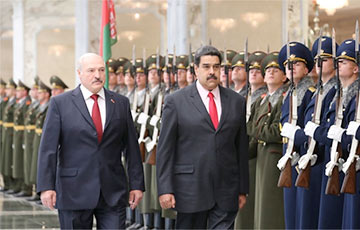
Oil, weapons and many debts are involved in the case.
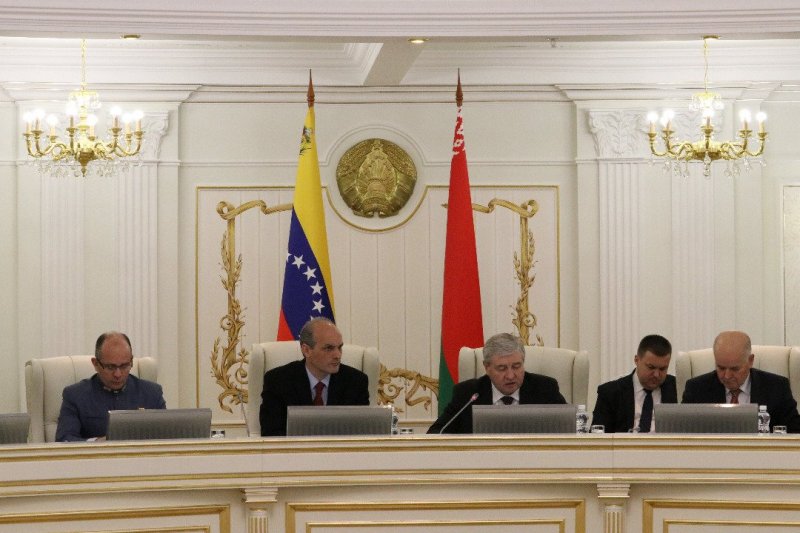
During the meeting with Venezuelan Vice-President Ricardo Menendez, Aliaksandr Lukashenka announced profound cooperation with this Latin American country and a "new page" in bilateral relations.
However, the Belarusian side has not voiced any concrete details about the scope of cooperation and new joint plans. Belsat sees into the mysterious rhetoric of Lukashenka.
Anamnesis of Friendship
The first agreement between the official Minsk and Caracas was signed twenty years ago, but the Belarusian embassy appeared there only in 2007 after the meeting of Lukashenka with the former Venezuelan leader Hugo Chavez. Relations with Chavez were warm: thanks to the "friend Hugo", in just two years the commodity turnover experienced a sharp increase: instead of previous $6 million, Belarusian supplies amounted to $173.1 million.
We traded in the production of MAZ: tractors, trucks, dump trucks and spare parts to them. Venezuela received Belarusian potash fertilizers, dried milk, and Belarusians went to work for joint ventures - the assembly shop of SP "MAZVen", "VeneMinsk Tractores" and "Maquinarias Barinas". In addition, the state-owned Belzarubezhstroy company started construction of residential buildings in Caracas.
The special Belarusian-Venezuelan commission included the long-time associate of Lukashenka Viktar Sheiman, who headed the Security Council in the middle of the 2000s. Probably, he was responsible for the most "delicate" aspects of trade.
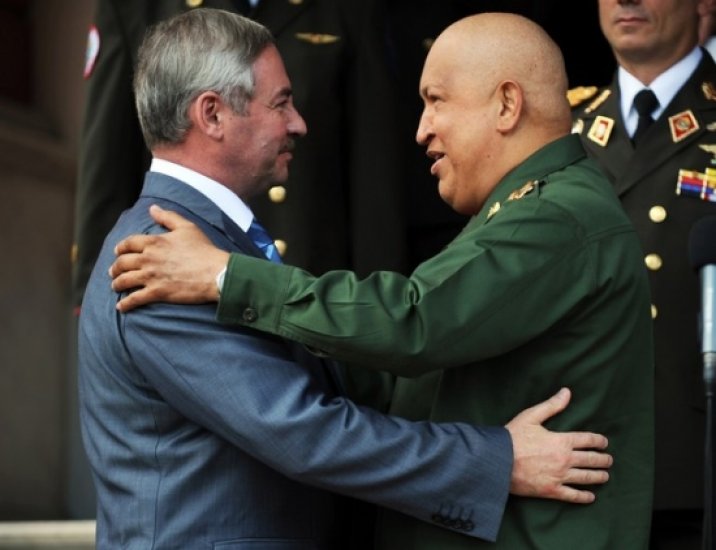
PHOTO BY REUTERS
Not only MAZs
In 2006 the US officially stopped supplying any weapons to Venezuela being concerned about the communist rhetoric of Hugo Chavez. United by a close ideology, Lukashenka and Chavez are periodically advised in public about the danger of the "American imperialism".
In December 2007, Lukashenka flies to Caracas, where the parties sign an agreement on the establishment of a unified air defense and electronic warfare system in Venezuela. Belarus sends its military advisers there. But this is not the end.
World media hardly get information about the details of the arms trade, high-ranking officials do not talk about.
In 2008 the Spanish El Pais edition publishes documents (correspondence) from the computer of Raul Reyes, one of the leaders of a group of Colombian Marxist insurgents, who was killed a year earlier during a raid of Colombian soldiers in Ecuador.
"Angel" discussed with the Belarusian authorities the possibility of supplying weapons...; Our Belarusian friend continues to work on ways of solving the problem through supplies on the black market <...; The delegation arrives in Caracas on February 17 <...; "Angel" asked us to be there and agreed with the delegation personally," Ivan Marquez wrote to Raul Reyes.
According to El Pais, "Angel" is President Hugo Chavez, a Belarusian friend is Viktar Sheiman. And the participants in the published correspondence are the leaders of FARC, the radical group of Colombian Marxist insurgents.
Naturally, Minsk did not miss an opportunity to get its bonuses from Caracas. Basically, it was oil of lower prices compared to market ones.
In 2011 Lukashenka and Chavez agree that Venezuela will supply up to 10 million tons of crude oil per year on a regular basis for three years.
The Belarusian-Venezuelan dialogue flourished until the death of "friend Hugo" in 2013.
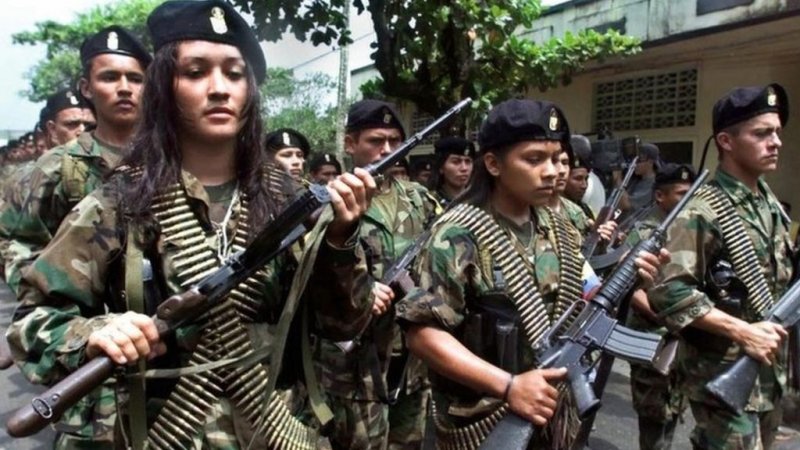
PHOTO BY AFP
Iron for Debts: Minsk Issues an Invoice
After the death of Chavez, a successful "oil" agreement with Venezuela is no longer possible. A few years later, when the economic and political crisis in Venezuela flares up, Minsk reminds its partners of the arrears in payments for products supplied by MAZ and MTZ.
According to some data, this year supplies of equipment have been suspended due to the debt which amounted to hundreds of millions of dollars.
In October, the new president, Nicholas Maduro, visits Minsk, and the parties agree that Venezuela will supply Belarus with hot briquetted iron in return for car assembly sets. The first vessel with iron ingots of the nationalized company Briquetera del Orinoco went to Belarus in early November.
"We have things you need"
On November 28 BelTA quoted Lukashenka's words addressed to Ricardo Menéndez, vice-president of Venezuela:
"Today we have what you need. In full. Things you need. You have what we need. And we can raise some money on it. I think it should be the basis of our agreements."
He stressed that he "is ready to put everything on the pan of Venezuela's success."
Lukashenka also stated that he was going to visit Venezuela in the near future.
"Already in the near future in 2018 during my visit to Venezuela we will be able to make significant progress in our relations. And not only to accept this road map, we will begin to implement it."
however, Lukashenka did not explain what was included in the "road map".
The day before the leading Venezuelan edition "Ultimas Noticias" wrote that cooperation was planned within the framework of Plan Patria 2030; in fact, the new state program of the Maduro government on the construction of socialism.
According to the source, the cooperation will include five directions: energy, agriculture, industry, finance, trade, and military. The latter one is not covered in details, all publications undergo ideological control.