
Former KGB-agent reveals illegal oil smuggling from Belarus
72- 3.05.2017, 14:07
- 38,556
Documents seen by Swedish Radio's Ekot show how the government of Belarus enabled smuggling of petroleum products through its country.
This is how it was done.
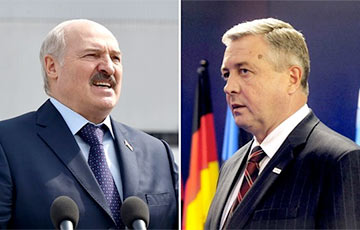
The government of Belarus has knowingly enabled smuggling of petroleum products through its country. Documents seen by Swedish Radio’s Ekot news desk show how Deputy Prime Minister Vladimir Semashko, the right-hand man of President Alexander Lukashenko, has personally acted to make sure the smuggling could continue.
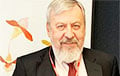
– This is quite simply corruption at the highest level of the state, which hurts the country’s economy. It’s about the top people in the government protecting those involved, says Andrei Molchan, who has worked for the Belarusian secret service, the KGB, for ten years.
The documents seen by Ekot come from an investigation into smuggling of petroleum products to Western Europe.
It was a simple setup. Belarus was allowed to buy petrol and oil from Russia at a reduced price; but if it wanted to sell the petroleum products on to the EU it had to pay tax to Russia. In order to avoid the taxes one company relabeled the petroleum products and smuggled them out of the country under a false description.
– There were thousands of tons per year that crossed the border under this label, says Andrei Molchan.
The documents that reveal the smuggling come from an investigation carried out by the Belarusian customs in 2007, when Belarus and Russia had agreed on a customs fee for exports of petroleum products that come from Russian oil.
The documents show that Belarusian customs officers stopped a train carrying petroleum products that they suspected had been re-labeled as tariff-free oil additives in an effort to avoid paying tax (product code 3811).
Samples of the contents of the goods train were taken by the customs, and send to laboratories in Belarus and Russia for analysis.
In all the labs the result was the same: The cargo had been wrongly labeled, and should instead have been marked as a petroleum product (code 2710) and been subject to fees.
The customs investigation showed that there were at least 19,000 tons of petroleum products being smuggled out of the country.
– This is many millions of dollars lost by the country in tax revenue, says former KGB agent Andrei Molchan, who is now in Sweden to seek political asylum.
According to the investigation the petroleum products were taken to harbours in Estonia. According to an investigation done by the Estonian customs authority for their Belarusian colleagues the cargo was again given a new label, this time the right one (2710). And when it was sent onwards Antwerp in Belgium it was under the description “Russian unleaded gasoline” on its consignment note.
Russia has repeatedly accused Belarus of smuggling out products made with Russian oil. In 2012 Russia claimed that Belarus had cheated it of revenues worth over 1 billion dollars by re-labelling petroleum products as acetone and other solvents not covered by the tax agreement with Russia.
President Alexander Lukashenko has denied the Russian accusations.
And no evidence was presented. But the documents seen by Swedish Radio Ekot show that the political leadership of Belarus knowingly sanctioned the smuggling since 2007.
When the goods trains were stopped by the Belarusian customs, and the exporter risked being charged with exporting petroleum products under a false description, President Lukashenko stepped in.
After the export company appealed to the president he asked his Deputy Prime Minister, Vladimir Semashko, to look into the issue.
Swedish Radio Ekot has read Vladimir Semashko’s exchange of letters with the customs authority.
It shows that the customs committee wrote to the deputy prime minister and showed him the proof that smuggling had been committed. The conclusion of the customs authority was crystal clear: Petroleum products have been illegally transported under the wrong description.
Vladimir Semashko ignores this conclusion. On the contrary, disregarding the information from the customs, and from several laboratories in different countries, he states that everything is above board. No fees need be paid.
He also writes that it was wrong for the customs authority to send samples to a Russian laboratory. He says they should have conducted the tests in a Belarusian military lab.
According to the letter from Vladimir Semashko the military laboratory has concluded these are not petroleum products that need to be taxed by Russia.
But Ekot has seen a report from the same military laboratory. It shows that their conclusion was precisely the same as that reached by all the others, that these are petroleum products that should have been taxed.
The letter, addressed to President Alexander Lukashenko, is signed by Deputy Prime Minister Vladimir Semashko.
– After this they stopped confiscating the goods transported by train, and they were allowed to continue over the border. It is entirely possible that they continue in the same way to this very day, says Andrei Molchan.
Swedish Radio has shown several of the documents in question to analyst Wojciech Konończuk, at the state funded Centre for Eastern Studies (OSW) in Warsaw, Poland. He has studied oil trading for ten years, with a particular focus on Russia and Belarus.
– I think the documents you showed me are, not only very interesting, but they clearly show that there was a probably illegal scheme of gasoline trading, in which Belarusian authorities was probably engaged.
And he says that the deputy prime minister seems to be acting on order from President Lukashenko.
– He asked his subordinate Semashko to do something quickly about this problem.
Wojciech Konończuk thinks that the documents show that the political leadership of Belarus were involved in the smuggling.
– There is a clear proof that Deputy Prime Minister Semashko was not interested in continuing investigation of the scheme. So it could be confirmation that very important officials were engaged in the scheme, he says.
His conclusion is that Deputy Prime Minister Semashko and other powerful people in Belarus have personally benefitted from the scheme.
– I would say illegal profits. Because from the documents you showed me there is a clear message for me that Deputy Prime Minister Semashko perfectly understand the idea behind the scheme and that it’s according to Belarusians law is illegal.
Former KGB agent Andrei Molchan agrees.
– This is quite simply corruption at the highest level of the state, which hurts the country’s economy. It’s about the top people in the government protecting those involved, says Andrei Molchan, who has worked for the Belarusian secret service, the KGB, for ten years.
If the petroleum products had been exported legally straight from Russia, without taking the detour through Belarus, the exporter would have been forced to pay the full tariff. By selling them via Belarus and falsely label the products as a tariff-free additive (anti knock additive) the companies and people in positions of power could have been able to share the money that would have been paid in fees.
Both ex-KGB agent Andrei Molchan and analyst Wojciech Konończuk are convinced that Russian interests are also involved in the smuggling affair. This is not what was previously suspected.
– It is different because now we can think that this illegal profits were shared by representative of Belarusian political ruling elite and probably with some engagement from Russian companies, says Wojciech Konończuk.
– The petrol is Russian. The custom fee to export from Russia to the EU is the same as to export from Belarus to the EU, so if you wanted to do everything honestly you would not need to go through Belarus at all, says Andrei Molchan.
Swedish Radio Ekot has asked Deputy Prime Minister Vladimir Semashko and President Alexander Lukashenko to comment, but they have refused.