

Belarusianization Or Russification
34- 9.03.2020, 16:49
- 25,941
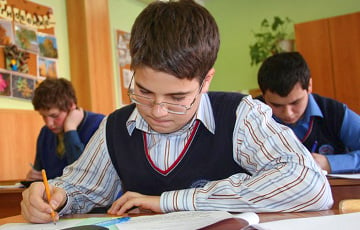
Today, Belarusian schools in Belarus are rather exceptions to the rule.
In late February, the Ministry of Education reported that in Belarus almost half of the schools, namely 45%, are Belarusian-speaking. It would seem that we must rejoice: here it is, soft Belarusianization in action, reports Euroradio.
But against the backdrop of statistics that the agency provided before, the statement about 45% of Belarusian-speaking schools sounded very strange. The fact is that, according to other sources, only 11.1% of all students in grades 1–11 at the beginning of the 2018/2019 academic year studied in Belarusian!
45% vs 11.1%: where does this difference come from?
The authors of the Angry Minobr Telegram channel tried to understand the situation.
As of 2018, there were 2813 schools in Belarus, of which 1220 were in cities and 1593 in rural areas. The Ministry of Education Schools counted 1282 schools with the Belarusian language of tuition - this really makes 45.5% of the total.
Of these 1282 schools, 1207 were located in rural areas, and only 75 in urban areas. In fact, this means that almost all rural schools are Belarusian-speaking, and almost all urban schools are Russian-speaking. And now attention: almost five times more people study in urban schools in Belarus than in rural ones! Hence the bias is taken. There are still many Belarusian-speaking rural schools - but there are much fewer students there than in Russian-speaking urban schools.
Belarusianization or Russification?
Over 6 years, from 2012 to 2018, there were 615 less schools in Belarus. There were 3428, 2813 remained. There were 1660 schools with the Russian language of education in 2012, 1527 remained. That is, minus 133 Russian-speaking schools over 6 years. In 2012, there were 1764 schools with the Belarusian language of education, by 2018 there were 1282 of them. That is, 482 Belarusian-language schools were lost during the same time.
Over 6 years, almost 3.5 times more Belarusian-language schools than Russian-language schools have disappeared. In some regions, the situation is similar to disaster. In the Vitsebsk region at the beginning of the 2017/2018 academic year there were two city schools with the Belarusian language - only one remained. The situation is similar in the Homel region, where at the beginning of the 2018/2019 academic year there were 3 city schools with a total number of students 115 people.
Opponents of the Belarusian language like to remind that bilingualism is provided for in the Constitution of our country. Based on these facts, we can say that the titular nation is studying in Belarus in the second state language. Already today, Belarusian schools in Belarus are, rather, exceptions to the rule.