

Wiretapping of the Ex-Chairman of the KGB of Belarus: International Consequences
23- 9.01.2021, 10:34
- 94,955
Who will stop Lukashenka's terrorism?
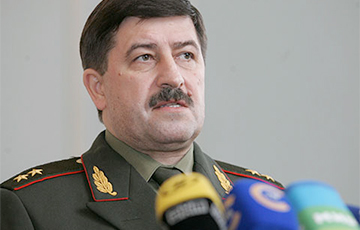
In Kyiv, they are already examining the records on the journalist Pavel Sharamet's case, published on December 4 in the EUobserver edition and on the Belaruski Narodny Trybunal channel. The audio recording shows a meeting of the then head of the KGB of Belarus Vadzim Zaitsau, who is discussing with the officers how to kill several people abroad on Lukashenka's order.
Will the countries in which the murder was planned or took place take up the investigation, and how will the new facts affect the attitude towards Lukashenka on the part of Europe and Russia?
Ihar Makar, Aleh Alkaeu, Andrei Suzdaltsev, Aleh Volchek, Pavel Latushka, Dmytro Gnap, and Andrei Astapovich answer this question on the air of the Belsat TV channel.
Dmytro Gnap is a journalist from Kyiv who was investigating the murder of Pavel Sharamet in 2016. He did not find a clear Belarusian trace in the case, with one exception: a day earlier, the commander of the Ukrainian Azov regiment, known in Belarus for his radicalism, was seen on surveillance cameras at the explosion site. Sergey Korotkikh, known by the nickname "Malyuta."
Journalist Dmytro Gnap says:
"In particular, his friend Inatovich was involved in and convicted of the abduction and murder of journalist Dzmitry Zavadski, a colleague and friend of Pavel Sharamet."
The Azovets also met with Sharamet the day before his death, but he seemed to have no motive and had an alibi, so the Korotkikh was excluded from the list of suspects in the execution of Pavel's murder. After the appearance of the audio recording with the planning of political assassinations by the Belarusian special services, Sergei Korotkikh should have been one of the first to be interrogated. The Ministry of the Interior and the National Police immediately added new information to the case. As for the perpetrators, they left the charge unchanged.
"I doubt this will be a quality international investigation," continues Dmytro Gnap. "In principle, in Ukraine, it is possible to reveal the truth in this case and reach not only the perpetrators but also those who ordered to murder Pavel Sharamet, if they are the Belarusian special services and President Lukashenko personally. But under Minister Avakov, this is hardly possible."
The defenders of the accused in the Sharamet case demand a detailed study of new materials by the competent authorities of European countries. Ihar Makar, the former deputy commander of the Almaz special forces combat group, plans to testify in Kyiv. He presents the project Belaruski Narodny Trybunal and, after all the examinations, published a scandalous recording of the meeting with the former chairman of the KGB Vadzim Zaitsau.
"I would very much like the Russian Federation to react very strongly against the background of these publications, to stop any support for Aliaksandr Lukashenka and this dictatorial regime, and, naturally, no longer to be blind to the crime that happened to Pavel Sharamet," he told Prosvet.
Will Vladimir Putin continue to support the Belarusian regime after this scandal? Political analyst Andrei Suzdaltsev (an eloquent critic of Lukashenka) has doubts. According to Ihar Makar, Suzdaltsev was also on the list of targets of the Belarusian special services.
"We, the Russians, who are dealing with the Belarusian topic and have laid down our lives on it, are, of course, a much greater threat than the Belarusians. We are hitting the communication Minsk-Moscow, and this is the umbilical cord," explains Suzdaltsev.
However, there is little hope that Russia will initiate criminal proceedings in response to planning a murder on its territory, unlike Germany, according to universal jurisdiction. There, the Belarusian side wanted to deal with three: the former commander of the special forces brigade, Colonel Uladzimir Baradach, Viachaslau Dudkin from the anti-corruption department, and the former head of SIZO No. 1, Colonel Aleh Alkaeu.
Aleh Alkaeu believes: "In this particular case, since the crime was conceived on the territory of Germany and it can in no other way be called as an act of terrorism, Germany has the right to open a criminal case on this fact."
In September 2019, we had the first serious evidence of the criminality of the irreplaceable Belarusian government. In an interview with Deutsche Welle, SOBR fighter Yury Harauski admitted that at the turn of the century, he participated in the assassinations of political opponents of the government: Yury Zakharanka, Viktar Hanchar, and businessman Anatol Krasouski. The former investigator of the prosecutor's office Aleh Volchek explains why there was no investigation.
"The political system has not changed. The investigation is not profitable for the authorities, since according to the list, it is necessary to involve almost 20 people, about whom Harauski spoke, who took part in the murders. They need to be interrogated, and response measures should be taken."
You can't do that kind of work from another country. But you can react with political instruments. For example, a recording of negotiations in the KGB in 2012 ...
"… Not so quickly as to influence the fourth package of sanctions, but it will have an impact if resolutions on the issue of Belarus are adopted," Petras Auštrevičius, Special Rapporteur of the European Parliament on Belarus, believes.
The world also pays great attention to current crimes. The facts of murders, violence, dismissals, and political trials get on numerous thematic channels, among which is "The only crime record book." Pavel Latushka, head of the People's Anti-Crisis Management and co-founder of the platform, explains:
"The book is important to all of us in terms of bringing these people to justice today, using universal criminal responsibility in different countries of the world."
According to the ByPol initiative, the list of countries in which certain criminal cases from Belarus will be considered is growing.
"But it is precisely the international investigative group on Belarus that has not yet been formed, and the investigation as such is not being carried out at the moment. Even if it is carried out, it will take years," says Andrei Astapovich, a former investigator and now a member of ByPol.
Therefore, organizations and foundations that are involved in protecting the repressed Belarusians and exposing the names of criminals insist that the best way is to change the government in Belarus and, after that - the courts at home. But for now, universal jurisdiction is setting a precedent and showing that violations of laws will be tried and punished.