

The Situation at JSC Belaruskali Is Heating Up
48- 27.08.2021, 22:17
- 91,586
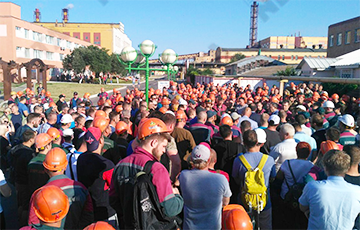
Miners are being persuaded to "tighten their belts."
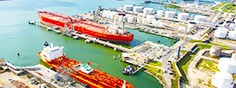
According to the latest information received by the strike of JSC Belaruskali, the domestic potash giant has begun active preparations for the transshipment of potassium through the port in Murmansk due to despair.
The focus is on this direction, since only there, according to unconfirmed information, there are special bulk terminals that can be rented and used for the transshipment of potassium. The question of what their throughput will be remains open.
Apparently, for the management of the OJSC, the situation with the nearest ports in the Leningrad Region has become completely and irrevocably clear - there are no bulk terminals in the required quantity at all, and, therefore, there is no opportunity for transshipment of potassium through these ports.
The existing terminals in the ports of St. Petersburg and Ust-Luga are used by the main competitor Uralkali to deliver its products to the end consumer. Uralkali's majority shareholder is Dmitry Mazepin.
A few days before the announcement of the fourth package of European sanctions, Mazepin, who also owns the chemical company Uralchem, received a loan of $ 1.5 billion from a group of 18 banks, including ING Bank, Société Générale, and Natixis, as well as Alfa-bank and Sberbank, which will help support the expansion of Uralkali's business into the niches of OJSC Belaruskali.
All the remaining infrastructure of the ports of the Leningrad Region is tailored for the transshipment of exclusively crude oil and petroleum products, and the port in Kaliningrad must be reached through all the same enemy Lithuania. By the way, the port in Kaliningrad is actively used by the same competitor - Uralkali.
Obviously, it was decided to go all the way in confrontation with the "Western conspirators" and break all long-term logistics to the detriment of the enterprise. At the same time, obviously, a decision has been made to almost completely destroy its own terminal in the port of Klaipeda, 30% of the shares of which belong to JSC Belaruskali.
Losses for Lithuanian carriers will amount to 20,000,000 euros, but, apparently, a decision has already been worked out to compensate for these losses, since Lithuanian officials firmly declare that the transshipment of potassium through Klaipeda will be stopped in December due to US sanctions.
In the meantime, the Lithuanians, together with the Poles and Latvians, are stepping up their efforts in the fight against migrants of the blue-fingered old man and his own cigarette smuggling. The NATO leadership has already intervened in the situation.
Meetings have already begun at the mines of the OJSC, the main purpose of which is to inform that already in September they must tighten their belts because the transshipment of potassium will need to be established through the terminal in Murmansk.
The administration has already begun work to cut various kinds of surcharges and allowances, compensations and payments, and occupational safety and health specialists, according to information received by the strike, have already been tasked with increasing the number of raids on the production area tenfold in order to increase the detection of cases. violations of safety measures and internal labor regulations, with the subsequent demotion of workers and their immediate supervisors for such violations.
Thus, they will "cut" absolutely everything in financial terms... Budgets for the purchase of new equipment, tools, and components will also be cut; the OJSC already had a problem with this in recent years, and it will get even worse. All this will affect the social infrastructure of the company.
In addition to the above, I would like to note that the strike committee has information that there are dismissals among the employees of the OJSC of their own accord due to the difficult psychological situation at the enterprise and difficult working conditions.
If anyone has not yet been informed about this situation, we would like to explain and remind you of it. If the "Russian brothers" give the go-ahead to the scheme with Murmansk, it will obviously be necessary to invest and invest significantly:
investment in additional port production facilities, construction of additional transport infrastructure, construction of additional storage facilities, purchase or lease, if any, additional wagons (3-4 times more are needed, since the turnover for Klaipeda is 4-5 days, for Murmansk - 14-18), renegotiation of contracts for new increased tariffs with Russian carriers, etc.
But most importantly, Murmansk is the largest harbor in the world, located above the Arctic Circle. It is located on the shores of the Barents Sea on the Kola Peninsula. The port in Murmansk tends to freeze in cold winters. At such times, ships are carried out with the help of icebreakers and tugs, which, in turn, leads to additional financial costs. If some kind of logistics at the initial stage can be debugged, then unresolved issues in the above areas may lead to the under-delivery of JSC products to the final consumer, which will lead to additional financial costs. And this is against the background of the fact that JSC Belaruskali is already experiencing difficulties with the currency due to the sanctions, and, therefore, began to convert all settlements into euros and yuan, trying to get away from the dollar.
Thus, the transshipment of potassium through Murmansk will increase the cost of its transportation in all respects. According to the terms of the concluded contracts, it is the JSC that bears the transportation costs. The increase in transportation costs will cause an increase in the cost of a ton of potassium produced by Belaruskali, and, consequently, its cost on the world market. It means that our domestic company will no longer be able to dump the generally accepted world market price, as it used to do, and quickly conclude contracts on favorable terms with the main buyers of potassium - China, India, and Brazil. Because of the considerable financial investment in the Murmansk scheme, the price per ton of Belaruskali will be higher than that of its main competitors. It would simply become unprofitable to buy it from a domestic potash producer, and the buyer would go to a competitor.
So the OJSC decided to save money and cut expenses on all fronts.
Now comes the fun part. On April 22, 2013, EuroChem acquired a 47.67% stake in Murmansk Commercial Sea Port. As of April 2013, 49.86% of the port's shares belonged to SUEK. Both of these companies are controlled by Russian businessman Andrey Melnichenko. As mentioned earlier, Melnichenko is among the top 10 richest people in Russia with a fortune of $ 18.8 billion. Melnichenko is the ultimate beneficiary of EuroChem, one of the main types of business of which is fertilizers. In other words, Melnichenko produces fertilizers and transships them through his own port in Murmansk. And then a competitor comes with an outstretched hand...
And this is all without taking into account the imposition of possible secondary sanctions by the United States on the aforementioned Russian companies in the event that they become involved in the “Murmansk schematosis” of JSC Belaruskali. In addition, if the sanctions are of secondary use, then for the sale of potassium, it will be necessary to create gasket firms, which will lead to an increase in the cost of the production of JSC by 30-40%.
Happy "holiday" to you, miners! Congrats on the amazing results of your business!