


How Prices Have Changed In Poland And Belarus Over The Year
20- 23.10.2023, 11:52
- 9,840
Where is it cheaper?
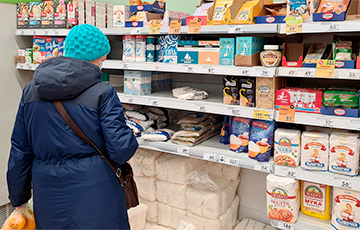
So, a year has passed and Solidarity once again goes shopping to compare the Belarusian “Hrošyk” and the Polish “Auchan”. In October last year, we compared how much a similar grocery basket would cost in Warsaw and Minsk. Then it turned out to be 8.5 rubles cheaper in Poland.
We looked at how prices in the two countries have changed over the year, where it is now more profitable to shop, and how many certain food sets an average Pole and an average Belarusian can afford in their countries.
Poland. The choice in Auchan remains wide, but the price per basket has increased by 30 zlotys
Like last year, we start with sunflower oil, and then move on to vegetables and fruits.
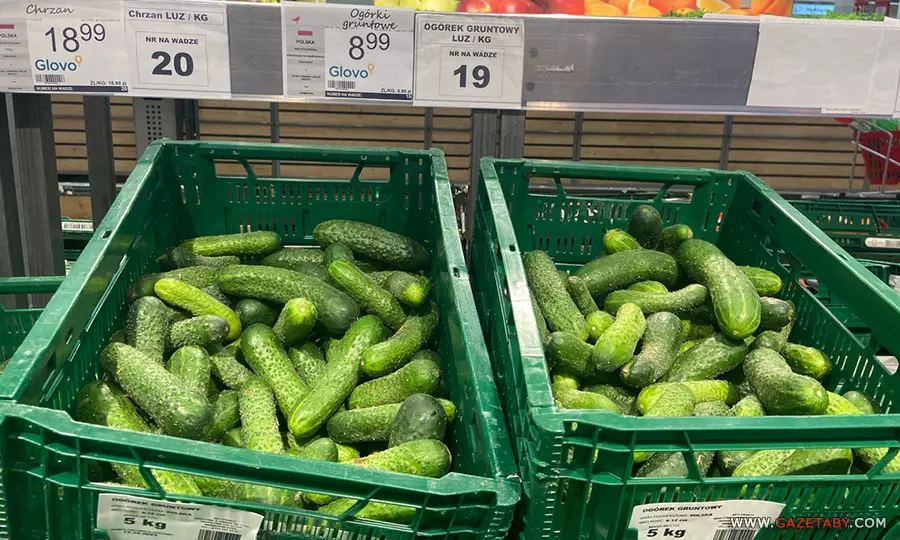
Sunflower oil price has not changed, and in some places it even became cheaper. We take a liter for 9.98 zlotys (7.7 Belarusian rubles). The choice of tomatoes is large, but we take the cheapest ones — 6 zlotys (4.6 rubles) per kilo. There are two types of cucumbers — small gherkins and regular cucumbers, which are long and large. A kilo of gherkins goes into our basket for almost 9 zlotys (7 rubles). This price, by the way, is two zlotys higher than last year.
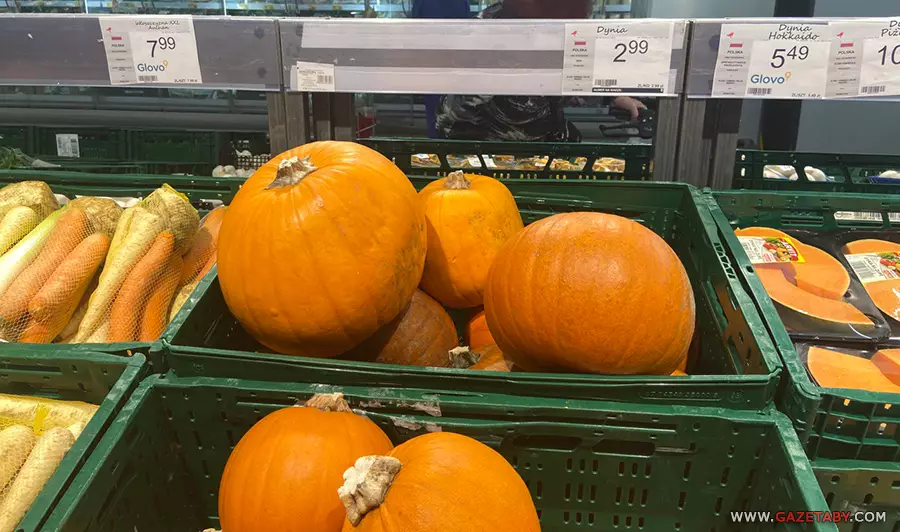
A kilogram of pumpkin has also gone up in price by one zloty — 2 zlotys last year versus three (2.3 rubles) this year. Ours weighed 1.5 kilograms. In the same department we buy avocados — 4 zlotys (3 rubles) per piece.
As standard fruits, we choose apples and bananas. The average price per one kilogram of apples is 3.5 zlotys. But we take the cheapest ones — 1.78 per kilogram (1.3 Belarusian rubles). The price for them was approximately the same last year. Bananas, however, have risen in price by a little more than a zloty — 5.69 zlotys last year versus 6.99 (5.4 rubles) this year. A branch of four pieces is sent to the basket for PLN 3.76.
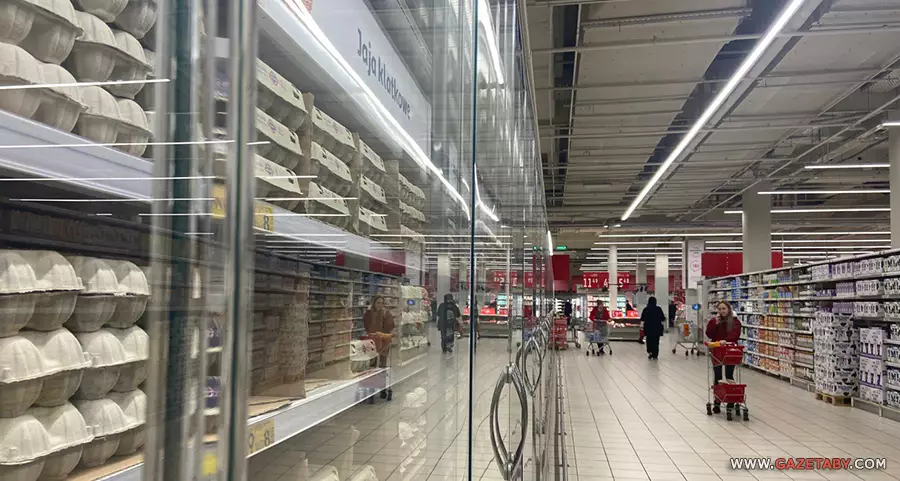
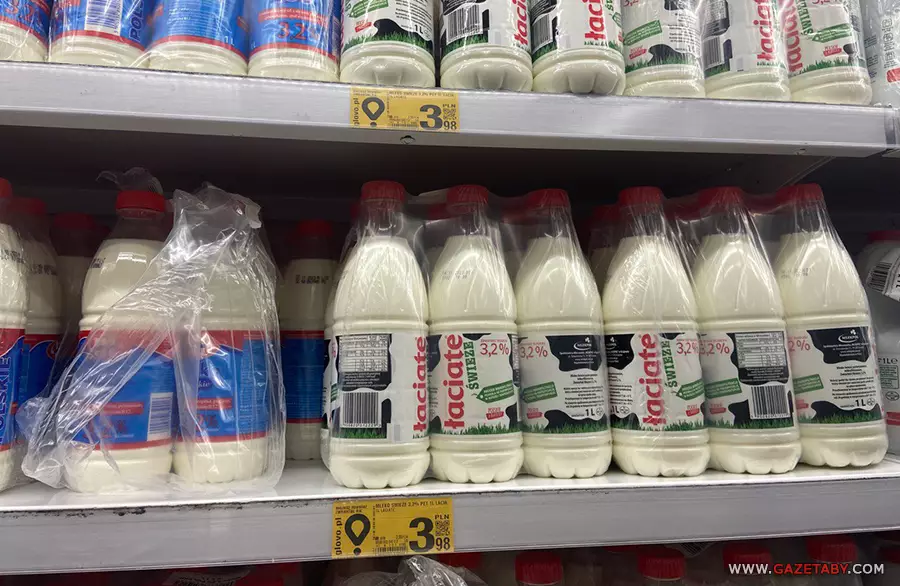
Now let's go to the dairy. Like last year, we are looking for eggs, milk, and cheese. A dozen eggs of size L will cost 8.98 zlotys (about 7 rubles) — last year they were cheaper by a little over a zloty. The price of milk has not changed much — 3.98 zlotys per liter (about 3 rubles). We chose Camembert cheese — 6.46 zlotys (a year ago it was 4.69 zlotys) — that's about 5 Belarusian rubles.
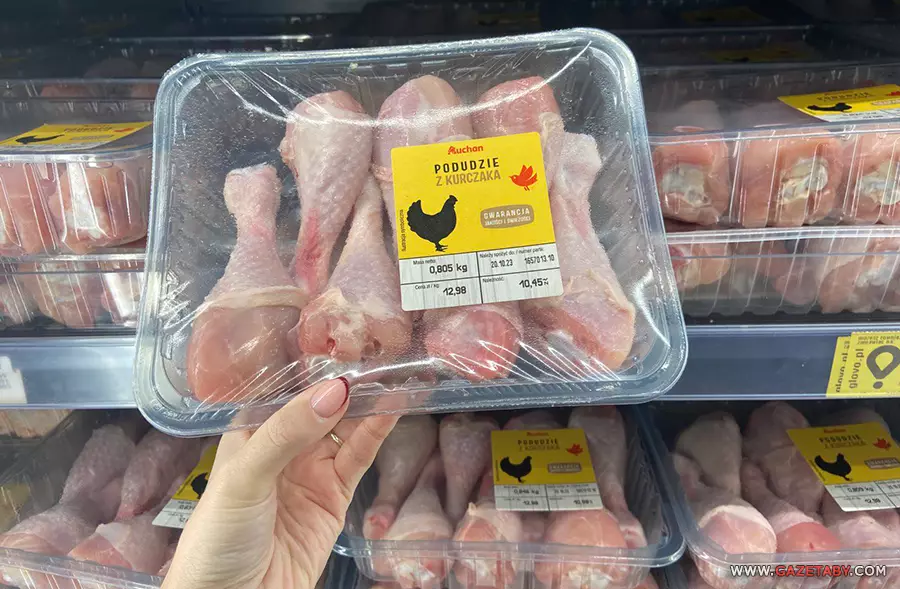
Let's move on to the meat. A kilo of chicken fillet will cost 24.88 zlotys (19.2 Belarusian rubles) — the price has hardly changed over the year. But minced pork has risen in price a little — now we put 500 grams in the basket for 12 zlotys (about 9 rubles), without two kapeykas, last year it was almost 10 zlotys. Chicken drumsticks, or legs, have hardly risen in price — 800 grams are added to the basket for 10.45 zlotys (8 rubles).
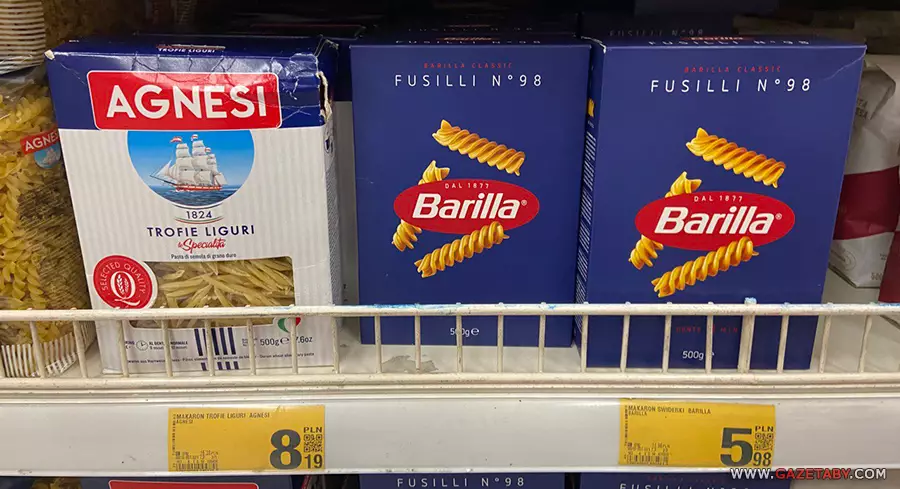
So, we also need cereal, bread and something to go with tea. Just like a year ago, we take toast bread — it has risen in price quite a lot: 5.69 zlotys (4.4 rubles) versus 2.74 last year. We take a kilo of rice for 7.39 zlotys (5.7 Belarusian rubles) and Barilla pasta for 5.98 zlotys (4.6 rubles). For tea, we choose a pack of waffles for 5.5 zlotys.
In total, for a food set that included meat, cereals, fruits, vegetables, dairy products and bread, we need to pay almost 130 zlotys, which is about 100 Belarusian rubles at the exchange rate on October 22, 2023 (1 zloty is equal to 0.77 Belarusian rubles). Last year, the Polish basket cost us 100 zlotys and, at that rate, 50 Belarusian rubles (in the autumn of 2022, 1 zloty was equal to 0.51 Belarusian rubles).
Belarus. We paid 11.5 rubles more than last year in “Hrošyk”
Now we are gathering a similar grocery set in Minsk. Oil goes first. We managed to find sunflower oil cheaper than last year — 3.89 rubles per liter.
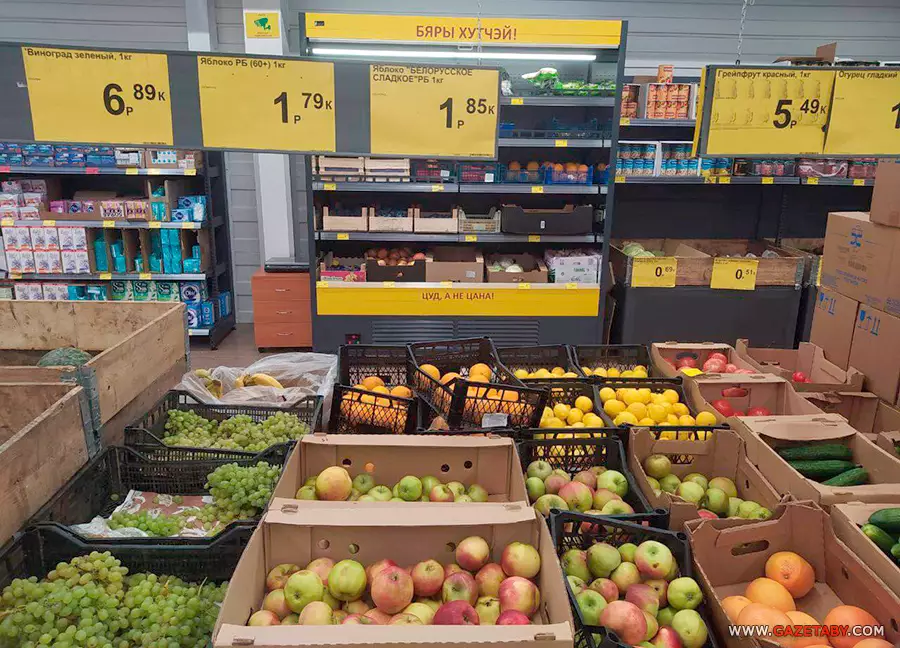
Next we proceed to vegetables and fruit. The cheapest apples will cost 1.79 rubles per kilogram, which is also cheaper than last year, but still more expensive than in Poland, even taking into account the increased exchange rate. Bananas will cost 4.59 rubles per kg; last year they were 4.49 rubles. We paid 3.83 rubles for a branch.
Small gherkins — 4.69 rubles per kilo, the cheapest domestically grown tomatoes — 6.22 rubles per kilogram.
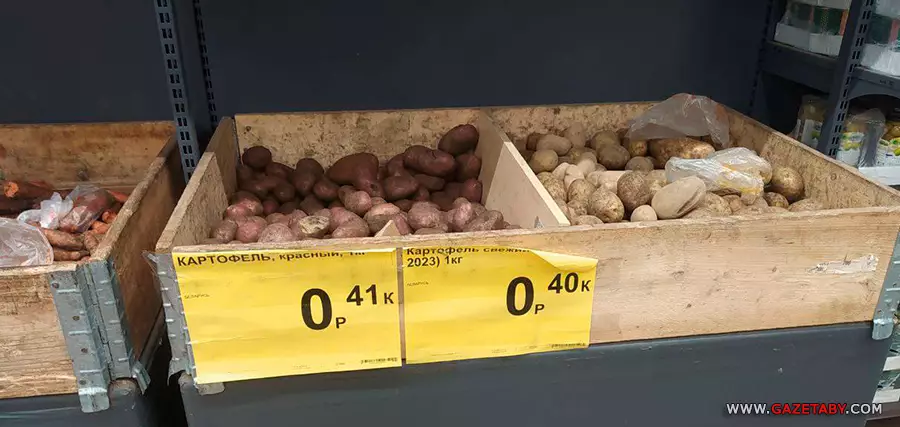
There is no pumpkin. It could have been replaced with zucchini, but they are not available either. Therefore, we take potatoes (0.4 rubles per kilo) and cabbage — a head of cabbage was 1.84 rubles (0.69 rubles per kilogram versus 0.55 rubles last year). There is no avocado either and, alas, nothing can replace it.
Let's move on to the meat. Basically everything in the department is already packed. So minced pork in a package for 9.99 rubles per kilo goes to the basket. A container of Petrukha chicken legs weighing 750 grams costs 6.29 rubles (last year a container of 700 grams cost 4.47 rubles). The chicken fillet has already been sorted out, but judging by the price tag it will cost us 11.69 rubles per kilo.
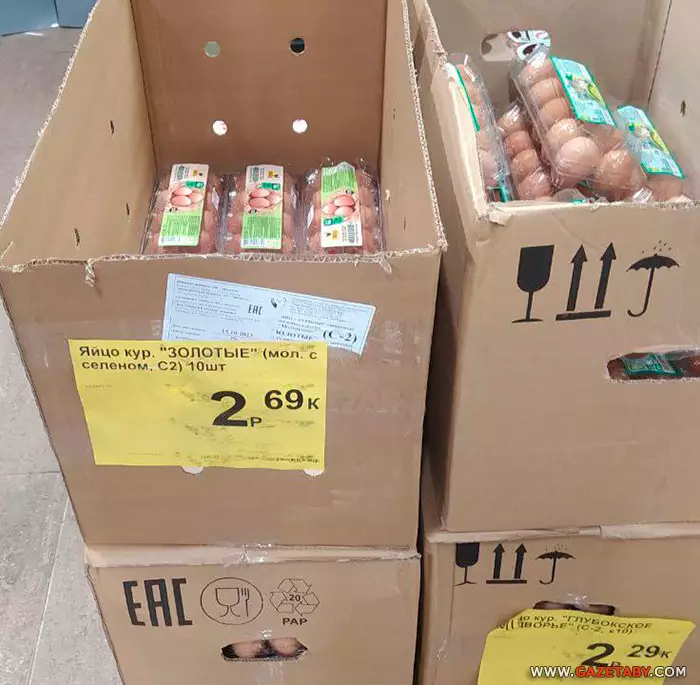
We take a dozen eggs for 2.29 rubles. Next we go to the dairy department. There is no Camembert here, but out of curiosity we looked at the neighboring Euroopt — there it was at a discount of 5.79 rubles. We buy Brest milk for 2.05 rubles (last year it cost us 1.69 rubles).
Toast bread will cost 40 kapeykas more than last year — 1.89 rubles versus 1.49. Only cereals remained. For a pack of Barilla pasta we paid 2.89 rubles. The selection of rice cereals is small, it seems there is much more millet. We take “Gusto” 800 grams for 2.39 rubles.
Waffles remain — we buy chocolate ones with nuts. They will cost 1.89 rubles per 200 grams.
In total, a set of products comparable in weight cost almost 70 Belarusian rubles. However, we replaced the pumpkin and avocado with cabbage and potatoes. Last year we paid 58.5 Belarusian rubles for a similar set.
Let’s compare and make conclusions
In total, it turns out that prices in both countries have not increased much, however, due to the weakening of the Belarusian ruble against the zloty this year, it is more profitable for Belarusians to purchase this set of products at home, and not in Poland.
But finally, we decided to compare how many of these food baskets a Pole and a Belarusian could afford on the average salary in their countries, and here the difference turned out to be colossal.
The average salary in Poland after taxes is 5,443.84 zlotys (4,211.19 Belarusian rubles). It turns out that the average Pole can afford to buy 41 food baskets worth 130 zlotys per month.
Finding data on the average salary in Belarus after taxes is not easy, everywhere only in gross terms — 1,933.1 rubles. After deducting income tax of 13%, and the 1% fee to the Social Security Fund, the net salary will be 1664.98 rubles. This means that the average Belarusian can afford 23 food baskets worth 70 rubles per month.