Economic Catastrophe In Russia
12- 6.11.2023, 12:49
- 28,078
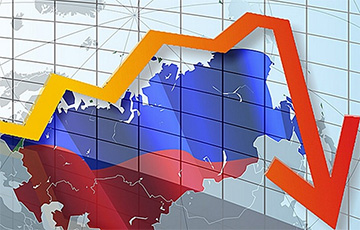
The Russian Federation plunged into the situation that arose after the nationalization of foreign enterprises by the Bolsheviks.
A narrow horizon is perhaps one of the most important characteristics of the activities of today's economic authorities in Russia, which are inextricably linked with political authorities. They don’t think about the future of the country’s economy, how it will attract investment after the change of current leadership. “After us the deluge.”
But this line of thinking, of course, is not suitable for everyone who “looks to tomorrow.” The country will undoubtedly need large-scale investments just as they did at the dawn of the 90s. The country has benefited a lot from them. Among foreign examples, one of the most striking examples of the benefits of attracting foreign capital is China. To which, it seems, the Russian leadership is “turning”.
In the meantime, a catastrophe has occurred in Russia, which is little understood.
It’s no longer just a matter of trust, but the presence of a government that purposefully encourages the entry of foreign companies, creating a favorable environment in the country. Which considers foreign investment as a source of technology, a tool for training the workforce, as a way to gradually form an independent and advanced business environment in the Russian Federation. All this was already experienced back in the riotous 2000s. And there the country came closer to what can be called nationalization — the story of the Sakhalin-2 PSA project.
Now, after the start of the war, this is about something else — a mass exodus of Western companies from Russia and the loss of their assets. Who gets them is a topic for another conversation and is not very important in the current context. It's all about losses. The scale is enormous.
The other day, CEO of the Danish brewing company Carlsberg Jakob Aarup-Andersen said the key words that had never been heard before. He said Carlsberg had severed all ties with its Russian business and would not agree to a deal with Moscow that would “legalize the asset grab.” The Russian Ministry of Finance responded to this that “the introduction of temporary management does not entail a change in the ownership structure.” But what does this change in terms of the investment climate for the Russian Federation? Who will be interested in investing in a country like the Russian Federation in the future? Who will be convinced by statements like the one made by the Ministry of Finance?
The only reasonable policy towards foreign investors would be to not prevent them from leaving Russia in any way after the outbreak of war. Do not set conditions, restrictions, give the opportunity to sell businesses on market conditions.
Yes, they would have losses caused by the fact that Russia came under sanctions. But, in any case, some of the risks would be eliminated — Russia would show itself as a country that respects private property rights, and would retain certain positions in terms of future capital attraction.
However, is this an approach for the current authorities? They plunged Russia into the situation that arose after the nationalization of foreign enterprises by the Bolsheviks. It is possible to get out of this state (of course, not under the current leadership), but it will require a lot of effort and sacrifice.
The “My friend dollar” Telegram channel