

Dance With A Rake
15- Iryna Khalip, Novaya Gazeta Evropa
- 10.02.2023, 10:06
- 17,852

Cher will never perform from the stage of the Bobruisk House of Culture.
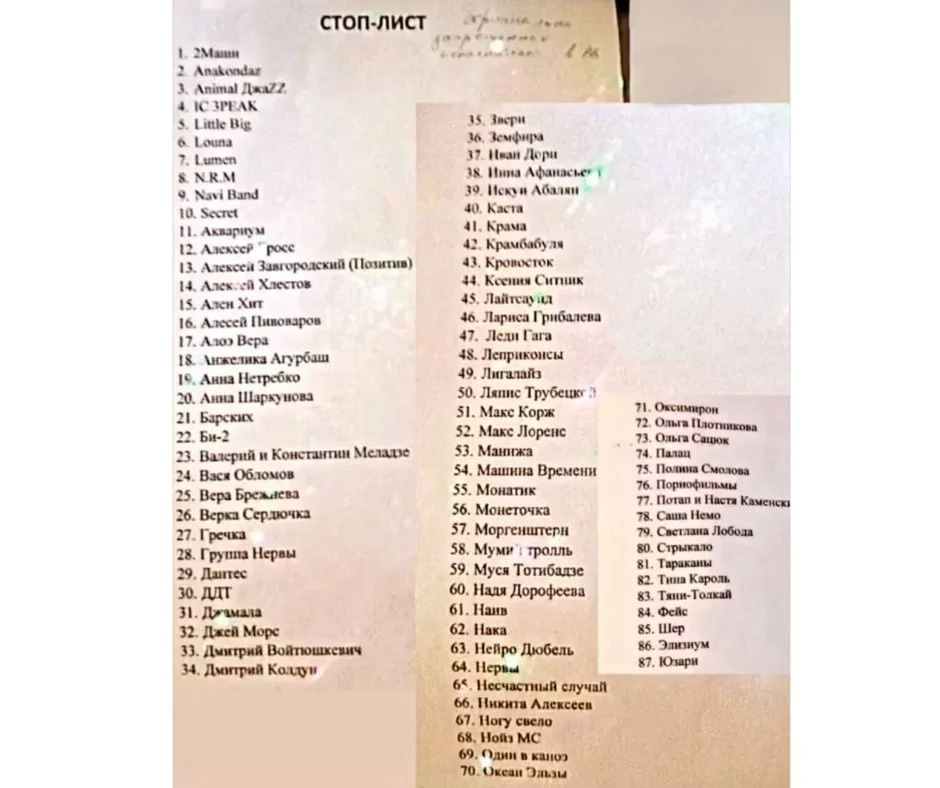
"Blacklists" of musicians in Belarus are a good old phenomenon, like the Russian salad on the New Year table. They appear from time to time, then disappear, then reappear in an updated form. In general, it is a perennial cycle of ideological fantasies of officials.
I do not know whether the list published by the Rada of Culture exists in reality, or whether it is a throw-in. But modern Belarusian history confirms that it may well exist. Especially when one considers the phenomenal obscurantism of those concerned with ideology.
"Porridge, honey, shit and bees" is how one could define the content of this list, if one had to invent a genre for it. The Belarusian rockers whose names have wandered from one stop list to another for decades - Lyavon Volsky, Lyapis Trubetskoy (after Warriors of Light, he had few chances to remain unnoticed), Dmitry Voytushkevich, Neuro Dubel, Palats, Krama. These are veterans not only of Belarusian rock but also of all kinds of performance bans.
And then there are the pop singers who perform at governmental and departmental concerts and do not suspect that their names are on the black list.
Perhaps those who compile concert programs for rural toilers or medium-sized machine-building workers are not even aware that such a list exists. It may not even reach the small clerks who make out "tours," if the list is marked "for official use only" or "top secret". Although, after the protests in 2020, rockers have no concerts in Belarus.
Lyavon Volsky commented on an extensive and diverse "document" on his page on Facebook:
"When the first black list appeared in Belarus (it definitely included me and my projects), I remember, there was some propaganda program on TV. They suddenly started "stigmatizing" the Belarusian musicians and me in particular. In a sinister voice, the host announced: "He (that is me), when the whole Belarus was rejoicing at the triumphant victory of our Kseniya Sitnik at the Junior Eurovision, said about her: "I don't when kids show off. And then a quote from My Generation:
“I wish I could buy dollar,
And sell these rubles,
And then to leave this land”.
This is, they say, what this musician calls for. So, twenty years have passed and an updated black list appeared. Kseniya Sitnik is already on it. Everything is in its place".
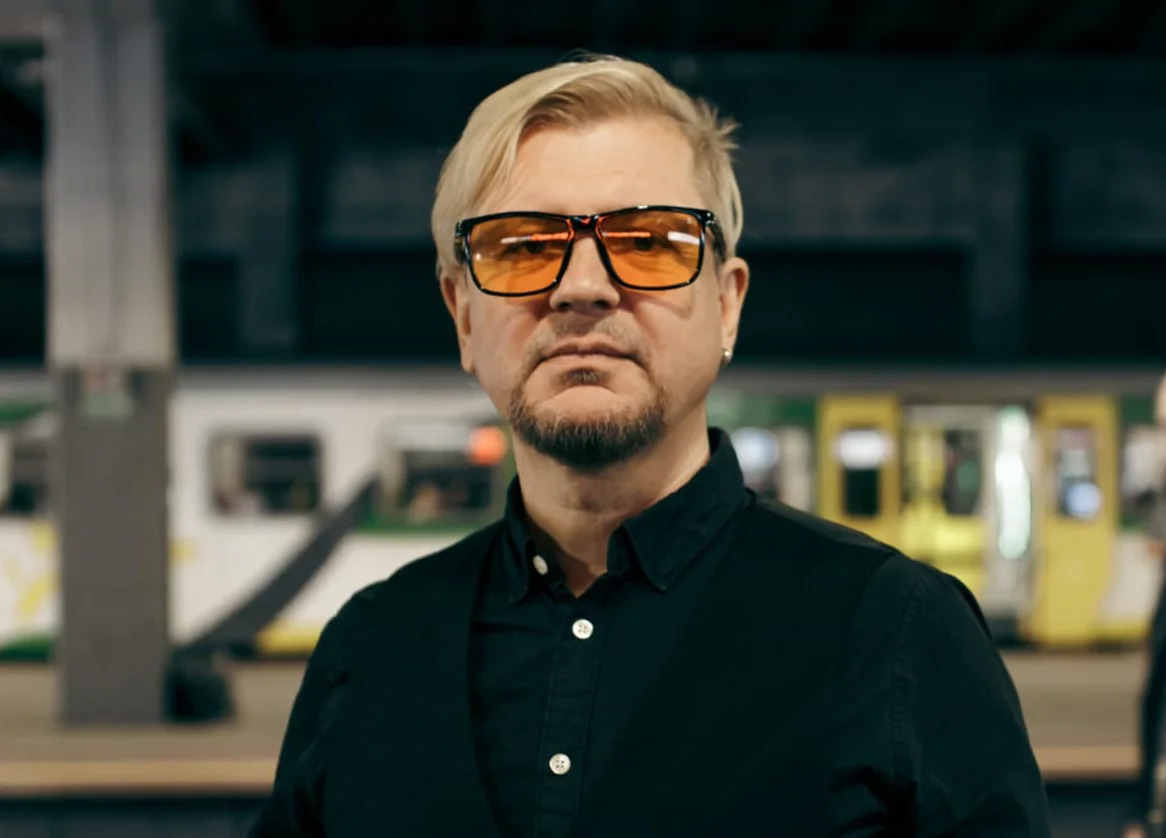
Photo: Facebook
One can explain the ban on Russian bands and performers who spoke out against the war - from Aquarium to Vasya Oblomov, from Nogu Svelo to Oxxymiron. It's understandable that Ukrainian artists are included: why should Okean Elzy perform in Minsk? But some of the names on the list are so extraordinary that one may question its authenticity, or the intelligence level of those who compiled it.
For example, the Russian opera singer Anna Netrebko, who, judging by her statements, loves Putin and the war more than her husband and the opera, mysteriously appears on the list. May one have decided to add one opera name to the pop-rocker list in order to make it more impressive? Well, yes, I salute the choice then.
But the singer Cher is a cherry on the cake. The American diva, who probably does not even know about Belarus, is banned from performing in this mysterious country. She doesn't knows that she will never sing from the truck in the field during the harvest season, or perform at a corporate party of the Ministry of Forestry, or address the audience from the stage of the Bobruisk House of Culture.
Speaking of Bobruisk. There have been also white lists in Belarus in addition to the black ones. Not everything is that bad here. In 2005, the Ministry of Information introduced quotas for radio stations: Belarusian artists should occupy 75 per cent of the musical airtime. But where could they find so many singers and phonograms to fill the airtime? So the ministry expanded the list of allowed musicians: those with Belarusian roots or those who "just happened to be on the air" could be put on the air.
For example, Би-2, a duet from Bobruisk. Everyone knows it, so the songs of Leova and Shura could be played on the radio indefinitely. The radio also allowed the Ночные снайперы, because Diana Arbenina comes from Volozhin, Alena Sviridova from Minsk, the guitarist DiDuLu, who was born in Hrodna, Andrey Makarevich, whose grandmother is from Belarus, and Vladimir Kuzmin, who lived as a child with his officer father in the garrison in the Mahiliou region. Now even his grandmother from Belarus will not save Makarevich, as well as Leva and Shura. Ban, taboo, veto, stop-list. It's a pity Valentina Tereshkova does not sing. She is also from Belarus.
The participants of the first black list were rockers. The scale of these lists was unprecedented in 2007. They went to the Lukashenka administration to meet with the deputy head of the administration Aleh Praleskouski. They complained about life under the ban; Praleskouski offered to play at the festival "Rock for Belarus", and in general, everyone seemed to be happy. They had a good talk with tea and handshakes that followed. But then, the musicians say, the leader of the punk band Neuro Dubel Aliaksandr Kullinkovich fell in the snow and was fiercely washing his hands.
Aliaksandr Kullinkovich passed away three years ago. The band's second vocalist, Yury Naumau with the stage name Paskuda, died two years ago. But Neuro Dubel is also on the last black list. Posthumously awarded.
Iryna Khalip, Novaya Gazeta Evropa