

Drones Over Russia: Pantsir Systems Are Useless
26- 1.03.2023, 10:40
- 22,608
Drones are already able to reach the Moscow region.
Unidentified aircraft, judging by media reports and the Russian MoD, were seen in several regions of Russia at once over the past day, namely: in Belgorod, Tuapse, Adygea, the Bryansk region and the Moscow region. Pulkovo Airport in St. Petersburg stopped flights for several hours on February 28.
Later, the Russian Ministry of Defence announced that the sky over the city was closed for the training of air defence forces, however, a number of media and Telegram channels expressed the idea that this could also be due to unknown UAVs.
Is it likely that the Armed Forces of Ukraine are involved in the appearance of unidentified drones over Russia, and how seriously does the Russian Federation take this threat? Israeli military expert David Gendelman told about it in the DW News Show.
– Is it likely that these were Russian drones launched to simulate a NATO attack?
– First of all, they do not need it. And secondly, some of the drones have reportedly already been identified to be of the Ukrainian type. In general, this is not the first time we have seen attacks of Ukrainian drones [targets in Russia - Ed.], Therefore, there is no justification for the version of a provocation. Currently, the geographical spread is more diverse: it happened in several places at once, including the Moscow region. Actually, it started a few months ago already, so the expansion is not surprising.
– Is there a reason why these drones appeared on the same day?
– Only the Ukrainian command directly knows about the reason for this. But in general, these attempts [to attack the territory of the Russian Federation with drones - Ed.] almost every day happen in the border regions: Belgorod and Kursk. There could be operations of a higher level overlaid today: in the Moscow region, Tuapse and Adygea. However, perhaps it’s just a coincidence, partially, because strikes in the border areas are carried out by lower-level units. The suburbs are, apparently, something more strategic.
General Zaluzhny [the Commander-in-Chief of the Armed Forces of Ukraine - Ed.], pointed out in his program article back in September that Russia had the ability to strike "with impunity" across the entire territory of Ukraine, while Ukraine - only on the "operational rear" of the enemy, because there is no parity between Russia and Ukraine in terms of the weapon ranges. Russia has weapons with up to 2000 km [range of destruction - Ed.], but Ukraine does not. If we [Ukraine - Ed.] receive such weapons, the war would change. Therefore, it was clear that the Ukrainians, as far as possible, would try to achieve this parity with the available sources.
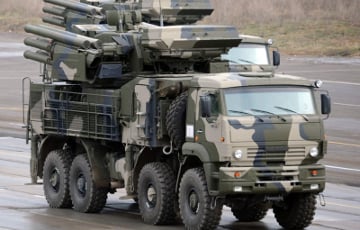
The [areal - Ed.] vehicle over the Moscow region is reportedly a Ukrainian drone with a flight range of about 800 km. If this continues systematically and massively... Here one can look at the reaction of Russia. If we saw reports about the placement of the Pantsir air defence systems on Moscow buildings recently, then yesterday there were reports that the military Air Defence was transferred from the subordination of the Ground Forces to the subordination of the Aerospace Forces.
This shows us that the decision was made in the Russian army to bring all air defence forces under one roof. It is likely that this was done precisely to counter the intensified Ukrainian attempts to deal air strikes deep into Russia. (...) That is, the Russian side takes this threat quite seriously and tries to oppose it with everything that is possible.
– What about the Russian Air Defence?
– The main problem of Russia is its huge territory. Perhaps this was the reason for the decision to bring all air defence systems under one roof in order to increase their coordination and effectiveness.
But it is impossible to intercept everything, and the Ukrainians are well aware of this. Therefore, the means of air attack go as low as possible, hiding from radars. This, by the way, is one of the reasons why drones so often fall or crash into trees in the forest. (...) Although they intercepted some of the means [means of attacks - Ed.]: as we have seen, but no was downed in the Moscow region and in Adygea. That is, the drones were either shot down or fell on their own before reaching the targets. However, strikes are not the main issue here, but building up attempts. If they are taken more and more often, then sooner or later the percentage of strikes will inevitably increase.
– What is the maximum possible damage such devices can cause?
– It depends on the specific device. The one in the Moscow region is reportedly a Ukrainian UJ-22 Airborne. According to official specifications, it carries up to 20 kg of payload. This is not much actually, but if, as they say, it strikes a gas compressor station, then 20 kg is enough to cause great damage with its strike.
– Are these attacks military or psychological in nature?
– Successful strikes will have a military significance because there is an oil depot [in Tuapse. - Ed.] is a very important source of supplying troops. If so far it has not worked out and the drones have been shot down, then so far there has really only been a psychological effect. If this does not work out and the drones are shot down, then there will only be a psychological effect. It [Kyiv - Ed.] was able to show what the Ukrainian army is capable of. If drones are already flying over the Moscow region the Russian side is to draw conclusions, and they seem to do it well.