


WSJ: Battle For Ukraine Is Fighting For Entire Inter-Sea
8- 6.04.2023, 8:35
- 11,856
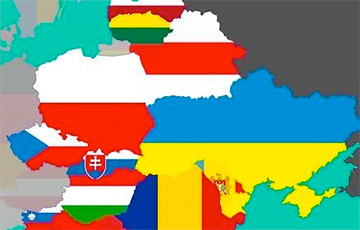
Victory matters not only for Ukraine.
The protection of Ukraine from Russian imperialism is a task that will affect the fate of all countries from the Baltic Sea to the Black Sea, American journalist, writer and geopolitical researcher Robert David Kaplan says in an article for the WSJ.
Would Europe be at peace with Putin's Russia if NATO had not expanded eastwards after 1989 and Europe had recognised Russia's interests in Ukraine?
Writer and geopolitical scientist Robert Kaplan answers emphatically: "No."
He argues that if the former Soviet bloc countries in Central and Eastern Europe had not joined NATO and the EU, they would now be weak states. He cites Romania and Moldova as examples: Romania has become a strong and stable state under the NATO and EU umbrella, despite being devastated at the exit of the Ceausescu dictatorship, whereas Moldova today, a country populated by the same people that was richer than Romania 30 years ago, is a weak country that could have fallen victim to Russia if Odessa had not withstood.
Thus, there could have been several such "Moldovas" between Germany and Russia today, which Putin would have been looking at.
"In other words, if the West had not expanded NATO and the EU to the East, we would now be fighting for Poland rather than Ukraine and Belarus, because Putin would probably be in hot pursuit of every country between Berlin and Moscow," Robert Kaplan writes.
"Ukraine would have long been under the Kremlin's thumb. Germany would have leaned even more towards neutrality, demanding close relations with Russia not only in relation to gas supplies, but also to secure its borders with Poland and the Czech Republic, if those countries had not become members of NATO and the EU and fallen under Russian influence."
The analyst says that the current battle for Ukraine is about defending the entire "Inter-Sea", a belt of democratic states from Estonia on the Baltic Sea to Bulgaria on the Black Sea, against Russian imperialism.
The very concept of the "Inter-Sea" was the idea of Józef Piłsudski, the first leader of a newly independent Poland. He believed that such a bloc of states would help to avoid Central and Eastern European countries being dominated by Germany or Russia.
In Kaplan's view, Russia attacked Ukraine not because of North Atlantic Treaty Organisation expansions, as officially claimed, but because of Putin's "Shakespearean demons".
Kaplan mentions the words of a Russian billionaire who recounted a conversation with Russian Foreign Minister Sergey Lavrov. How could it happen that Putin made the decision to go to war without consulting anyone, including the Foreign Minister. Lavrov replied: "Putin has only three advisers: Ivan the Terrible, Peter the Great and Catherine the Great".
The analyst notes that the decision to invade Ukraine reflected not the collective thinking of the Russian elite, but "the Russian president's own thoughts". Ukraine's victory will offer Russia a small chance to change itself, Kaplan writes.