

The Collapse Of The Russian Ruble
16- 14.08.2023, 11:18
- 34,642
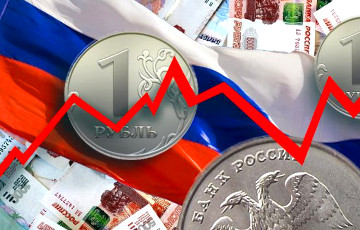
Now it's not worth a cent.
100 rubles per dollar have come and gone forever.
This is not a record — in March 2022, it was 120+. But then there was panic because of the outbreak of war. And then the sanctions, which hit and failed imports first of all, and the ruble began to strengthen rapidly.
But since the autumn of 2022, the economy has “taken its toll”, and the ruble’s journey to new heights and the title of the weakest currency of the year began, based no longer on a panic, but on macroeconomic indicators.
The sanctions hit export earnings, and the forced de-dollarization (which in Russia appears to be a conscious policy) led to a severe shortage of freely convertible currencies. The influx of dollars and euros has almost zeroed out. Selling oil to India and China does little to help — export earnings are stuck in limited convertible rupees and yuan, which cannot be withdrawn from these countries. And imports for dollars and euros went up. The ruble has nowhere to go — only to fall. These are the realities of the country's trade balance.
The main reason for the collapse of the ruble is sanctions and forced de-dollarization. Putin's aide Oreshkin gave a TASS column announcing that the main reason for the fall of the ruble and accelerating inflation is the weak monetary policy of the Central Bank, and promised “normalization of the exchange rate”.
This is contrary to the facts. The CBR's monetary policy is one of the toughest in the world. “Tightening the screws” on the part of the Central Bank may lead not to the strengthening of the ruble, but to the fall of the economy due to too expensive loans. Oreshkin's call to the CBR to tighten policy is a complete misunderstanding of the situation and a typical “shooting yourself in the leg”. It can only worsen, not improve the situation. The CBR understands this, unlike Oreshkin.
The presidential elections in Russia (March 2024) are ahead, but the economy cannot “reach out” to them in the previous mode. Either the budget or production will fall down. The most painless way out, the way to try to somehow maintain the situation until the elections, is precisely the fall of the ruble, which finances the budget deficit (due to exchange rate differences) and gives additional profit to exporters. And, besides, it naturally restrains imports (they become more expensive). The Russian authorities have no other choice but to release the ruble, which no one officially holds, it is floating free.
Expensive imports, of course, are followed by inflation. But, firstly, with a decent lag. And secondly, as usual, Rosstat is lying about it. Here inflation is something the Central Bank will restrain by raising the rate, and not the ruble at all. The Central Bank also needs the weak ruble in order to restrain imports and correct the current balance in freely convertible currencies. That is why the Central Bank raises the rate, but slowly. It is fighting not with a weak ruble, but with its consequences — with inflation.
The latest statements by the Central Bank are precisely about this: let the ruble fall, this does not pose a “threat to financial stability”.
A sharp increase in the rate now is a recognition of the financial crisis in the country. This is the last thing the president needs six months before his re-election. How then to say that “we survived”, “sanctions make us stronger”?
No one will hold the ruble, but they will hold the inflation. It will be, but without sudden movements. The biggest hope is to live until March 2024, and then everything can go to hell …
Telegram channel “My friend dollar”