

Political Scientist: Lukashenka’s Hanged On A Hook
6- 30.08.2023, 9:44
- 15,868
It is getting seriously tough for the Belarusian dictator.
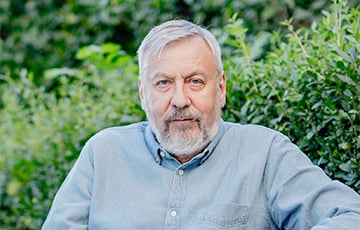
Political scientist Anatol Kotau, in an interview with Filin, spoke about the risks of closing the borders of Belarus with the EU, and what consequences this will lead to.
— The most important document in this area was adopted the day before — there was a joint statement by the ministers of internal affairs of Poland and the Baltic countries, who met in Warsaw and outlined the prospects for closing all borders in the event of an escalation of one of the two threats — illegal migration and incidents with the Wagner on the external EU border.
That is, as soon as one of these works, the iron curtain falls. It will be not only Latvia, Poland and Lithuania, but also the border of Estonia and the Russian Federation. Risks, threats are indicated, the consequences of not responding to them too.
Over the weekend, exclusively on the Lithuanian section of the border, illegal migrants disappeared somewhere. This is a remark to the fact that Lukashenka says that he does not control them, this is not his problem. When it’s getting really tough, he is quite capable of not only controlling, but even managing the migration crisis.
This week will be indicative of the direction in which events are developing and how much Lukashenka controls or does not control illegal migrants. Rather, he controls them than not, in the amount in which they are in Belarus.
The most unpredictable factor right now is the Wagner group. Because in the absence of funding sources and unity of command, representatives of this structure can commit unpredictable and uncontrolled actions.
They went through more than one dirty war, where they are used to getting big money, for them Yevgeny Prigozhin is an authority, because he got them out of prison, and they understand that he was eliminated. And this means that the personal prospects for those who are lower in rank are even less attractive.
The choice is either to try to stay in Belarus and it is not clear what to expect, or to return to the Russian Federation and sign a contract with the Ministry of Defense (there is a great chance to die at the front in the war against Ukraine in the forefront), or to try to somehow illegally cross the border with the EU, because it's about survival.
It may happen that a group of “daredevils”, who decide that no security guarantees are valid either in Belarus or in Russia, will try to break through the border. This incident can happen at any moment.
And in order to prevent this, because for Lukashenka the risk of closing the borders is a really gloomy prospect, they need to be seriously guarded so that no one runs away, and this is not chasing old ladies and students with clubs.
If the regime can more or less control migrants, then it cannot be ruled out that someone from Wagner will be paid for provocation in the form of individual actions. With the death of Prigozhin, the Wagner factor became more unpredictable, because there is no longer a single structure, it is a civilian gang.
— In a joint statement, the heads of the Ministry of Internal Affairs of Poland and the Baltic countries demanded that the Lukashenka regime “immediately withdraws PMC Wagner from the territory of Belarus”. Political observer Alexander Fridman believes that the issue will be decided by the Kremlin.
— Yes. absolutely right. For Lukashenka, to force out the Wagnerites as migrants in the EU is to get the closure of the border. Push them out to the Russian Federation — so they themselves will not really want to go there without Russia's decision.
To do this, he needs to meet with Putin and surrender some next part of sovereignty in exchange for the fact that the iron curtain on the borders will fall, not now, but later. He will do his trademark trick — buy time.
Lukashenka will strive for this meeting, and the uncertainty factor with the Wagner group drives him on, because someone has to pay salaries and pensions to these fighters. And this is no longer an educational center registered in Asipovichy, because its owners no longer exist.
If there is a deal regarding the withdrawal of Wagner from Belarus to the Russian Federation in part, to Africa, then this will be achieved at a very high price for Belarus and the Belarusian people. Because such a hook, on which Lukashenka is hung, Putin will not give up just like that. Wagner in Belarus is the most effective element of control over Lukashenka and his regime.
— The Ministry of Internal Affairs of Poland promised that in the event of a complete closure of the border, mechanisms would be developed to allow people fleeing repressions in Belarus to enter the EU. How do you think the closing of borders will affect the Belarusians?
— If we are talking about the situation with the borders in the document that was adopted yesterday from the point of view of the interests of the Belarusians, then this is a document that creates a serious danger, is a challenge, a threat to the Belarusians. Because, firstly, the targets that are listed there relate to two specific threats to the EU: migrants and Wagner.
The issues of smuggling, nuclear weapons and the fact that in Polish narratives there was a demand to release political prisoners were left out of the brackets. All this is not in these documents.
The closure of road checkpoints harms Lukashenka's interests, but also closes the only way to the EU that is now available to Belarusians, with the exception of some Jesuit air routes.
In the interests of the Belarusians and more painful for Lukashenka would be the blocking of the railway. Because this is the main flow of goods, transit, smuggling, and citizens do not go there.
That is, it must be admitted that the EU is primarily concerned about its own interests, but as a result, the barrier will be closed precisely for citizens. To a lesser extent for smuggling and not as painful for the regime as it could be.
Another point that catches the eye in the document is that the territories of states should be accessible to representatives of the Belarusian opposition. In the event of a serious escalation — and any incident that will lead to the closure of the borders will clearly not be an isolated case — there will be a more serious involvement of Belarus, both the territory and the state, in an armed conflict with Ukraine, with all the ensuing consequences.
Crossing these red lines, changing the status quo, when the Belarusian territory is not subjected to retaliatory strikes, preventive strikes. If this changes, refugees appear. They are not only representatives of the opposition.
The humanitarian corridors that seem to be visible in this document are very narrow. And this is also not in the interests of Belarusians — for those who plan to move later, who are released from prisons and will have to leave soon, and for a large category of potential refugees from Belarus who will flee the war.
Therefore, the document is dangerous from the point of view of Belarusian interests. When read literally, it reads an iron curtain for Belarusians in general, a pass to the EU for those escaping through tough filters. Well, the blocking of the railway and the fight against smuggling does not follow.
Therefore, neither the regime nor the Belarusian society should rejoice at the adoption of this document in such a wording. Now all efforts should be aimed at ensuring that the accents in the document, as well as the practice of its application, are shifted to take into account the interests of Belarusians.