
Volodymyr Fesenko: China Is Dissatisfied With Meeting Between Putin And Kim Jong Un
10- 13.09.2023, 16:06
- 27,542
Shells from the DPRK will not help the Russians.
Russian ruler Putin today, September 13, met with the head of the DPRK, Kim Jong Un, at the Vostochny Cosmodrome in the Far East. Western media suggest that the head of the Kremlin begged Kim Jong Un for shells to wage the war in Ukraine.
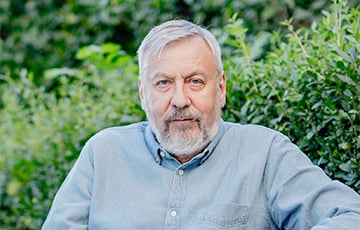
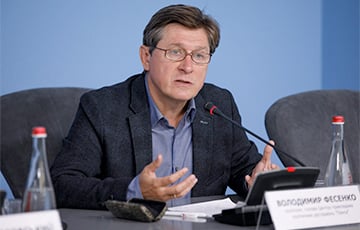
Will Putin get what he wants? How will Beijing react to the rapprochement of dictators? The journalists of Charter97.org spoke about this with the well-known Ukrainian political scientist, head of the Penta Center for Applied Political Research Volodymyr Fesenko:
– I think that there were agreements on the supply of some batch of artillery shells (perhaps not one, but several). Naturally, as an exchange. True, we don’t know whether Kim Jong Un will get what he wants, and he wants a lot.
For example, Putin is unlikely to share the most modern military technologies. They will give food, make symbolic gifts: the launch of a North Korean astronaut, satellites, or exchange satellite intelligence data. It is quite possible. But depending on how much Putin gives and whether it satisfies Kim Jong Un, the latter will give as many of those same shells.
However, I don’t think this will solve all of Putin’s problems. There is a lot of discussion about this in Ukraine, but I think that both sides will get only part of what they want. You have to see that North Korea does not have any huge reserves of ammunition. Russia doesn’t have it either.
The Russian Federation is a much larger country, with a larger army and resources than the DPRK, but even Russia does not produce as many shells as it spends during the war. I will give simple figures that are now published in various Western media: during the year of the war, the Russian Federation spent more than 10 million artillery shells. At the same time, Russia is striving to reach a production level of 2 million shells per year and not yet.
How much can North Korea give? I have not seen specific figures, but we can talk about the supply (in the best case) of several hundred thousand shells.
– Will this help the Russians?
– This may help Russians cover their needs for a few months, but it will not solve strategic problems. There is cause for concern in this case, but these agreements between Putin and Kim Jong Un won’t change the course of the war. They will not significantly affect the military situation.
– What risks do you see in the rapprochement of the two dictators?
– Russia may, for example, begin to transfer some military technologies to Kim Jong Un secretly, but it is unlikely that they will do it officially, judging even by statements. They seem to say, on the one hand, that they will lift sanctions against North Korea, and then they say, no, and they won’t abandon the regime of international sanctions. This is a typical ambivalent Russian position: and ours and yours.
Putin is also frightening the West by lifting sanctions against North Korea, but at the same time, I think he will do this only partially and unofficially.
However, there are emerging risks for South Korea, Japan, the US and the Pacific. That requires an answer and strengthening sanctions against the Russian Federation and putting pressure on it. There is a problem. It is not critical, but, of course, the cooperation of two dictators and such aggressive regimes increases the risks for international security.
– The DPRK cooperates closely with China. Can we conclude that China will in some sense support the Kremlin in the war if North Korean weapons go to the Russian Federation?
– Look, I think that the situation here is somewhat different. China used to have a real monopoly influence over North Korea. It controlled both food supplies and most of the trade. Naturally, there were relations with the Russian Federation, but sanctions were in force.
The strongest sanctions in the world were introduced against the DPRK and Iran. Now, if direct cooperation between Russia and North Korea intensifies, this will reduce China’s influence on North Korea. I think that it is unlikely that Beijing will be delighted with this.
China is happy with a weak Russia. Beijing wants to separately influence both Russia and North Korea so that they depend on it. If active cooperation suddenly begins between the DPRK and the Russian Federation, I don’t think that this meets China’s interests.
There is a contradiction here and, in my opinion, China is not going to join some kind of “axis of evil”, “anti-American coalition”. Yes, China is creating a coalition of countries that want to be friends with it and that don’t really like America. This includes Russia, Belarus, Iran, and so on, but Beijing refrains from a direct military alliance with these countries.
I think China is actually ambivalent about increased cooperation, especially military cooperation between Russia and North Korea.

Bank's name: Bank Millennium S.A.
Address: ul. Stanislawa Zaryna, 2A, 02-593, Warszawa
IBAN: PL97116022020000000216711123
SWIFT: BIGBPLPW
Name of the account holder: Fundacja “KARTA ‘97”
Purpose/title of payment: Donation for statuary aims
You can contact us by the e-mail charter97@gmail.com