
'Belarusian People Feel Embarrassed When Others Think They Are Russians'
36- 9.06.2024, 10:02
- 20,716
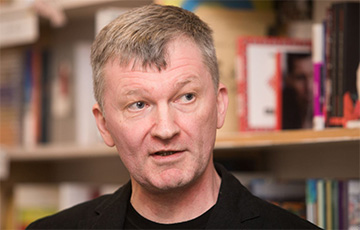
Translator and author Siarhei Shupa spoke about "situations" with Belarusians abroad.
In the new issue of the talk show Zhyzn Malina ("Raspberry Life"), translator and author Siarhei Shupa told how Belarusians differ from Russians.
In the opinion of Siarhei Shupa, Belarusians have a different view of the world.
"Russians feel (and cannot but feel) themselves representatives of the largest, most powerful country in the world, which, relatively speaking, everyone should be afraid of. It's a feeling of greatness. Belarusians do not care about this at all," the author believes and recalls the results of a survey of Russians conducted "six or seven years ago" about what problems they are most concerned about:
"The Russians somewhere in the top three had "What are our developments in Syria?" I do not imagine the level of absurdity, why a person from Saratov or Voronezh should be interested in this. Belarusians, I think, never use such categories. They don't care what happens there. Belarus has nothing to do with this. Russia — "How are our guys doing in Syria?" What are your guys doing there?
This is such a geopolitical self-perception of oneself in the world. Russia is a big country that claims to be the first in many respects. And Belarusians do not claim. So that they would not be touched, so that they would be allowed to work, earn money, and live well. I'm talking about ordinary people who do not have any ambitions. And for this, they do not need to be the first in space or in Syria to carry out any showdowns, or to fight for supremacy with America. What for? Live for yourself, not for some illusory grandeur. And this is the main and significant difference."
Siarhei Shupa also considers it a problem that Belarusians do not speak the Belarusian language. He explain:
"A Belarusian comes abroad for vocations. He is mistaken for a Russian. It's not a problem at first. But then the one starts to feel kind of awkward. When not only the locals take him for a Russian, but also the Russians themselves who go there. And all sorts of situations arise. And the Belarusian feels: "No, I don't want to, I'm not like that." And if you spoke in Belarusian, then naturally everything would immediately fall into place, and there would be no incidents."