


Bad News For Belaruskali
6- Feliks Mirski, Belarusians and the Market
- 22.09.2024, 14:18
- 7,826
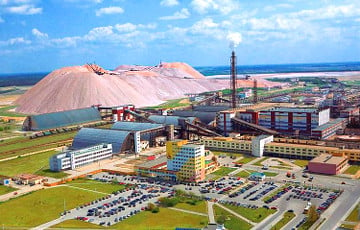
Why the growth of exports to China is not a reason for joy.
The value of Belarusian potash exports to China rose in August for the first time after it had been declining for several months in a row. But it seems that this is not very good news for Belarusian potash exports.
According to Chinese statistics, Belarus supplied $57 million worth of potash fertilizers to this country during the month. On its face, this appears to be good news. In July, the value of Belarusian potash exports to China was only $45 million. In June it was 88 million, and in May it was 100 million. That is, for the first time in several months, supplies of Belarusian potassium to China went up. It would seem that we can rejoice. Especially considering that this year the revenue from the export of potash fertilizers to China fell by half compared to last year.
But in fact, the August growth is not a reason for joy. It's the exact opposite. This growth shows that the situation on the market of potash fertilizers for Belarus is deteriorating.
Most recently, Belaruskali was told that in August a record amount of fertilizers was sold for export – one million tons. China is the main market for Belarusian potash fertilizers. There, the company sells from 70 to 80% of what it produces. It turns out that Belaruskali needed to set a record for fertilizer exports in order to earn only $12 million more in the Chinese market in August than in July. And this means that the prices for Belarusian potash are not growing. What Belaruskali loses on falling prices, it is trying to get by increasing supply volumes. And judging by the symbolic difference between income in July and August, it turns out very badly.
And there is one obvious difficulty with attempts to compensate for the fall in price by increasing sales volumes. It consists in the fact that production volumes are not infinite. In pre-sanction times, Belarus could export 10.5-11.0 million tons of potassium. The maximum production volume of Belaruskali was 12 million tons of fertilizers per year.
That is, the August volume of exports, if we recalculate it for a year, corresponds to the maximum possible volume of production of the enterprise. There is also, however, the company "Slavkali", which developed the Starabinskae potash fertilizer deposit. Work there began in 2017, and in 2021 was frozen due to sanctions. In 2023, work resumed.
But I have some problems. Firstly, even with an optimistic scenario, fertilizer production there will not begin until the middle of next year. And secondly, the annual production there will be 2 million tons. And these are not the volumes that can solve the problems of the Belarusian potash industry in particular and Belarusian exports in general.
In order to earn $57 million in the Chinese market, Belaruskali had to sell the maximum possible amount of potash fertilizers in August. At the same time, the average monthly revenue from the sale of fertilizers to China last year was more than 80 million. Belaruskali will not be able to sell more than a million tons of fertilizers per month. It just doesn't have that much potassium.
In fact, he won't be able to sell a million tons every month. After all, August sales were a small local record, which Belaruskali, by the way, most likely compensated for the decline in sales in July. That is, he sold the stocks that it had.
That's why the increase in revenue from the sale of fertilizers to China in August is actually bad news. It indicates, firstly, that the prices for Belarusian potash fertilizers continue to fall. And secondly, that even at the cost of maximum effort and resources, Belaruskali is not able to repeat last year's successes.
Feliks Mirski, Belarusians and the Market

Bank's name: Bank Millennium S.A.
Address: ul. Stanislawa Zaryna, 2A, 02-593, Warszawa
IBAN: PL97116022020000000216711123
SWIFT: BIGBPLPW
Name of the account holder: Fundacja “KARTA ‘97”
Purpose/title of payment: Donation for statuary aims
You can contact us by the e-mail charter97@gmail.com