


How The Collapse Of Cargo Transportation In Russia May Hit Belarus
2- 13.10.2025, 6:00
- 9,496
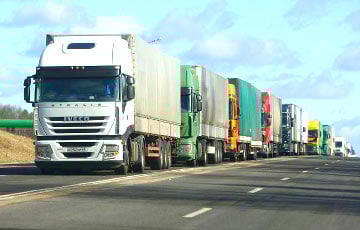
There are direct risks.
A crisis is brewing in Russia's road transportation market. Due to the high cost of resources, falling rates and falling demand, thousands of companies can no longer cope with the financial burden. If in the first quarter of 2025 every fifth transportation company left the market, then by the end of the year up to 15% more carriers may close, writes the site "Belarusians and the market".
Crisis in volume growth
According to a study by M.A.Research and logistics company PEC, in the first six months of 2025, the industry's revenue in Russia fell by 5%, although the volume of transportation in physical terms grew by 3.5%. This means that transportation works more, but earns less.
Analysts predict that at the end of the year, revenue will increase by only 1% to 2.63 trillion rubles, while in 2024 the growth was 13%. Against the background of inflation and rising costs, such "growth" actually means stagnation.
Why the market is breaking down
The main reason for the crisis is the imbalance between rising costs and falling tariffs. The cost of fuel and maintenance of vehicles has risen, while transportation rates - on the contrary - have fallen due to the excess of transport and reduction of orders.
The Central Bank's key rate remains high, which means that leasing and loans are becoming unaffordable for many carriers. According to industry surveys, about 30% of companies are already operating with negative profitability, and another 28% are experiencing cash gaps.
To this are added:
- lack of orders on domestic routes;
- sanctions restrictions, which make spare parts and equipment more expensive;
- growth of customer debts, especially in construction and retail.
Who will survive?
Large federal carriers with their own warehouses and digital services will survive the downturn. Medium and small firms operating on the classic "driver-trucker-customer" model will be the first to leave.
In 2025, the industry, in fact, will undergo a natural purge: weak players will be eliminated, and the market will concentrate around a few large network companies.
Effect for Belarus
Belarus is traditionally tied to the Russian trucking market - both for exports and imports. The consequences of the crisis in Russia for the Belarusian economy may manifest themselves in several ways.
Rising delivery costs
The reduction in the number of Russian carriers will lead to a shortage of vehicles on key routes. This is especially noticeable for Belarusian companies, which send cargoes deep into Russia - up to Siberia and the Volga region. Tariffs on these routes may increase by 10-15%.
Decrease in the volume of transit through Belarus
If Russian carriers reduce the geography of transportation, some transit routes through Belarus may lose ground. This will hit the domestic logistics sector - warehouses, services, customs brokers.
New opportunities for Belarusian companies
On the other hand, freeing up a niche in the Russian market creates a window for expansion of Belarusian carriers. Companies that are able to work with Russian clients on non-cash payment and have equipment under the EAEU standards will be able to occupy part of the routes, especially in the western regions of Russia.
Threat to joint projects
Many Belarusian carriers work through Russian subsidiaries. Their closure due to debts could affect the whole chain, including leasing, insurance and tax relations.
Risks for exports and imports
Delays in deliveries from Russia could complicate the work of enterprises dependent on Russian components, fuel and equipment. This is already being felt in construction and trade.
What to expect in 2026
Experts at M.A.Research believe that the situation will not stabilize until mid-2026. Transportation rates will start to recover only after the mass withdrawal of weak players.
For Belarus, the next year will be a time of adaptation: large firms will start to integrate into Russian logistics chains, while some carriers will reorient to routes to Poland, Lithuania and EU countries, where demand for transportation is growing.
Belarus is both a challenge and an opportunity. On the one hand - risks for exports and supply chains, on the other hand - an opportunity to occupy a part of the Russian niche and strengthen its own logistics capacities. Everything will depend on how quickly Belarusian business will be able to adjust to the new reality.

Bank's name: Bank Millennium S.A.
Address: ul. Stanislawa Zaryna, 2A, 02-593, Warszawa
IBAN: PL97116022020000000216711123
SWIFT: BIGBPLPW
Name of the account holder: Fundacja “KARTA ‘97”
Purpose/title of payment: Donation for statuary aims
You can contact us by the e-mail charter97@gmail.com