
The Kremlin Is Pushing Europe Toward A New War
2- 14.10.2025, 16:26
- 4,960
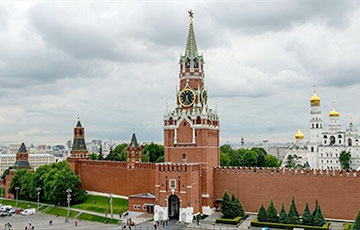
Russia is using a whole arsenal of tools.
Russia has been pressuring Europe for years, from the invasion of Georgia in 2008 and the annexation of Crimea in 2014 to the war against Ukraine and recent drone incidents over European countries.
All of these events are not random episodes, but parts of Moscow's long-term plan to change the European security architecture without directly confronting NATO, writes The Conversation (translated by Charter97.org).
The Kremlin's main goal is to revise Europe's post-war structure, regain its sphere of influence and limit NATO expansion. To do so, Russia is using a whole arsenal of tools: military pressure, hybrid attacks and political provocations.
Moscow's pressure arsenal
The Kremlin is using several approaches simultaneously. Military escalation, from troop concentrations to invasion, creates crises that force the West to the negotiating table. Airspace violations and cyberattacks test NATO's readiness to respond. Energy pressures and disinformation are undermining unity within the alliance. Domestically, confrontation with the West is presented as proof of Russia's strength and Europe's weakness.
This tactic - "constant testing" - is aimed not at capturing but at exhausting the enemy. Each provocation allows the Kremlin to assess how ready Europe is for collective defense and how quickly it can respond.
What awaits Europe?
Experts see three scenarios:
1. A new prolonged confrontation and militarization of NATO's eastern flank;
2. "Finlandization" of Ukraine - neutral status under Russian pressure;
3. Escalation due to a mistake or incident, which could escalate into a broad clash.
Europe's response - unity and sustainability
The EU should accelerate the creation of a common air defense system, develop collective measures against cyberattacks and sabotage, strengthen energy independence and industrial self-sufficiency.
The Kremlin's strategy is systemic and designed to exhaust. It can only be countered by cohesion. Europe must prove that its future is not determined by fear, but by stability and unity.

Bank's name: Bank Millennium S.A.
Address: ul. Stanislawa Zaryna, 2A, 02-593, Warszawa
IBAN: PL97116022020000000216711123
SWIFT: BIGBPLPW
Name of the account holder: Fundacja “KARTA ‘97”
Purpose/title of payment: Donation for statuary aims
You can contact us by the e-mail charter97@gmail.com