
Trump: U.S. Is In A State Of Armed Conflict
4- 3.10.2025, 9:59
- 7,190
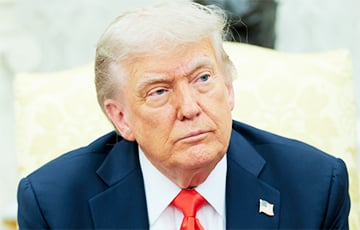
Photo: Getty Images
Who is the adversary?
The United States is in a state of "armed conflict" with drug cartels, the country's President Donald Trump said. This is stated in a secret notification that his administration sent to Congress, writes The New York Times, citing the document.
The Trump administration's notification recognized drug groups as "terrorist organizations" and called suspected drug smugglers "unlawful combatants" - a term usually applied to enemies on the battlefield.
This notice reveals more details about the legal justification for three U.S. military strikes on ships in the Caribbean Sea in September that killed 17 people on board. Previously, the Trump administration called the attacks self-defense, claiming the targets were drug couriers working for cartels recognized as terrorists. Now the White House is trying to portray them not as isolated episodes but as part of a long war with organized "non-governmental armed groups."
Factually, Trump is thereby asserting emergency war powers. In a recognized armed conflict, international law allows a country to kill enemy combatants even if they do not pose an immediate threat, detain them without trial and try them through military tribunals, experts explain.
International law lawyers, however, believe Trump is going beyond the law: drug sales alone cannot amount to an "armed attack" on the United States. Even with the high number of overdose deaths (and the Trump administration cites tens of thousands of deaths each year), international law prohibits the military from targeting civilians unless they are directly engaged in combat.
Retired Judge Jeffrey S. Korn, who previously served as the U.S. Army's senior military law adviser, called Trump's actions "not a stretching but a tearing apart" of legal rules.
At the same time, his administration claims to be acting "under the laws of war" to protect the U.S. from "deadly poison." However, ships coming from Venezuela have been the primary targets, although the spike in drug overdose deaths in the U.S. has been linked primarily to fentanyl being brought into the country from Mexico. For its part, Congress has not authorized the use of military force against the drug cartels.
In a classified notice obtained by the NYT, Trump said the actions of these groups amounted to an attack on the United States and allies, meaning America was engaged in an "unconventional armed conflict" with them - a term commonly used for civil wars or fighting by authorities with various groups.
After the terrorist attacks of September 11, 2001, this was the status given to the U.S. conflict with al-Qaeda, which allowed George Bush Jr. to invoke war powers, but then there was an actual armed attack on America and congressional authorization.
Now Trump is actually mixing the "war on drugs" in a metaphorical sense with a real war, claiming he can wipe out people suspected of having ties to the cartels without trial. In the last documented episode, on Sept. 15, U.S. Special Forces destroyed a boat carrying three people, calling them "unlawful combatants."
The Pentagon says the mission is conducted in strict compliance with U.S. and international law. But even State Department lawyers specializing in the law of armed conflict have expressed doubts: for a group to be considered a participant in a war, it must be sufficiently organized.
For example, the Venezuelan group Tren de Aragua, which is most often mentioned by the Trump administration, according to U.S. intelligence, is made up of disparate local cells and is so decentralized that it is difficult to imagine it as a unified armed force.

Bank's name: Bank Millennium S.A.
Address: ul. Stanislawa Zaryna, 2A, 02-593, Warszawa
IBAN: PL97116022020000000216711123
SWIFT: BIGBPLPW
Name of the account holder: Fundacja “KARTA ‘97”
Purpose/title of payment: Donation for statuary aims
You can contact us by the e-mail charter97@gmail.com