
ISW: Putin Won't Like Trump's Peace Plan, But He May Make A Sneaky Compromise
2- 21.12.2025, 11:14
- 4,748
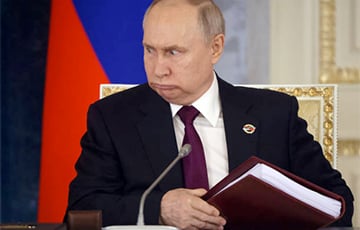
Ukraine needs reliable security guarantees.
Russian dictator Vladimir Putin has once again confirmed during his annual "Results of the Year" press conference that he is going to achieve his goals in Ukraine militarily. Only in order for the dictator to order a ceasefire, Kiev, in his opinion, must fulfill a number of ultimatums demanded by Moscow.
The "peace plan" proposed by the United States, which is currently being discussed, does not satisfy the head of the Kremlin, but he can sign the agreement - and immediately violate it. That's according to a new piece by the Institute for the Study of War (ISW).
Putin has not abandoned his goals in Ukraine
Analysts noted that Putin used a staged "communication with the people" on Dec. 19 to once again proclaim that he was not going to abandon any of the goals of the war he launched against Ukraine.
The dictator said Russia is "ready and willing" to end the war based on principles he outlined during his June 2024 speech to the Russian Foreign Ministry.
"Putin used the speech to lay out his conditions for a cease-fire agreement and only then to begin negotiations: the complete withdrawal of Ukrainian troops from all of Luhansk, Donetsk, Zaporizhzhia and Kherson regions and Ukraine's abandonment of its NATO membership aspirations. "In this 2024 speech, Putin stated that Russia's 'fundamental' position includes Ukraine's neutral status, demilitarization (Russia's demand for limiting the Ukrainian military so that Ukraine cannot defend itself), and denazification (Russia's demand for replacing the current Ukrainian government with a pro-Russian puppet government)," ISW reminded us of Putin's whims.
The Russian dictator in the aforementioned speech last year also demanded that the international community enshrine its recognition of Russia's annexation of four regions and Crimea in international agreements, and that the West lift all sanctions against Russia.
Analysts noted that most of the demands formulated by Putin in June 2024 and repeated by him a few days ago directly contradict the U.S. 28-point "peace plan" and all its subsequent versions.
In particular, the U.S. proposed freezing the front line in Zaporizhzhya and Kherson regions, and expressed readiness to recognize Ukraine's Donetschina, Luhansk region and Crimea as de facto Russian, not de jure.
In addition, the plan being pushed by Washington did not require legal recognition of the occupied Ukrainian territories as Russian, either from Ukraine or from other states.
"Putin's statements continue to make clear that he will not be satisfied with a peace agreement such as those based on the 28-point proposal now being negotiated. Putin may make temporary compromises, as he stated during his live-streamed speech during the U.S.-Russia Summit in Alaska in August 2025, but his unwavering commitment to his original maximalist military goals shows that he would not be satisfied with such an agreement and would continue to pursue his goals to the fullest extent even after the agreement is signed," ISW noted.
That is why, the analysts emphasized, any peace agreement should provide a strong Ukraine with reliable security guarantees: this is the only way to achieve a lasting and sustainable peace and prevent the resumption of Russian aggression.
"However, the Kremlin has repeatedly publicly and explicitly rejected such security guarantees," ISW noted.

Bank's name: Bank Millennium S.A.
Address: ul. Stanislawa Zaryna, 2A, 02-593, Warszawa
IBAN: PL97116022020000000216711123
SWIFT: BIGBPLPW
Name of the account holder: Fundacja “KARTA ‘97”
Purpose/title of payment: Donation for statuary aims
You can contact us by the e-mail charter97@gmail.com