

Google Has Decided To Move All Its Servers Out Of Russia
9- 26.12.2025, 19:09
- 8,212
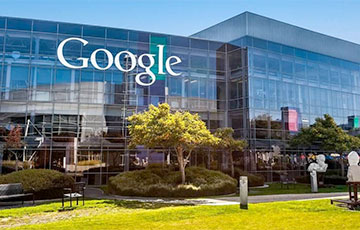
They deliver Google and YouTube content.
The US company Google has notified Russian providers of its intention to take back its Dell R720 servers that speed up content delivery for users, sources told RBC. They said the hardware in question is used as part of Google's Global Cache (GGC) system to store YouTube videos, maps, Android app and Chrome browser updates, images from Google search and more. The company stopped installing such servers in Russia after the war with Ukraine began.
The notice says the decommissioning is scheduled to begin on January 26, 2026, because the Dell R720 servers are "discontinued and have no warranty period." According to the company, they "handle minimal traffic." At the same time, the remaining Google Global Cache machines deployed in Russia "will remain in operation," the report emphasizes. One of the providers told the publication that in a clarifying letter Google asked to disconnect and remove from the rack of the specified servers, as well as to provide the address from where they can be taken. According to him, some of the Dell R720 machines "have already been removed" - this is being handled by the European company MPK Asset Solutions, which specializes in IT equipment life cycle management, including its dismantling and disposal.
Google stopped commercial activities and closed its office in Russia after the invasion of Ukraine, leaving only free services available. The company's local legal entity, Google LLC, was declared bankrupt in October 2023.
After leaving, Google did not modernize its GGC servers in Russia. This fact was later used by Roskomnadzor when it began slowing down YouTube in the summer of 2024. The regulator claimed that the slowdown in access speeds to the video hosting site was the fault of Google, which had not upgraded its servers in the country for a long time. The company itself denied this, and later former State Duma deputy Alexander Khinshtein, who headed the Information Policy Committee, admitted that YouTube's slowdown was initiated by Russian authorities.
Roskomnadzor later accused the video hosting of "numerous violations of the law" and "disrespect" for the country. In December 2025, Andrey Svintsov, deputy chairman of the State Duma's Information Policy Committee, said YouTube would be completely blocked in Russia in the next six months to a year.

Bank's name: Bank Millennium S.A.
Address: ul. Stanislawa Zaryna, 2A, 02-593, Warszawa
IBAN: PL97116022020000000216711123
SWIFT: BIGBPLPW
Name of the account holder: Fundacja “KARTA ‘97”
Purpose/title of payment: Donation for statuary aims
You can contact us by the e-mail charter97@gmail.com