

‘Lay Wait, Then Attack’: AFU Start Using New Tactics
3- 4.02.2025, 8:56
- 20,572
The enemy is hit with his own weapon.
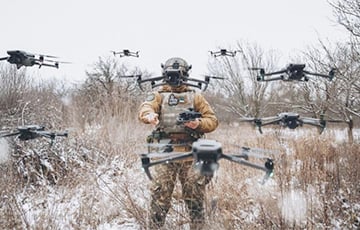
Ukrainians are using a new tactic of FPV drone attacks from ambush ‘lay wait and hit’. This technique is being used behind Russian positions to target vehicles on supply routes, which is probably being used as a way to complicate logistics and carry out targeted attacks, Forbes writes.
The tactic may have been a response to the limited flight time of FPV drones, which typically operate for no more than 20 minutes. However, it is also a step towards a new format of warfare.
Ambush & Strike Tactics
This method was described in a Russian tactics manual that appeared on Russian social media a few months ago. Now we can see its use by Ukrainian forces.
A video has appeared online showing a series of strikes targeting a small quad bike, probably one of the Chinese Desertcross 1000-3, which Russian forces are increasingly using due to the shortage of military hardware.
The FPV ambush drone is on the snow near the road, facing the direction of traffic, with its rotors off. The operator is watching a quad bike passing by, and at 0:04 the video cuts off for a few seconds, the FPV rises into the air and pursues the target. It gets ahead of the quad bike and then turns around, attacking head-on.
At 0:12, footage of the reconnaissance drone observing the strike appears. After the explosion, the quad bike continues moving, but then drives off into the forest belt.
The video switches to the footage from a second FPV approaching the already damaged quad bike. The driver is not seen. The second drone attacks.
A third FPV confirms that the quad bike is destroyed and on fire. The operator probably proceeds in search for the driver by footprints in the snow, albeit this pursuit is not shown.
This video suggests that all three FPVs were pre-positioned in the ambush, and the operators felt justified in using three drones to attack a small target with no passengers or cargo. The Desertcross costs around $23,000 in Russia, while FPVs cost around $500 per unit. However, the key factor is not the price, but the availability of ammunition.
Striking Lorries
The second video from the net shows three attacks targeting Russian lorries. In the first two cases, FPV drones wait in tall grass. When the target appears, the rotors are switched on and the screen displays ‘ARMED’ and then ‘BOMB ARMED,’ which may indicate a two-stage warhead activation process.
In the third case, the drone is positioned by the side of the road and takes off along the road, looking for a target. This may indicate coordination with a reconnaissance drone that informed the operator of the truck's movement.
In all three attacks, the FPV drones target the rear of the cab - probably to hit the driver, as the small FPV warhead is not capable of completely destroying the truck.
Targeted Strikes
The third video shows the destruction of Storm Ossetia Battalion Chief of Staff Sergei Melnikov in Zaporizhzhia region. The Ukrainian Main Intelligence Directorate had received information about Melnikov's route and schedule and prepared an ambush.
In the video, an FPV drone flies past Melnikov's car, turns around and attacks head-on, similar to the attack against the quad bike. The driver tries to drive off the road, the car flips over. The drone repeats the attack. According to the MID, Melnikov and his driver are killed.
New Level of Warfare
The ‘sit and wait’ tactic is interesting because it opens up new possibilities for FPV drone warfare.
It is not known exactly how FPV drones are positioned in ambushes. Given their limited battery life, they could arrive on their own or be delivered by specialised unmanned aerial vehicles. Ukrainian Wild Hornets and other systems are already being used to transport FPV drones and increase their range.
Ukrainian forces are actively using drones to plant anti-tank mines behind the front line. However, such mines are easy to defuse, whereas FPV drones can remain stealthy and attack anyone trying to defuse them.
The idea involves the development of the HellHive concept pioneered by the US VRR company: pre-positioned boxes of FPV drones that are activated when needed. Such drones can be almost autonomous - they only need a reconnaissance drone operator to identify targets.
In the future, ambush drones may be able to operate at much longer ranges. Ukraine's Lyutyi have a range of more than 1,600 kilometres and can scatter FPV drones near airbases instead of explosives, creating obstacles for the enemy.
As the videos show, FPV drones are already being used for ambushes. The main question is what new capabilities they will open up in the future.

Bank's name: Bank Millennium S.A.
Address: ul. Stanislawa Zaryna, 2A, 02-593, Warszawa
IBAN: PL97116022020000000216711123
SWIFT: BIGBPLPW
Name of the account holder: Fundacja “KARTA ‘97”
Purpose/title of payment: Donation for statuary aims
You can contact us by the e-mail charter97@gmail.com