

Lukashenko's Idea With BelNPP Failed
20- 2.07.2025, 13:23
- 10,490
No one needs electricity from it.
Next year Belarus will celebrate a sad anniversary: in April it will be the 40th anniversary of the Chernobyl NPP disaster, which affected our country more than any other.
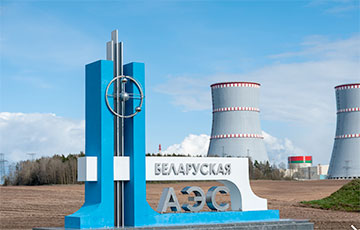
At the end of the last century there were many reminders of the tragedy, and it seemed that Belarusians would be extremely wary of the development of nuclear power. However, not much time passed - and the country's leadership accepted and realized the idea of building the BelNPP. Now it intends to continue actively developing the nuclear power industry: recently, statements about the construction of a second nuclear power plant have been constantly made, this time close to the Ukrainian border. It is also expected that in the near future sites for radioactive waste burial will be chosen on the territory of our country.
In this regard, the thinktanks decided to analyze the economic results of the commissioning of the first NPP and the feasibility of the new energy source, taking into account the risks of a peaceful atom.
BelNPP as an exporter of electricity: expectations and realization
One of the main arguments in favor of the construction of the first NPP in Belarus was the reduction of energy dependence on Russia. However, despite the availability of other proposals, a Russian reactor was chosen to build BelNPP, which entailed the choice of a Russian contractor to build the plant. This led to both the choice of Russian nuclear fuel and cooperation with Russia in nuclear waste disposal. In addition, a Russian loan of about $10 billion was obtained for the construction of the plant, which, however, was not fully utilized.
A significant part of the energy produced at the Belarusian NPP was supposed to be exported, in particular, to Lithuania. However, even before the nuclear power plant was commissioned, it became clear that these plans were not going to come true. Lithuania reacted extremely negatively to the construction of the nuclear power plant: the site in Astravets is less than 50 kilometers from Vilnius, while for safety reasons the IAEA does not recommend building nuclear power plants near major cities.
When the plant was being built in 2017, all the Baltic States decided to abandon participation in the BRELL energy ring (Belarus, Russia, Estonia, Latvia, Lithuania) in order to reduce energy dependence on Russia and connect to the European energy system. This decision was finally implemented in 2025.
Ukraine could have been another destination for Belarusian electricity exports, but this opportunity was completely lost after the outbreak of hostilities. In 2022, Ukraine joined the European energy system ENTSO-E in an accelerated manner and disconnected from the energy systems of Russia and Belarus, which had been working with it since the Soviet times.
Export of electricity produced by BelNPP to Russia is also problematic, as the country does not need additional supplies. Moreover, Russian exports of electricity to the EU countries have declined since the war started: in 2022 alone, they fell by 16.4% year-on-year. This reduces Belarus's ability to supply electricity to the Russian market.
Nuclear power vs gas
Another argument in favor of building a nuclear power plant was the plans to reduce the use of Russian gas for electricity generation and to gradually replace gas with electricity. The Belarusian authorities have stopped updating detailed information on energy consumption after 2020, but it is still possible to find information in open sources that allows analyzing the dynamics of Belarus' gas and electricity consumption.
Compared to 2020, total gas consumption in 2023 decreased by 2 bcm or 12.6%. However, when analyzing the total figures, one should take into account the fact that Belarus' GDP will decrease in 2022. Therefore, despite the lack of relevant official data, we can assume that the decrease in gas consumption by companies is due to both a certain substitution by electricity and the consequences of the crisis in 2022. At the same time, already in 2024, gas consumption in Belarus has grown to 17 billion cubic meters, which is almost the same as in 2020.
The official statistics on energy and fuel consumption by the population can be analyzed in more detail. In general, it is growing, while the volume of gas consumption has remained at approximately the same level in recent years. In January-March 2025, compared to Q1 2019, the volume of electricity consumption by the population increased by 33.5%, while gas consumption increased by +0.9%. Thus, it is not yet possible to talk about a decrease in gas consumption by the population.
Electricity is not getting cheaper. On the contrary
The construction of nuclear power plants also raised hopes for cheaper electricity. However, official statistics show that these expectations have not come true. In 6 years, the cost of 100 kWh for the population increased by 65%. And inflation for this period amounted to 55.5%, that is, the price of electricity has increased in real terms. And there is nothing surprising here, because the construction of nuclear power plants is very expensive. The Belarusian authorities have borrowed $10 billion for it. The Belarusian authorities borrowed $10 billion for it, which must be paid back with interest. The instability of the NPP's operation in the first years of its launch should be added, which caused constant downtime, which also did not contribute to the price reduction.
Therefore, it can be noted that the launch of the NPP did not result in a significant decrease in gas consumption by Belarusians, while the growth of electricity consumption by the population was significant, despite the gradual increase in its cost. The hopes for growth in electricity exports also failed to materialize.

Bank's name: Bank Millennium S.A.
Address: ul. Stanislawa Zaryna, 2A, 02-593, Warszawa
IBAN: PL97116022020000000216711123
SWIFT: BIGBPLPW
Name of the account holder: Fundacja “KARTA ‘97”
Purpose/title of payment: Donation for statuary aims
You can contact us by the e-mail charter97@gmail.com