Experts Told About The Danger Of The Belarusian NPP In Astravets
6- 23.07.2025, 14:56
- 6,454
The unplanned shutdown is a concern.
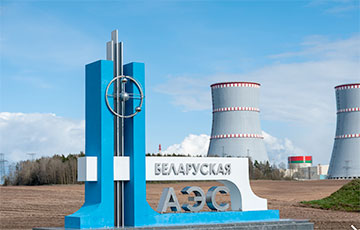
The recent shutdown of the second power unit of the Belarusian NPP in Astravets has once again drawn attention to nuclear power safety issues. According to official information from the Belarusian Ministry of Energy and the Lithuanian State Nuclear Power Inspectorate, the cause was a malfunction of the cooling system in the generator section. Nuclear physicist Andrei Ozharovsky says in an interview with LRT that although the incident was unplanned, it poses no threat to Lithuanian residents, while nuclear facilities expert at the Lithuanian Energy Institute Algirdas Kaliatka says radiation never left the Belarusian power plant in principle.
The unplanned shutdown is a cause for concern
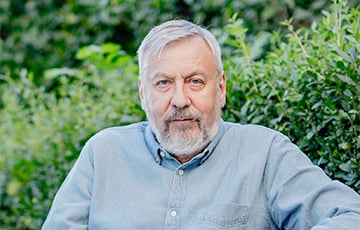
Russian expert Andrei Ozharovsky is a nuclear physicist, environmentalist, radioactive waste expert, and representative of the international environmental rights organization Bellona. He says that the main thing to understand is that the incident at the plant forced an unintended shutdown of the reactor unit. In such cases, backup power sources are always connected, but this is expensive and shows the unreliability of the nuclear unit itself.
"The power unit is not operational and does not produce electricity. According to official information, the accident happened not in the reactor part, but in the generator. This is one of 3 conditional parts of the plant, where there is also a reactor and a turbine. A breakdown at any of them means that the plant stops producing electricity.
The most important thing is that this is not a planned shutdown. Backup power, including gas-fired power plants, had to be turned on immediately to avoid a blackout. This dramatically increases the price of nuclear energy, as the reserve must be kept ready all the time," explains Andrei Ozharovsky.
Nuclear power is unstable by definition
The expert emphasizes that such incidents with nuclear power plants are not rare. According to him, the instability of nuclear power has long been known, despite the claims of the technology's supporters about its reliability.
"Nuclear workers like to criticize supporters of renewable energy for the fact that the sun sometimes sets or the wind doesn't blow. But that's predictable. But when 1,200 megawatts suddenly drops out of the power system, as in the case of a power unit outage, it is unpredictable and dangerous," he says.
Although the current incident occurred under a "soft scenario" - that is, the faults were noticed in advance and the loss of generation was compensated for by backups - the plant's generator still requires serious repairs and analysis of the causes. And, as A. Ozharovsky emphasizes, the Russian company-developer Rosatom gave only 2 years of warranty period, after which the Belarusian side can bear all the costs of troubleshooting.
Also, according to the physicist, the problems may lie not only in personnel errors, but also in hidden defects in the equipment - as it has already happened with similar power units in Russia.
"Perhaps something was violated by the generator operator, chief engineer, maybe there are some defects in the design. At Novovoronezh NPP, the world's first unit of this type, VVER-1200, shut down after several weeks of operation because of a huge defect in the generator part. The generator there burned out and there was a powerful short circuit. This is comparable to a lightning strike - the entire copper winding failed," the expert says.
And moreover, according to A. Ozharovsky, even when there is no accident, the reactor shutdown itself can create risks - for example, due to the sharp cooling of metal structures. The interlocutor notes that reactors work best either at 100 percent load or in a shutdown state. At the same time, transient modes are the most dangerous.
"When the reactor is shut down, de-cooling begins: the reactor vessel must be cooled from 300 degrees to ambient temperature. This is a heavy load for a thick-walled metal structure. Therefore, it is during the transient modes, when the unit is switched on or off, that the risk of something going wrong increases," the nuclear physicist explains.
People living near the border should be wary
Although the current incident, according to the expert, does not pose a threat to health, radioactive emissions occur near the nuclear plant even in normal operation, especially during fuel replacement, and it is during such periods that radiation levels can rise. This is considered a serious and unrecoverable disadvantage of nuclear power plants.
"If the Ministry of Energy of Belarus is telling the truth, then the incident is not a threat. But even in normal mode, especially during fuel reloading, there are serious emissions and depressurization of the plant circuit. The nuclear workers themselves have said: after the launch of the first unit in the villages of Chech, Varnyany, Goza the level of radiation exposure increased.
The radiation did not reach the border with Lithuania, but it is worrisome that the exposure of nearby Belarusian villages occurs not during the accident, but in the normal operating mode," says Andrei Ozharovsky.
The expert says that one can work on reducing the danger of nuclear power plants, but it's impossible to make them completely safe, so, according to him, one should be prepared for various accidents.
In such situations, many residents rely on auxiliary means - iodine-containing tablets or other means of protection from certain types of radiation. However, the expert cautions against excessive optimism, because in the event of an incident, radiation may become too serious a threat.
"When radioactive substances are released, not only radioactive iodine, but also cesium and strontium come out, and one pill will not provide complete protection. Unfortunately, this is not a video game where there are magic suits and pills that neutralize ionizing radiation. In real life, radiation is extremely dangerous," he says and adds that he supports the Lithuanian government's initiatives to distribute medication against various radioactive elements.
Standard shutdown not related to radiation
Algirdas Kaliatka, an expert on nuclear installations, academician and senior researcher at the Lithuanian Energy Institute, says the incident is a typical situation, but notes that without a full investigation into the causes, the plant cannot be started up.
"Unfortunately, we cannot say exactly what happened. We only have official information, which is published on the website of the State Nuclear Power Inspectorate. However, similar information can be seen on the official website of the Ostrovets nuclear power plant," A. Kaliatka said in an interview with LRT.lt.
According to him, the documents emphasize that the accident did not affect safety-critical elements of the plant, because, as the expert believes, the automatic reactor shutdown was the result of a failure in the generator, not in the reactor part.
"There was a failure in the generator cooling circuit, which is not directly connected to the nuclear system, and as I understand it, the generator automatically shut down. This in turn caused the reactor to shut down. In general, the situation did not lead to radioactive emissions," he explains.
The key and most interesting point of the message of the Belarusian authorities, A. Kaliatka considers that the reactor will not be turned on until the investigation of the causes and elimination of the malfunction are completed.
"I especially liked the last line in the message: the nuclear plant is investigating this event. The station is being tested to explain the cause, to investigate what happened. And only when the fault has been identified and corrected can the reactor be restarted. It is unknown how long this process will take," A. Kalyatka said, emphasizing that it is inadmissible to start the power unit without eliminating the source of the problem and finding out all the root causes of the events.

Bank's name: Bank Millennium S.A.
Address: ul. Stanislawa Zaryna, 2A, 02-593, Warszawa
IBAN: PL97116022020000000216711123
SWIFT: BIGBPLPW
Name of the account holder: Fundacja “KARTA ‘97”
Purpose/title of payment: Donation for statuary aims
You can contact us by the e-mail charter97@gmail.com