
"Lukashenko Factor" Undercuts Foreign Trade
1- 14.08.2025, 11:06
- 5,148
It's not just about sanctions.
After 2020, the Belarusian economy is going through a protracted period of structural problems. Traditionally, any growth has been fueled by exports of goods and services. But today the export machine is stalling. Sanctions, narrow range of available markets, falling quality of products and poor political image of the state form a situation when traditional partners are more and more rarely favored, while new ones surprise more and more.
Cracks in the "economic miracle"
The Belarusian "economic miracle" of the last five years today looks more and more like a three-shkin kaftan - to fix a hole in one place, one has to cut a flap in another.
Problems are accumulating, the old ones are not disappearing, but only becoming more acute. There is a chronic shortage of personnel on the labor market, the industry is suffering from equipment wear and tear, and interest in Belarusian products on foreign markets is declining.
Exports, in fact, could not be otherwise. After 2020, the tightening of sanctions severely limited supplies to Western markets. Belarus lost not only key buyers in the EU, but also access to Western technologies, modern equipment and credit resources, which used to allow it to improve the quality of products and keep them competitive.
As a result, Belarusian foreign trade statistics are full of contradictions. The growth of volume indicators hides deep structural problems.
According to the National Statistics Committee, exports of goods amounted to $19.01 billion in the first half of the year - not a small amount, but still 3.7% less than a year earlier. Imports, on the contrary, grew by 3.3%, reaching $22.19 billion.
As a result, the deficit of foreign trade in goods almost doubled: from $1.74 billion in 2024 to $3.18 billion in 2025.
The picture by destination is even more eloquent:
Exports to CIS countries remained virtually unchanged (+0.46%) and amounted to $13.93 billion.
Exports outside the CIS fell by 13.5% - from $5.87 billion to $5.08 billion.
In other words, Belarus is increasingly stuck in a narrow circle of close embrace of "friendly countries", primarily Russia, and is losing its positions in other broad markets.
At the same time, entering new markets outside the West turned out to be not a breakthrough, but, in fact, a step aside. Products for export remain the same, and sometimes worse in quality, than before. It's just that now they are sold in markets with less solvency - or with tough competition from other suppliers.
Even in Russia, which accounts for the lion's share of Belarusian exports, competition is intensifying. Here they have to fight for a place with products from China and Turkey, without an advantage in price or quality.
As a result, Belarusian exports have found themselves in two serious traps.
The first one is qualitative. Exported Belarusian products were initially oriented at the markets of the middle price segment. In the premium markets it is almost not represented, while in the mass markets it faces competitors who produce cheaper and better quality products and have no problems with equipment upgrading.
The second trap is price. Belarus competes in niches where buyers are very sensitive to price. And it is becoming increasingly difficult to produce cheaper under the sanctions pressure and rising costs.
Eastern vector: allies or competitors?
Orientation to the East, primarily to China, Iran, the countries of the far arc and the EAEU, in theory was supposed to compensate for the losses from the withdrawal from Western markets. In practice, however, many of these countries are direct competitors of Belarus.
China and other "friendly countries" produce similar goods - from machinery to textiles - and, importantly, without sanctions restrictions, but with access to modern technologies and financing.
In Africa, Latin America and part of Asia, Belarusian products are ready to buy... but there is no money.
This is where the paradox appears: Belarus can demonstrate equipment and get approving nods, but the deals fall through because the buyers have empty pockets. Or, even worse in the long run, the contracts are concluded at the expense of credit resources of the Belarusian side.
In such a case, Minsk risks losing not only the exported equipment, but also the invested funds.
Political marker as a barrier
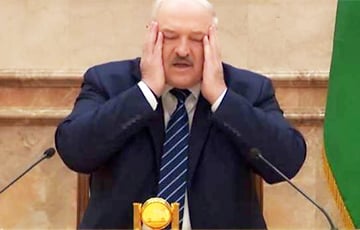
After 2020, Belarusian exports are increasingly affected by a political "marker". In recent years, goods with the label "Made in Belarus" have been accompanied by another "brand" - the image of Alexander Lukashenko.
Although Belarusian dairy products or tractors can still rely on a reputation for quality, the political background often overrides these advantages, especially in markets where reputation and sanctions risk become key factors in choosing a supplier.
As a result, such a political marker turns into a kind of correction factor to the price of goods and services exported by Belarus, making them less competitive or not passable for many markets at all.
So, Belarus' foreign trade today suffers not only from sanctions, but also from the need to pay a "risk premium" - a political one.
This makes transactions more expensive, reduces their profitability and, in the long run, deprives the country of the opportunity to modernize equipment and technologies in time. Without access to modern technologies, Belarus is already producing yesterday's equipment, which will not be bought tomorrow.
The way this kind of political risk premium works is well illustrated by the example of export of services. In the past years, it was the export of services - transportation, IT, engineering - that partially compensated for the weakness of commodity exports.
Today, these areas are under pressure. Sanctions and discord with Western partners have reduced the geography of transportation, and the IT sector, having lost access to Western customers, has reoriented to the domestic market and neighboring Russia, where solvency is lower and competition is higher.
At the same time, even business groups close to the authorities understand the problem perfectly well. But unlike private businesses, they cannot talk about it openly, let alone conduct brand cleaning campaigns. They have to work with the negative connotation, which is formed by the political regime, and accumulate irritation, having no opportunity to influence the situation.
Tell me who your friend is...
In contrast to Russia, where even business close to the authorities has more autonomy and better adapts to sanctions, Belarus remains in a double dependence: on its own restrictions and on sanctions against allies.
Cooperation with Venezuela, Cuba or Iran is of little use, as these countries are isolated and cannot offer large markets or technologies.
The list of key foreign economic partners of Belarus today largely reflects the degree of its international isolation. Economic ties with closed, insolvent or competing countries cannot compensate for the loss of access to the world's largest markets.
The main reason is silent
Paradoxically, Belarus has the potential to restore exports. Even if we simply take the "Lukashenko coefficient" out of the equation, there will be a tangible positive effect - regardless of who comes to power.
Any successor, even without a radical turnaround in foreign policy, will be able to remove some of the reputational and sanctions restrictions. And will definitely take advantage of this. This will automatically expand sales markets and give an opportunity to update technologies.
But until this happens, Belarusian exports remain in a narrow corridor, where new markets are either inaccessible, insolvent or overly competitive, while the old ones are closed or have already been lost.
And the endless meetings of officials on the topic of export activation, in fact, are reduced to the statement of the consequences with complete silence of the reasons. Or rather, the main reason.
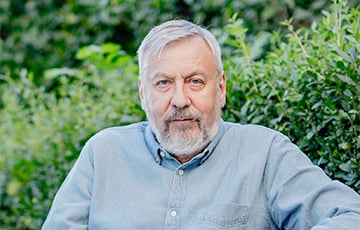
Ales Gudiya, "Pozirk".

Bank's name: Bank Millennium S.A.
Address: ul. Stanislawa Zaryna, 2A, 02-593, Warszawa
IBAN: PL97116022020000000216711123
SWIFT: BIGBPLPW
Name of the account holder: Fundacja “KARTA ‘97”
Purpose/title of payment: Donation for statuary aims
You can contact us by the e-mail charter97@gmail.com