

Hungary Left Without Russian Oil Due To Strikes On The Druzhba Pipeline
4- 15.08.2025, 12:38
- 9,632
The WSU has imposed its own "sanctions."
Hungary stopped receiving Russian oil due to a strike by the Armed Forces of Ukraine (AFU) on a key distribution station of the Druzhba pipeline in the Bryansk region on August 12-13, foreign affairs and foreign economic relations minister Peter Szijjártó reported. He said that Russian Deputy Energy Minister Pavel Sorokin informed him about the repair work at the site. Given that they are "being carried out continuously, there is a high probability" that oil supplies will resume on Friday, Siyjarto added.
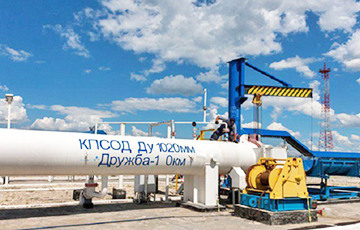
VSU began hitting the Unecha linear production and dispatch station (LPDS) in the village of Vysokoye in the Bryansk region from the evening of August 12. Governor Alexander Bogomaz reported that rockets and drones were used for the attack. Satellite images recorded a significant fire. The Unecha station is the largest node of the Druzhba trunk oil pipeline network with a total length of 8,900 kilometers. The main specialization of the LPDS is oil transportation via pipelines. The facility belongs to the Transnefteproduct holding company. Before that, drones attacked the station on August 6, after which there was also a fire.
Hungary remains one of the two EU countries that continue to buy Russian oil. In July, it imported €200 million worth of "black gold" from Russia, CREA analysts estimate. Hungary also buys Gazprom gas (for 285 million euros in July), which makes it the largest importer of Russian hydrocarbons in Europe. Slovakia also buys oil under the "Druzhba" program in the European Union (for 169 million euros in July). In addition, Belgium, France and Spain import Russian LNG, according to CREA data.
The Druzhba pipeline was built in the 1960s. It originates in Almetyevsk, Russia, and runs through Mozyr, Belarus, where it splits into two branches. The southern branch goes through Ukraine to the Czech Republic, Slovakia, Hungary and Croatia. The northern branch goes to Poland and Germany. Russian oil supplies through the northern branch were stopped due to sanctions, but oil from Kazakhstan continues to be transported through this route. Before the war in Ukraine, Russia supplied the European Union with about 720,000 barrels of crude oil daily through the Druzhba pipeline.

Bank's name: Bank Millennium S.A.
Address: ul. Stanislawa Zaryna, 2A, 02-593, Warszawa
IBAN: PL97116022020000000216711123
SWIFT: BIGBPLPW
Name of the account holder: Fundacja “KARTA ‘97”
Purpose/title of payment: Donation for statuary aims
You can contact us by the e-mail charter97@gmail.com