

Attributes Instead Of Meanings
14- 16.08.2025, 9:40
- 13,292
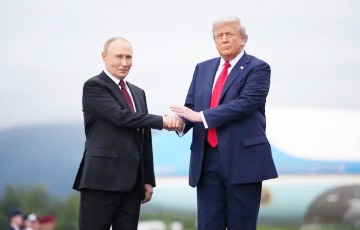
The outcome of Trump and Putin's meeting in Alaska.
Donald Trump met with Vladimir Putin for the first time in years - at the US military base in Anchorage, the Russian president was welcomed with a red carpet, an honorary escort and applause from the White House host. The talks, which lasted three hours, failed to produce any promises of a cease-fire in Ukraine, but allowed Putin to return to the world stage.
Trump said afterward that he had discussed Ukraine's security guarantees with Putin and advised Vladimir Zelensky to agree to the deal, the terms of which were not announced. Experts interviewed by BBC see the success of the meeting only in the fact that Trump and Putin did not announce that they had decided Ukraine's fate themselves.
Red Carpet and Applause
Vladimir Putin left Anchorage in good spirits. He hadn't met with an American president since the summer of 2021, hadn't been to the United States since 2015, and for the past few years he's been unable to show up in most of the world's nations as a war crimes suspect. And then he is invited to the world stage by Donald Trump.
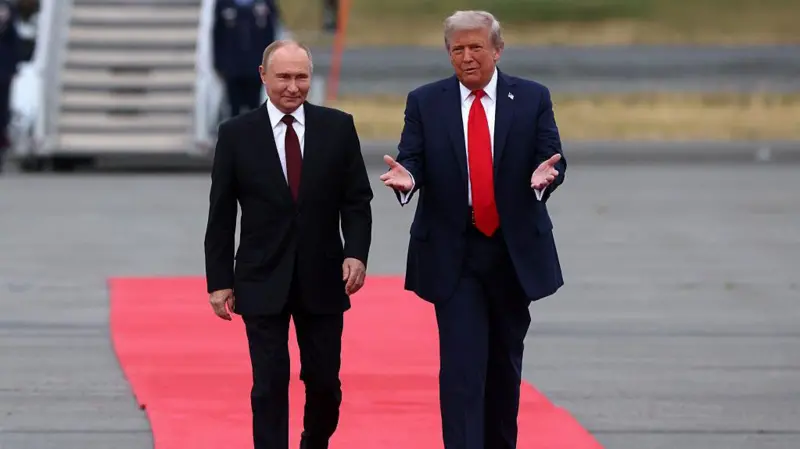
The Russian president was rolled out the red carpet, welcomed at a US military base, he was applauded several times by the US president (though the White House press office later cut this footage from its social media video), and he was allowed to open a joint speech to journalists.
It's hard to believe that just a week ago, Donald Trump was threatening Putin with new sanctions, giving ultimatums - first for 50 days, then for ten, saying that his patience had almost burst.
Factually, under Trump, the United States has not introduced a single new package of restrictions against Russia: it did not support the February G7 sanctions on the anniversary of the invasion, nor Britain's new restrictions, nor the lowering of the ceiling on Russian oil prices approved by the European Union in July.
American Democrats caustically noted that Trump "decided to respond to Russian strikes on Kiev with a post on social media." And now - also with personal applause. Following the meeting, Trump said he had no plans yet to impose new sanctions on Russia and its trading partners, although on board his plane heading to meet Putin, the US president said: if there was no ceasefire, he would not be happy.
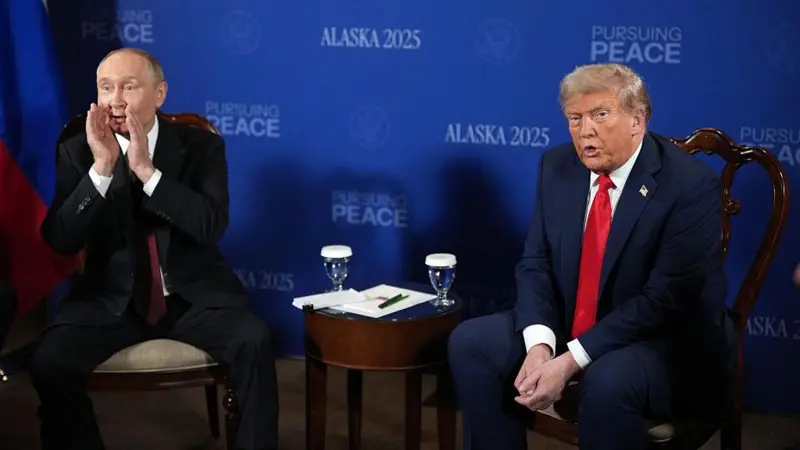
After three hours of talks, Trump returns to Washington with nothing. "An agreement only exists when it is reached," he said at the end of the talks. Which could be interpreted as an admission that he and Putin could not agree on a ceasefire in the here and now. "We haven't gotten to that yet," Donald Trump added.
After the meeting, Trump gave an interview to Fox News in which he clarified his position slightly. He announced that Putin wants to "solve the problem" and that Russia and Ukraine are close to a deal. What the parameters of this deal are, and what Putin agrees to, Trump did not say.
Nevertheless, he stated that "now it's up to President Zelensky." The American president himself is ready to arrange a meeting between Putin and Zelensky as early as next week. "Now they [Russia and Ukraine] are going to organize a meeting between President Zelensky and President Putin. And I don't think I even asked them to do that. Not that I want to be there, but I want to make sure it gets done," Trump said. It was unclear from those words whether Moscow or Kiev would still organize the meeting.
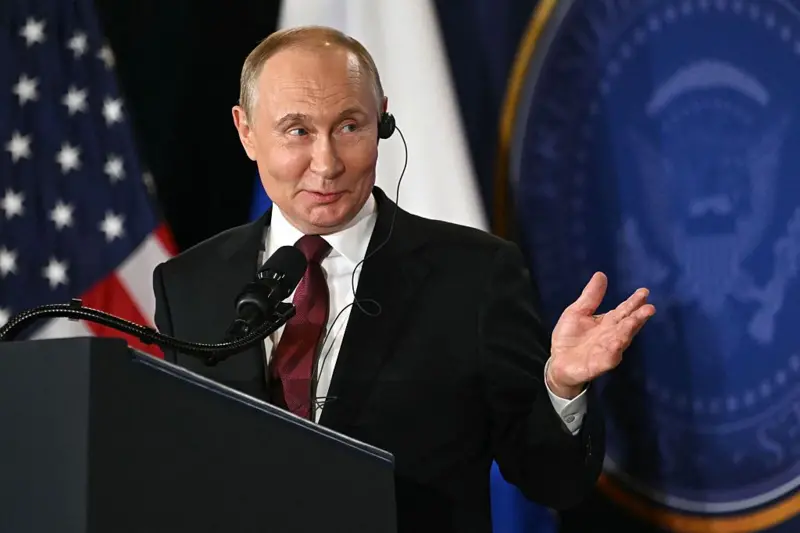
Trump also said that he and Putin had largely agreed on Ukraine's security guarantees as well. He also said he advised Zelensky to agree to a deal with Putin: "Russia is a very powerful power, and they are not."
According to Edward Rong, a former senior member of the Joint Intelligence Staff at NATO headquarters, it is significant that Trump did not agree to discuss a "Ukraine land swap" and did not allow the Russian delegation to expand the meeting's agenda.
"Russia, at least domestically, presented this meeting as a discussion of issues much broader than the war in Ukraine. It was very clear from the American side that Ukraine was the only item on the agenda," Rong told the BBC.
"The good news is that no bad deal was made for Ukraine, that's where the good news ends," veteran US diplomat Daniel Fried - who spent 40 years in the State Department, including working on US-Russian relations - told the BBC.
The problem, according to Fried, is that Putin has made no concessions whatsoever: "Trump has tried to present things in a better light, but it's not clear what he's accomplished." It is unclear why the summit was held in the first place, the retired diplomat says. "The idea came about because of [US presidential special envoy Steve] Whitkoff's erroneous report about the Kremlin's readiness for a deal. Either Putin misled everyone or Whitkoff misunderstood him, but Russia was not ready for a deal."
Promise of more meetings
The journalists who flew to Anchorage after the presidents waited for the press conference: Vladimir Putin rarely speaks to as many independent correspondents as were present in Alaska today. But the Russian president opened the conference by reading from a piece of paper and complimenting Trump.
"Today we hear President Trump saying, 'If I were president, there would be no war.' I think that's what would actually happen. I affirm that because overall, President Trump and I have developed a very good, businesslike and trusting rapport. And I have every reason to believe that moving along this path, we can reach - and the sooner the better - the end of the conflict in Ukraine," Putin said.
Trump responded by calling his colleague several times in a friendly manner - simply Vladimir.
Despite his love of public speaking and talking to the press, Trump seemed to shield Putin from having to answer questions. After finishing their speeches, both immediately departed, ignoring reporters shouting questions at their backs. Kremlin spokesman Dmitry Peskov explained the decision to abandon the press conference by saying that the leaders had made "exhaustive statements."
It is still unclear how to interpret the summit for Ukraine and Europe, political analyst Evgeny Roshchin told the BBC: on the one hand, Trump did not throw around words that would be difficult to refuse and did not decide anything for Ukraine and Europe. "But perhaps he wants to agree with them on something they won't like," the expert adds.
"Trump needed a meeting and the promise of more meetings to stay in the spotlight. That's what he achieved," James O'Brien, former US assistant secretary of state for Europe, told the BBC.
He said the opportunity for Putin to get his way has now also opened up, but it remains to be seen what Trump thinks of it and his position may be reconsidered.
Edward Rong believes Trump was not charmed by Putin at the meeting. "That was perhaps the biggest fear - that Putin could charm Trump. And Trump acts spontaneously, he can be swayed to some decision or concession," Rong said. The promise of a new meeting - and Trump talked a lot about preparing for it in an interview with Fox after his conversation with Putin - does not seem like a major achievement to the BBC's interlocutor. A meeting can be planned and agreed to, but if a specific date is not set, statements in this regard are meaningless: "Everything will remain at the level of a plan. This is something that can be negotiated indefinitely until it all falls apart," Rong said.
Without Lunch
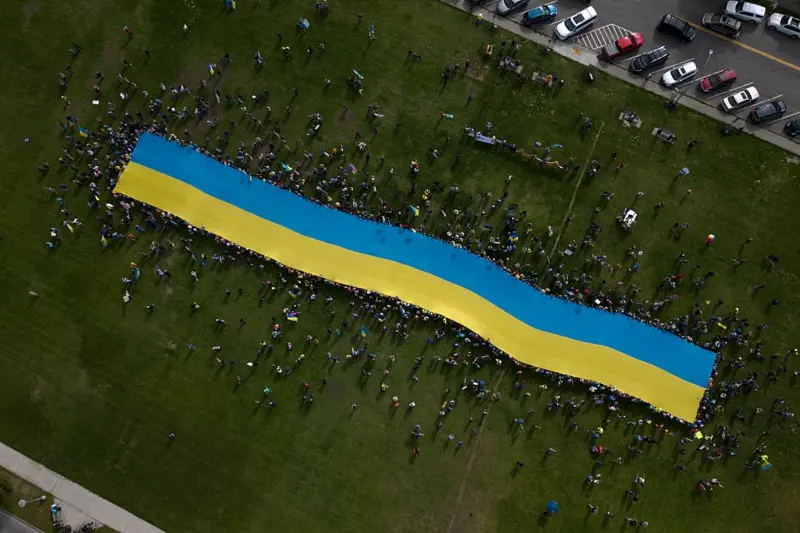
The Ukrainians watching the meeting in Anchorage fear that the red carpet, the honorary escort of fighter jets and the joint ride in the presidential limousine could mean that the White House's position on the war in Ukraine has once again swung closer to that of the Kremlin.
Valeriy Chaly, Ukraine's former ambassador to the United States, expressed his disappointment with the warm welcome Putin received in Anchorage.
"First impressions are usually accurate. The red carpet was rolled out by the military for Putin right as he approached (and slightly missed). Together they left in a car. Someone (probably a journalist) managed to ask Putin, loudly, in the presence of the US President, if he would stop killing civilians. Putin gestured that he couldn't hear. It's disgusting and sad to watch all this."
"Yes, the warm welcome, the red carpet, Putin getting into Trump's limousine - all of this, of course, elicits a negative reaction from Ukrainians. But it's actually quite typical of Trump's style - whether it's [North Korean leader] Kim Jong-un, [Saudi Crown Prince] Mohammed bin Salman or anyone else - he always behaves in a friendly, welcoming, hospitable way," Edward Rong, a former senior member of the Joint Intelligence Unit at NATO headquarters, told the BBC.
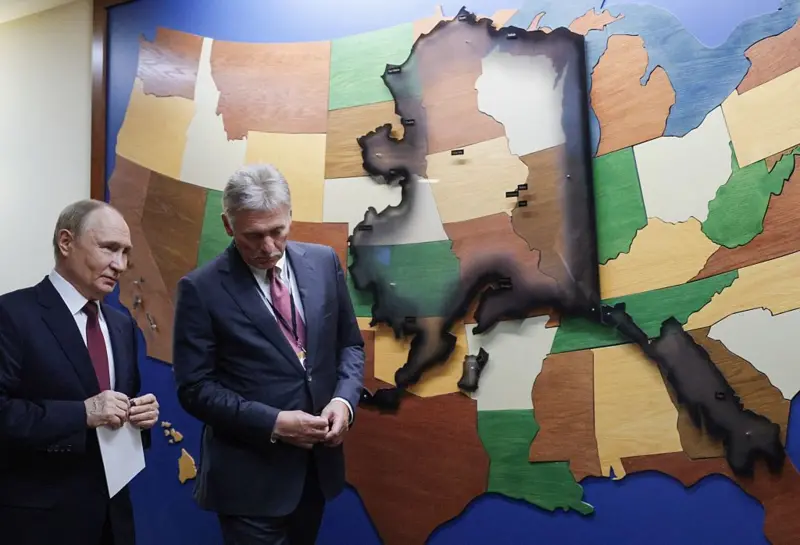
The interaction between the Russian and American delegations did not last as long as originally expected, however. Those watching the meeting were expecting both negotiations in an expanded format and a joint dinner between the presidents, but neither happened.
The last time Donald Trump canceled a joint meal with his guest after a historic altercation with Vladimir Zelensky in the Oval Office.
The events preceding the cancellation of the U.S.-Russian dinner are certainly far from the drama of those negotiations. Back then, there was shouting and accusations. Now there are compliments. But the outcome is the same - the absence of a result that could be recorded as an asset and proudly presented to the general public.
Although on the eve of the meeting, Trump said that if the talks were inconclusive, he had no plans to call Vladimir Zelensky or European leaders. As of Saturday night Kiev time, there was still no confirmation that Trump had called Zelensky. Vladimir Putin said in a lengthy speech that he hoped Kiev and European countries would not derail the "emerging progress" in the Ukrainian settlement.
"Ukraine and Europe did the right thing by conveying their positions to Trump. They should continue to push for sanctions on Russian oil and gas," said former U.S. Assistant Secretary of State James O'Brien. - Otherwise, they will just have to watch from the sidelines while Trump continues to control the agenda."
From Kiev's point of view, so far no catastrophic scenario has occurred: Donald Trump and Vladimir Putin did not unite at the "historic" meeting in a bid to end the war in Ukraine by forcing Ukraine to surrender.
Recognition is not something you can put on bread
Even before the summit began, the Russian side made it clear that they wanted to discuss more than just issues related to the war in Ukraine. And one of the most important topics for Putin is the prospect of a radical remaking of the system of international relations that has developed since the collapse of the Soviet Union.
Even in 2021, the Kremlin made its demand very clear: written guarantees that NATO would not accept into its membership countries that Moscow considers its "historical sphere of influence." The list is intentionally broad and vague, and clearly includes not only Ukraine, but all other states formed after the collapse of the Soviet Union.
Neither Putin nor Trump explicitly said whether the topic was discussed during the current talks in Alaska. However, Putin mentioned that in order to solve the Ukrainian issue, "all the root causes of the crisis must be eliminated."
Politologist Yevgeny Roshchin considers it a negative signal that Putin again talked about the "root causes" of the invasion of Ukraine: "This means that during the meeting he tried to return to this conversation again, in particular to the topic of NATO expansion: Putin obviously persists."
The US president said that among other things, one "very significant point" was discussed, without specifying which one. All this clearly indicates that Putin has not given up his desire to reshape the geopolitical map of the world.
The Russian president has long made no secret of his admiration for the Soviet Union and his desire to return to a model of international relations in which major countries divide the world into spheres of influence. Such a demand strikes at the heart of the current European security system. For NATO's Baltic and Eastern European members, accepting this principle would not just mean defeating Ukraine - it would legitimize the very idea that strong neighbors can dictate their terms and subvert the sovereignty of smaller countries.
Putin is once again trying to use the war in Ukraine not only as a territorial dispute, but also as a lever to structurally reshape world politics. He is trying to secure for Russia the right to influence the security architecture of Western countries.
Putin's speech, in which he emphasized the closeness of Russia and the United States, confirms this hypothesis: "Although we are separated by oceans, our countries are actually close neighbors. When we met, got off the airplanes, I said: "Good afternoon, dear neighbor. It is very nice to see you in good health and alive." And in a neighborly way that sounds very, in my opinion, kind. Only the Bering Strait separates us."
"But Trump has promised Putin nothing in terms of normalizing relations - yes, he was received in the United States at the highest level, recognition to Putin is important, but you can't put recognition on bread, you can't convert it into hard currency," political analyst Roshchin said. "Trump needs to stop pretending that he has made progress when there really is no progress," Daniel Fried added.

Bank's name: Bank Millennium S.A.
Address: ul. Stanislawa Zaryna, 2A, 02-593, Warszawa
IBAN: PL97116022020000000216711123
SWIFT: BIGBPLPW
Name of the account holder: Fundacja “KARTA ‘97”
Purpose/title of payment: Donation for statuary aims
You can contact us by the e-mail charter97@gmail.com