
Russian Stocks Plummet After Putin Refuses To Call A Ceasefire In Ukraine
7- 16.08.2025, 18:48
- 20,864
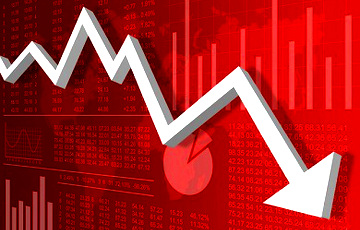
The ruble is also falling.
The Russian stock market reacted with a decline to the outcome of the talks between Vladimir Putin and Donald Trump, which lasted half as long as planned and, according to Trump, did not lead to an agreement on Ukraine, writes The Moscow Times.
Although Trump said he had decided to postpone "for two or three weeks" the imposition of tough sanctions against Russia, which he had threatened if the talks failed, the Moscow Exchange index fell 2 percent in Saturday trading and lost 130 billion rubles of capitalization.
As of 11.07 Moscow time, Gazprom shares were down 2.9%, Rosneft - 2.6%, Gazprom Neft - 2.2%, and Sovcomflot - almost 3%.
Slightly less, by 1.5%, the securities of state-owned banks - Sber and VTB - sagged. Shares of metallurgical companies lost more than 2%: Severstal fell by 2.5%, NLMK - by 3%, MMC Nornickel - by 2.6%. Aeroflot spiked by 2.9%.
The ruble is falling on the forex: the dollar is up 0.5% to 80.15 rubles, and the euro is up 0.9% to 93.76 rubles.
"The market expected more," states investment banker Evgeny Kogan: a halt in hostilities, the conclusion of some agreements, the signing of some protocols of intent, talk of lifting sanctions. But none of that has happened. According to Axios, Putin has rejected a temporary ceasefire and prefers a comprehensive peace agreement that would take into account all his claims.
"To make the market feel good, you need an obvious diplomatic success, the other options will make the market feel bad," agrees Andrey Khokhrin, CEO of Ivolga Capital. So far, however, no success is in sight. "The Russian side said that the negotiations could take 6-7 hours. They took the finance minister with them. They planned to discuss economic issues. But it did not come to that. It's not a good sign," Kogan notes.
In the near future, the Russian market risks to sag "by a couple of percent" and the dollar to rise in price - up to 81-82 rubles, he predicts.
For the Russian economy, the outcome of the meeting means the preservation of the Western sanctions architecture and the need to continue the course with a focus on domestic resources, government orders and trade with "friendly" countries, states the strategy director of Finam Yaroslav Kabakov.
"The lack of agreements on key issues fixes the status quo: the West maintains the sanctions architecture, while Russia continues to adapt through trade reorientation, development of parallel imports, strengthening domestic production and budgetary support for priority industries. Economic growth is largely driven by government spending and investment in the defense industry, infrastructure, construction and basic industries. At the same time, risks associated with the oil and gas price environment, logistics and high borrowing costs remain, which makes it necessary to tightly control the budget balance and monetary policy," Kabakov says.

Bank's name: Bank Millennium S.A.
Address: ul. Stanislawa Zaryna, 2A, 02-593, Warszawa
IBAN: PL97116022020000000216711123
SWIFT: BIGBPLPW
Name of the account holder: Fundacja “KARTA ‘97”
Purpose/title of payment: Donation for statuary aims
You can contact us by the e-mail charter97@gmail.com