

Why Did The Negotiations End So Abruptly
15- 16.08.2025, 17:51
- 47,874
Three versions.
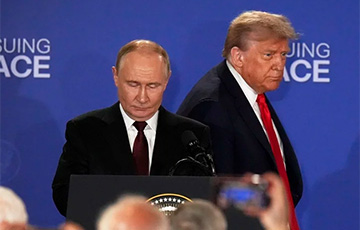
First things first. The first thing to note is the early conclusion of Donald Trump's meeting with Vladimir Putin; the cancellation of the part of the talks that was supposed to be an extended meeting and for which Putin dragged along two delegates with economic competencies - RDIF director Kirill Dmitriev and Finance Minister Anton Siluanov; the dinner cancellation; and - last but not least - the fact that the White House was the primary source of information about the cancellation.
Moscow was sending signals through all channels about a broader context and reset, up to and including a return to strategic arms limitation talks - it expires on February 4, 2026.
Washington was responding by signaling potential sanctions relief.
Obviously, in the first two hours of the meeting, the two sides fixed a blocker that not only outweighs all the "carrots," but also makes the mere continuation of talks and broadening of the context a sign of the blocker's potential acceptability. In other words, if continued, an unacceptable option is on the table.
I'm guessing that "option" may not only and not so much about Ukraine (there's a reason for all the incantations about "root causes"). It's as if Trump is winding down the negotiation process and taking time out "for consultations," demonstrating that a brokered, unacceptable option is not on the table after all.
Second. Moscow's strategy in dialog with Trump is obvious to a hedgehog. In negotiation theory, it is of the most primitive kind - it is called anchoring.
An example: trading in an eastern bazaar. "How much is this fridge magnet?" - "100 euros! But only for you, dear, 90 euros and only today".
The red price of a magnet is 1 euro, but in the end it is happily bought for 5. You initially make an obviously unacceptable offer, as far from your own "red lines" as possible, in order to shift the zone of possible compromise (ZOPA, Zone of Possible Agreement) towards the concessions of the other side: now every step from the unacceptable "anchor" to the "middle" is a joint effort and your compromise, presented as a victory for the other side (95% discount from 100 euros, not 400% markup).
"Investing" in the negotiation process, agreeing with third parties, etc., the other side's negotiator is already motivated for a compromise that is sort of getting closer and closer to "about to happen", albeit to his own detriment, and so is not ready to leave the table.
The blocker-type offer was most likely a "package" offer, not announced to Steve Whitkoff in advance, probably dealing with European security in general, and obviously going beyond what Trump can negotiate without consultation. It was laced with good compromises on specifics so as not to close off the possibility of next steps altogether, but, once again, was knowingly unacceptable.
Third. The time factor. Both Trump and Putin need to reach some kind of deal by mid-2026, the deadline. For Trump, earlier is more important. And not because of "medals" or the Nobel. It is important for him to focus on China in the context of a likely escalation around Taiwan - and not only.
Putin realizes that after the American elections in 2026, when the Democrats regain control of at least one house of Congress, there will be almost no chance to legislate the lifting of sanctions. Moreover, by all indicators, the highest Central Bank rate in Russia has killed the economy, and a year is the maximum that it can last in the current configuration.
Putin has only one thing left: maximum escalation now, primarily military, of course, "we will not be behind the price," in order to sell "de-escalation" more expensive. It is pointless to wait for a stable ceasefire or freezing of the front until then.
Vadim Malkin, The Moscow Times

Bank's name: Bank Millennium S.A.
Address: ul. Stanislawa Zaryna, 2A, 02-593, Warszawa
IBAN: PL97116022020000000216711123
SWIFT: BIGBPLPW
Name of the account holder: Fundacja “KARTA ‘97”
Purpose/title of payment: Donation for statuary aims
You can contact us by the e-mail charter97@gmail.com