
The "petrochemists' Case" Started In Belarus
5- 24.08.2025, 13:09
- 4,892
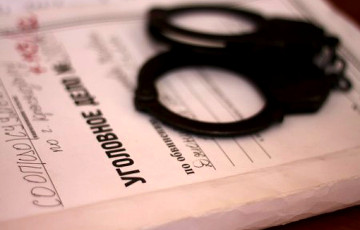
A criminal case for bribes was opened against three managers of state-owned enterprises.
Another criminal case "concerning systemic business corruption" is reported by the Interior Ministry's departmental publication "On Guard", noted "Pozirk".
It is noted that the defendants in the case are "three plant officials".
"For a bribe from the head of the company, they ensured the merchant to win in procurement, drawing up technical specifications in such a way that they corresponded in detail to the characteristics of the equipment supplied by the latter to the enterprises," the publication says.
It is not reported which enterprises they are talking about, but the material suggests that the plants represent the petrochemical industry.
"Petrochemicals is one of the most important sectors of the country's economy, including on a strategic scale. Therefore, ensuring order and legality in these processes is extremely important, especially in modern realities. The responsibility of the employees of the enterprises is enormous, given the importance of their products in the world markets," says the publication.
It is emphasized that the equipment used at such enterprises is expensive, so "the industry also attracts unscrupulous businessmen who are trying to make a profit, using in their interests, including Western sanctions - closed European markets". In this regard, "everything necessary for the effective operation of enterprises comes from other regions", "the price category in such situations is lowered, which is quite logical, but in this case it was the other way around".
Returning to the essence of the criminal case, the departmental media notes that the Ministry of Internal Affairs officers in analyzing the procurement of enterprises drew attention to "excessively inflated price indicators of supplies". "For example, equipment costing about five or six thousand dollars per unit was delivered to factories at prices starting from 15 thousand dollars, sometimes reaching 25 thousand dollars. Sometimes the markup reached 300%," the article specifies.
"Established affiliated persons participating in tenders of factories in order to distinguish by the stated characteristics of their goods to the better products offered by the main seller, who himself attracted them to participate in procurement. As a rule, two or three such organizations were involved in the tender," said Oleg Reut, senior operative commissioner for especially important cases of the Main Department for Combating Economic Crimes of the Interior Ministry's criminal police.
According to him, affiliated persons in their bids "specified in advance characteristics that did not correspond to the technical specifications of the plants, for example, specifying a function with overestimation or underestimation of capabilities, increasing the price, and so on." As a result, the winner was "exactly the firm that was originally planned". By the way, some of these fictitious participants were created directly by the defendant.
It is emphasized that the company that supplied the goods "was not a manufacturer of equipment", and therefore its representative "can be called an ordinary reseller, a middleman, selling goods several times more expensive than the adequate market price, while illegally profiting at the expense of the state".
The Ministry of Internal Affairs also revealed "a close connection between the defendants."
The meetings took place "in the offices of production workers, in the smoking rooms of enterprises, on the street."
"One of the bribes was given in the factory building, practically at the workplace of the official, and the other was given with the help of an intermediary - a relative of one of the representatives of state enterprises. Here, the defendants tried to cover their tracks - after the tender, the bribe "lay dormant" for about a month. Then the merchant handed over the money to the intermediary, who kept it for about two weeks and only then gave it to the addressees," the publication says.

Bank's name: Bank Millennium S.A.
Address: ul. Stanislawa Zaryna, 2A, 02-593, Warszawa
IBAN: PL97116022020000000216711123
SWIFT: BIGBPLPW
Name of the account holder: Fundacja “KARTA ‘97”
Purpose/title of payment: Donation for statuary aims
You can contact us by the e-mail charter97@gmail.com