


Slow-moving Khrushchevs
41- Ales Gudiya
- 27.08.2025, 17:59
- 25,146
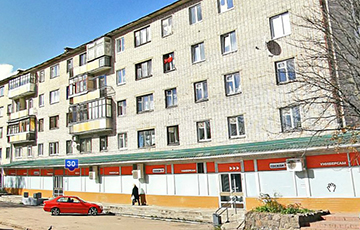
This issue will affect hundreds of thousands of Belarusians.
Authorities are again discussing the future of Khrushchevka houses - houses that were conceived as a temporary solution to the housing crisis, but have stood for more than half a century and still make up a significant part of housing in the country.
Today, officials promise major repairs instead of demolition, but the deterioration of this "remnant" of the Soviet era turns it into "slow-moving Khrushchevs" - a problem that will one day have to be solved the more radically the longer it is postponed.
Renovation
Belarusian authorities have once again raised the issue of old five-story buildings. They are discussing the inclusion of a section on housing renovation in the new Concept of State Housing Policy until 2030. And the renovation is understood as capital repairs, or resettlement of residents and demolition of outdated houses with the subsequent construction of modern housing.
At one time it seemed that Belarus plans to follow the path of Moscow and demolish such housing, as Khrushchevki is a legacy of the common Soviet past.
But at a recent press conference, Chairman of the Committee of Architecture and Urban Planning of Minsk City Executive Committee Viktor Gutko explained that there are no plans for mass demolition of Khrushchevki even in the capital. In other words, residents of the old five-storey buildings should rather wait for major repairs than for resettlement in new housing.
There is nothing more permanent than temporary ... housing
In Soviet times, Khrushchevs were conceived as a temporary solution to the housing crisis of the late 1950s. They were built quickly and cheaply, without elevators and a number of other amenities, with tiny kitchens and combined bathrooms.
The life expectancy was only 20-25 years: it was assumed that later the five-storey buildings would be replaced by modern, more comfortable houses. But life decided otherwise. These "temporary houses" have stood for more than six decades.
Why were they not demolished? The scale of construction was too large: at that time millions of families got their cherished personal apartments, and after the economy was no longer able to quickly replace all the "temporary" fund.
Of course, for people it was a huge improvement over barracks and communal houses. However, the idea of demolition after twenty years remained on paper.
In the end, such houses were firmly integrated into the image of cities. Now they have become "slow-moving Khrushchev houses": they are still standing, but the wear and tear is growing, and the longer the problem is postponed, the more expensive and painful its solution will be.
How many Khrushchev houses are there in Belarus?
According to the Institute Belzhilproekt RUE, there are about 2.5 thousand houses of the Khrushchev era in Belarus. Khrushchev-era houses (five-storey panel and brick) with a total area of about 10 million square meters.
A significant part of this heritage is concentrated in the capital: there are more than 800 such houses (about 3 million square meters). They were built mainly from 1955 to 1975, that is, many of them are already 60-70 years old.
But most of the capital's Khrushchevs have had time for major repairs and insulation, thanks to which their technical condition is assessed as generally satisfactory.
But there is also moral deterioration. The layout of khrushchevoks became outdated very quickly: adjoining rooms and tiny kitchens already in the late Soviet period no longer meet the requirements for comfort.
Infrastructure around such houses is also not designed for today - residents suffer from a lack of parking spaces. There are incomparably more cars in the yards than half a century ago.
Neighborhood experience: demolition vs modernization
Countries that inherited the mass construction of the XX century, differently solve the problem.
For example, in Moscow in 2017 launched a large-scale renovation program. It actually means the mass demolition of Khrushchev and other five-storey buildings with the resettlement of residents in new houses. The final list included more than five thousand houses, and modern high-rises are being built in place of old neighborhoods.
This approach, on the one hand, allows you to quickly renew the housing stock, but on the other hand, it causes heated debates. Critics talk about the densification of the urban environment, the growth of traffic problems and the fact that people are deprived of their usual housing, albeit with compensation.
But for developers it has become a profitable project: the golden Moscow land has become free for new construction.
The Baltic States have chosen a different path - not demolition, but deep modernization. In Estonia, for example in Tartu, a significant part of old houses were comprehensively modernized: walls were insulated, new engineering systems were installed, even solar panels. The result is almost half the energy consumption.
In Latvia and Lithuania there are state programs with EU support, which allow to renovate hundreds of houses. The point is to preserve neighborhoods, making them comfortable and energy efficient, and people do not have to change their place of residence.
In other Eastern European countries, mixed solutions are used. Most often it is insulation of facades, replacement of communications, installation of elevators and redevelopment of apartments. Sometimes, in order to finance renovation, new floors or attics are added, and the sale of these apartments covers the costs.
It is obvious that in most cases - especially in the Baltic States, Poland, East Germany and other states of the former socialist camp - the problem of the Soviet building heritage was extremely acute. It required not only considerable financial resources, but also a wide public discussion.
Where to get money?
The problem of Khrushchev buildings is extremely urgent for Belarus. However, it has technical, financial, and social and legal aspects. An effective solution will require either very large sums of money or non-standard approaches - and most likely, both.
According to experience, large-scale renovation of housing is an expensive pleasure. Experts have calculated: to demolish all the Khrushchev buildings in Belarus (the same 10 million square meters), it would require several billion dollars.
This is an unaffordable amount for the Belarusian economy. No private investor is ready to invest such money in the local real estate market, taking into account all the risks. However, the state is not able to finance such a megaproject on its own.
Not only money is lacking, but also consensus on how to solve the problem. The Russian scenario (demolition and new buildings) implies, in fact, infringement of the owners' rights - people are often relocated without their consent, and a new apartment is often given in another district.
In Moscow, the conflict was partially settled by spending on "equivalent housing", but Belarus has no resources for such generous compensation.
The European scenario (gradual modernization) requires long-term investments and available loans, while Belarus is now virtually cut off from cheap external financial resources. International organizations (EBRD, EIB, etc.) could support energy efficient renovation projects, but due to political isolation after 2020 cooperation with them is frozen.
The bosses are not accustomed to consult with society
There is also a human factor. The solution of the Khrushchevoks issue affects the interests of hundreds of thousands of Belarusian families. This requires an open dialogue between the authorities and the society, taking into account the opinion of people when rebuilding their houses and yards.
In neighboring countries, public discussions and explanatory campaigns are held before the implementation of such projects, special funds or agencies are often created, which include representatives of tenants.
In modern Belarus, such forms of dialogue are practically absent. The authorities are not used to consulting with citizens and seem to be afraid to open Pandora's box by starting a public discussion. All the more so because renovation is inevitably connected with the issues of property, compensation, and resettlement, which means that it can become a trigger of social tension. In the current political situation, no one is in a hurry to initiate such complex processes.
The problem of Khrushchev houses will probably remain unsolved in the coming years. Every year these houses will grow older, public utilities will patch up the holes with overhaul.
The lack of a systematic plan means that the issue will become very acute, perhaps in a decade or two, when structural elements of the houses start to fail en masse. Then decisions will have to be made in a firefighting order ... but already to the next generation of managers.
Ales Gudiya, "Pozirk"

Bank's name: Bank Millennium S.A.
Address: ul. Stanislawa Zaryna, 2A, 02-593, Warszawa
IBAN: PL97116022020000000216711123
SWIFT: BIGBPLPW
Name of the account holder: Fundacja “KARTA ‘97”
Purpose/title of payment: Donation for statuary aims
You can contact us by the e-mail charter97@gmail.com