


The Russian Economy Is Running On Flat Tires
1- 3.08.2025, 10:59
- 4,506
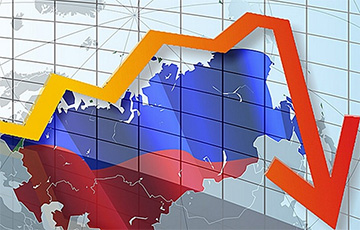
Freight shipments collapsed to record levels due to sanctions.
Freight transportation in Russia is down 7.3% since the start of 2025, minus 5.4% in July alone, because transportation of grain (-35.6%), scrap metal (-34.6%), building materials (-17%) and oil (-4.7%) has fallen sharply. The railroad, which serves industry, is now sagging because the economy is failing to cope with sanctions, falling production and lower domestic demand.
This is written by Andriy Yermak, head of the Ukrainian Presidential Office, citing official data from Russian Railways. In July 2025, freight transportation volumes fell by 5.4% year-on-year.
And since the beginning of the year, the figure has already fallen by 7.3%. According to Yermak, this is not just statistics - it is a symptom of deeper structural problems in the Russian economy, which has lost its stability under the pressure of international sanctions and war. Especially critical is the situation with the key areas of freight transportation, which traditionally formed the basis of industrial and export capacity of the Russian Federation:
grain: minus 35.6%;
black scrap metal: minus 34.6%;
construction materials: minus 17%;
black metals, cement, coke: minus 14-17%;
raw materials for industry: minus 19.4%;
oil and oil products: minus 4.7%.
Only two sectors - fertilizers and non-ferrous ore - are showing at least some growth. But this is not enough to keep the large-scale and logistics-dependent economic system, which is the Russian Federation. In other words, the locomotive is stalling, and stalling on flat tires.
The reason for such losses is a complex of factors. Firstly, the sanctions pressure is not weakening, and sometimes even intensifying. Export restrictions, refusal to cooperate with Russian producers, technological isolation - all this cuts off the oxygen not only for foreign trade, but also for domestic production. Secondly, the Russian economy is sinking deeper and deeper into the military model, where preference is given to the defense complex rather than to the development of civilian industries.
With this background, Russia is gradually losing even those positions that it used to consider its strategic asset - in particular, logistics, metallurgy, and agricultural exports. The collapse of grain transportation by a third is not just a domestic problem, but a blow to its geopolitical influence, which the Kremlin has been building, among other things, through food shipments to Africa and Asia.
According to Yermak, the current state of Russia's railroads is a direct reflection of the state of its economy. "The railroad is an artery of the economy. In the Russian Federation, it demonstrates its condition," he notes.
The US, meanwhile, is considering the implementation of secondary duties that would further cut the Russian economy off from global flows. And while RF is still being held together by energy sales, this single pillar is looking increasingly unreliable.

Bank's name: Bank Millennium S.A.
Address: ul. Stanislawa Zaryna, 2A, 02-593, Warszawa
IBAN: PL97116022020000000216711123
SWIFT: BIGBPLPW
Name of the account holder: Fundacja “KARTA ‘97”
Purpose/title of payment: Donation for statuary aims
You can contact us by the e-mail charter97@gmail.com