

Gray Cat Blogger: What Helped Me Survive? Faith First And Foremost
6- 13.09.2025, 12:11
- 8,776
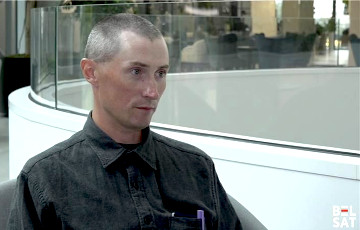
A released political prisoner told about torture in prison.
Blogger Dmitry Kozlov, also known as Gray Cat, became widely known in the spring of 2020. He hosted streamings from Orsha and also joined the coverage of actions in Minsk. On June 10, 2020, before the elections, the young man was detained along with European Belarus activists and punished with six years in prison. According to human rights activists' calculations, he was to be released on November 28, 2024. In July 2025, his YouTube channel was recognized as extremist.
In a commentary "Belsat" blogger Dmitri Kozlov shared his first impressions after his release.
- What helped me to survive? Faith in the first place, people's support and, let's say, inner conviction. That is, when you know you are right, you have a clear conscience. Well, you feel lighter. That is, some people, I've seen, who were in jail, serving time for a crime specifically, they have shorter sentences. So everything is better there, but when everything is bad inside, nothing helps.
- Remind me what you were imprisoned for. I was given twenty days for participating in the action "Stop Cockroach" on May 31, 2020 on Komarovka. After I had served almost the entire term, I was re-arrested under Article 342 for allegedly organizing the event in Hrodna, for which Tihanouski was imprisoned. That is, this provocation was obvious. I had never been to Hrodna in my life, but they said: "You don't need to. You could do it remotely and that's all.
- Tell us about the support for political prisoners behind bars, which was in the 20th and 21st years.
- Many people supported. If you take 2021, a lot of people from the will were supportive before all the screws were tightened. I didn't lack for anything. There were letters until it was all stopped. But gradually it got worse, the regime really didn't like people being supported. They wanted to create as harsh conditions as possible. Torture in the sense in which some people imply that there was a lamp pointed in the face, beaten with sticks - there is no such thing now. It's more subtle, they try to break you morally. They force you to give up your beliefs. That is, they create such conditions that you come to them and say: "I repent of everything, I admit anything, you're right, I'm guilty and it doesn't matter what and when."
- Did you receive information that political prisoners are asked to write petitions for pardon to Lukashenka?"
- I was sent once in July 2021 a paper from Yuri Voskresenski. I replied to Voskresensky, but not about a pardon. I asked: what kind of organization are you, what authority do you have? What right do you have? You write about some kind of amnesty, at the same time you offer to write a pardon - these are different laws. Just give an answer, Who are you, what do you represent? Naturally, there was no answer, and my letter went nowhere.
In 2024 I was summoned from the CCP by some people from the prosecutor's office. They asked me questions about whether I still considered myself a political prisoner, whether I had changed my views on the 2020 election, whether I had changed my beliefs. If I said I had changed my beliefs, they would most likely offer me some way to prove it, record a video interview in their favor, and write a pardon. I said no and that was it. And after that I "went to the 411".
- If there was an opportunity, would you have stayed in Belarus?
- Yes, first of all. Well, not that I would stay. I would stop by home at the very least and get my stuff. Nobody asked me anything. They put us on a bus, said they would explain everything, tell us everything, but in the end they just deported us from our own country as illegal migrants. I have my passport. I mean, I was not thrown out without a passport. But they say we can't go back. It's dangerous.
On September 11, 52 political prisoners were suddenly released in Belarus and deported to Lithuania. One of them - Nikolai Statkevich - resisted exile and remained in Belarus. The release became possible as a result of Belarusian-American negotiations.

Bank's name: Bank Millennium S.A.
Address: ul. Stanislawa Zaryna, 2A, 02-593, Warszawa
IBAN: PL97116022020000000216711123
SWIFT: BIGBPLPW
Name of the account holder: Fundacja “KARTA ‘97”
Purpose/title of payment: Donation for statuary aims
You can contact us by the e-mail charter97@gmail.com