

Belarusian Railroad Workers: Transit From China To Europe Paralyzed
34- 13.09.2025, 17:58
- 48,028
A real collapse.
Belarus and Poland occupy a strategic position within the China-Europe transport corridor. A significant part of container trains from China to Germany, the Netherlands and Belgium passes through them. Now this route is actually blocked, writes "Community of Railwaymen of Belarus" about the closure of the border of Poland with Belarus on the night of September 12.
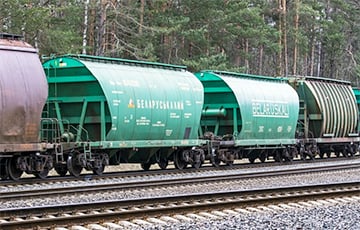
The capacity of the main corridor China - Europe through Orsha and Brest is up to 80-90 pairs of trains per day (freight and passenger). In reality, transit container trains from China occupy about 20-30 trains per day of the total volume of traffic in this direction.
Average container train has 50-57 cars, the length of which is about 700-900 meters. One train in standstill takes almost a kilometer of track. Large stations can accommodate several trains. But if the number of such trains will number dozens, it will already create a serious obstacle to the movement of local trains.
"Thus, if every day at least 15-20 trains will "bump" into the border, the so-called "abandoned trains under the code 02 *" will be accumulated during the week. With an average length of one train of about 800 meters, this will amount to about 80-110 kilometers of tracks occupied exclusively for stopping trains. Even with the most optimized distribution by stations and reserve parks, in 7-10 days there will be a shortage of free tracks on the BZhD. Stations will be blocked, and shunting work will become very difficult or impossible," experts explain.
Right: An abandoned train is a freight train that has been delayed and temporarily abandoned: as a rule, without a locomotive, placed on a side track of the station, secured with brake shoes and guarded. The reasons are technical, commercial or technological: non-acceptance by the destination/receiver station, lack of locomotive, non-acceptance by the adjacent railroad, restrictions at border crossings, etc.
Code 02 is a service classification of delays, meaning that the train is "trapped" at the border or not accepted by other infrastructure (border crossing with "third" countries/CIS or other owner's network)..

Bank's name: Bank Millennium S.A.
Address: ul. Stanislawa Zaryna, 2A, 02-593, Warszawa
IBAN: PL97116022020000000216711123
SWIFT: BIGBPLPW
Name of the account holder: Fundacja “KARTA ‘97”
Purpose/title of payment: Donation for statuary aims
You can contact us by the e-mail charter97@gmail.com