
ISW: Russian Troops Have Completely Lost Control Over Kupyansk
- 26.09.2025, 9:14
- 9,246
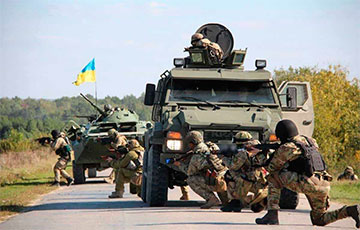
Commanders force soldiers to cross the river under threat of being shot.
The Russian army does not control any neighborhood of Kupyansk, but sabotage and reconnaissance activity in the city remains high. Russian barrier troops are forcing soldiers to cross the river under threat of being shot.
The Institute for the Study of War (ISW) reports that.
On September 24 and 25, Russian troops attacked in Sumy and Kursk regions, particularly north of the city of Sumy near Alekseevka and northeast near Yunakovka.
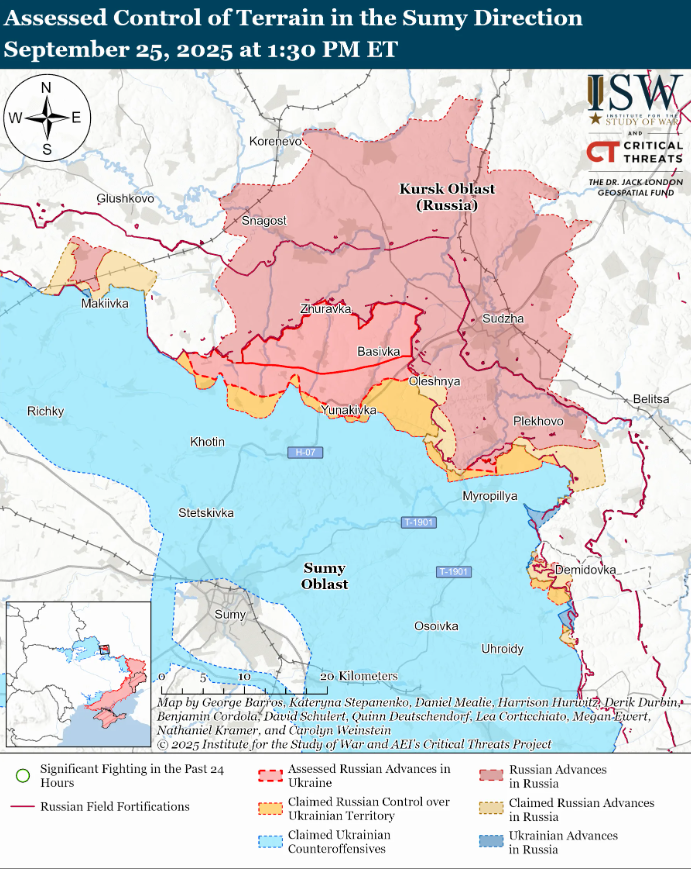
A Russian milblogger affiliated with Russia's Northern Group of Forces claimed that the command of Russia's 44th Army Corps prioritized providing material amenities, including internet, heating and others, to two forward command posts of its 30th Motorized Rifle Regiment in the forests of Sumy region. And it is doing so at the expense of Russian soldiers in other forward positions, in particular by forcing Russian soldiers to spend their low salaries on heating supplies. Milblogger also complained that the forward positions of Russian troops are not sufficiently fortified to protect them from AFU strikes.
September 25, Russian troops continued offensive operations in the north of Kharkiv region, but no confirmed progress was made.
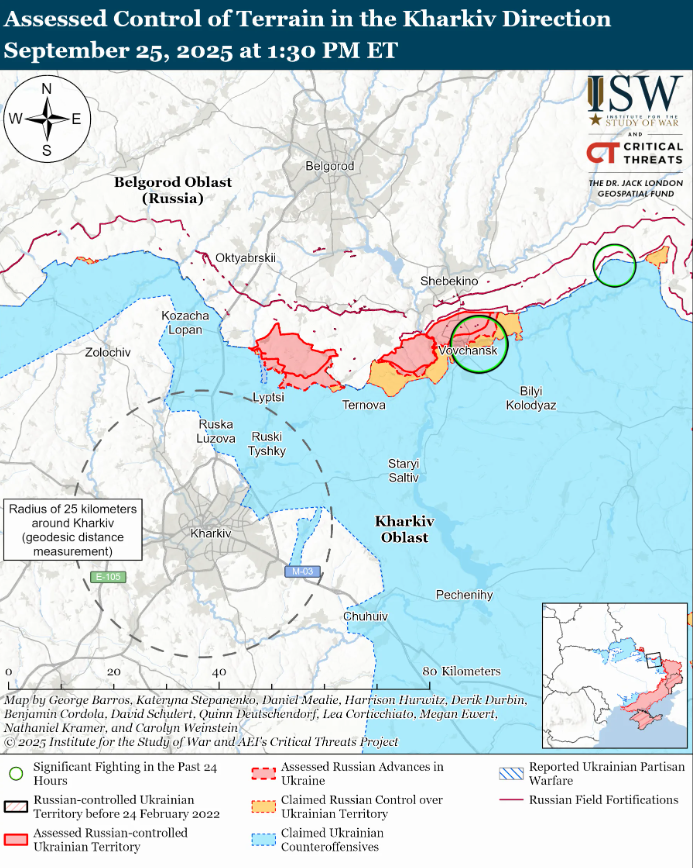
A Russian milblogger claimed that Russian troops were advancing towards Sinelnikovo to cut off Ukrainian troops in Volchansk from supply routes. Another Russian milblogger claimed that units of the Russian Air and Space Forces (VKS) had struck Ukrainian air defense systems in Liptsy and Ukrainian drone operators in Bolshiye Prokhody (north of Kharkiv) with Kh-38 air-to-ground missiles.
Russian forces continued offensive operations in the Kupyansk direction but did not advance.
The commander of a Ukrainian drone regiment operating in the Kupyansk direction said on September 25 that the AFU had stopped the advance of Russian forces in Kupyansk and prevented their advance beyond the northwestern outskirts of the city. Russian troops do not control any neighborhood of Kupyansk, but sabotage and reconnaissance activity in the city remains high.
Russian troops continue to disguise themselves as civilians or Ukrainian soldiers to secretly set up observation posts.
They have also stepped up efforts to cross the western (right) bank of the Oskol River after Ukrainian troops destroyed a pipeline that Russian troops used to amass on the northern outskirts of Kupyansk in mid-September 2025.
A commander said that Russian barrier troops force soldiers to cross the river under threat of being shot.
Russian milblogger denied reports that Russian troops had "practically captured" Kupyansk and said Russian troops were providing false reports to the Russian Defense Ministry.
Russian troops have recently advanced in the Liman direction.
Speaker of Ukraine's 3rd Army Corps Alexander Borodin said on September 25 that Russian troops are still not carrying out heavy equipment assaults in the Liman direction due to significant equipment losses, attacking mostly with small infantry groups consisting of untrained personnel who receive step-by-step orders from their commanders.
Russian troops continued offensive operations in the Seversk direction and in the Konstantinovka-Druzhkivka tactical direction, but no confirmed progress was made. As well as in the Pokrovsk direction.
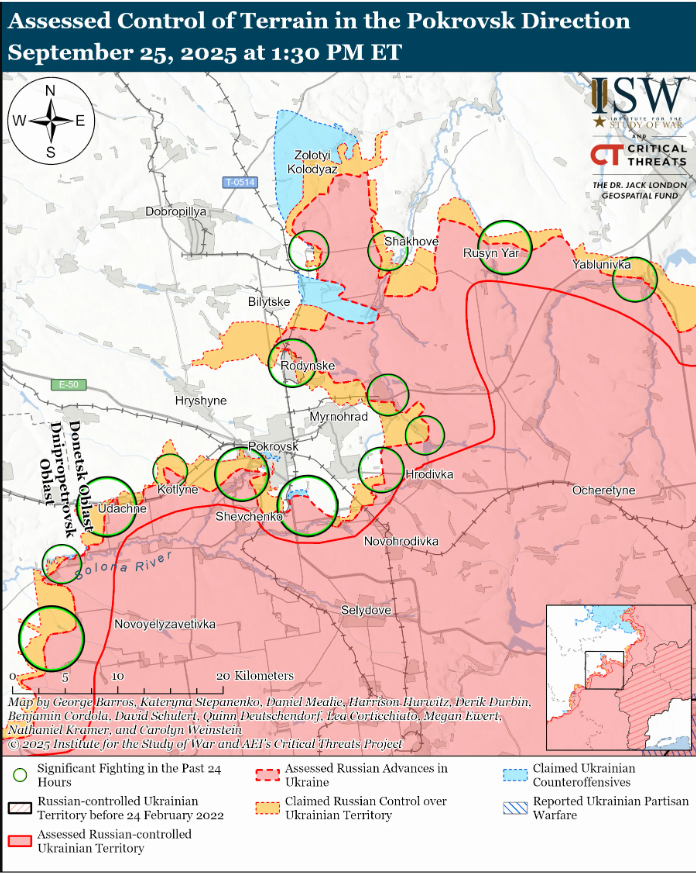
The battery commander of a Ukrainian interceptor drone reported that Russian forces continue to carry out assaults in small infantry groups to gain a foothold in the south of Pokrovsk, they have become more active in the Pokrovsk direction compared to a few weeks ago and have equipped Gerbera attack drones with cameras to make them work as a less expensive alternative to more expensive reconnaissance drones.
On Sept. 25, Russian forces continued offensive operations in the Zaporizhzhya and Kherson regions, but made no advances.
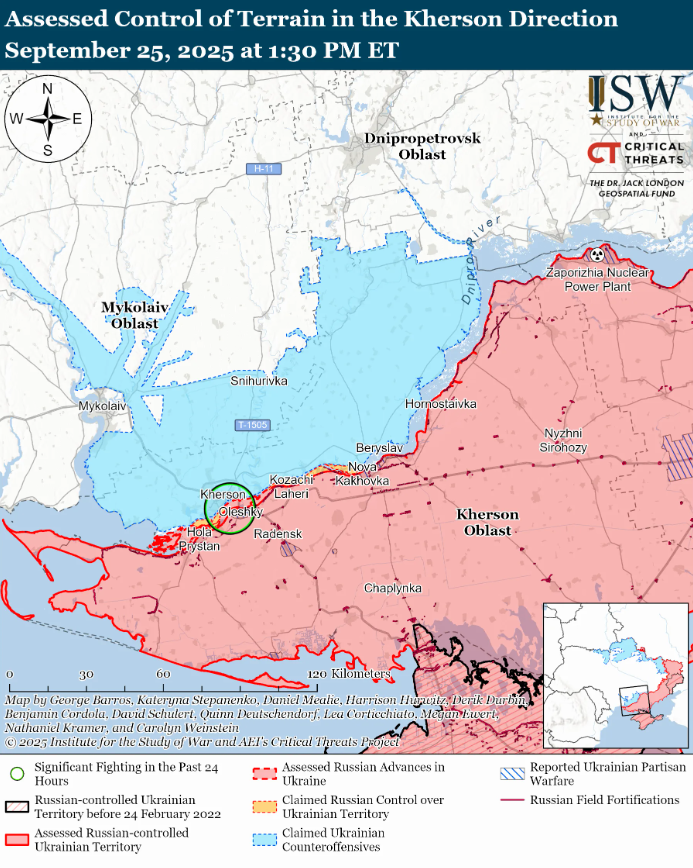
Ukrainian Navy spokesman Dmytro Pletenchuk said Russian authorities have begun using the Kerch Bridge to transport fuel to occupied Crimea because of Ukrainian strikes on railroads in occupied southern Ukraine that have halted freight traffic. Pletenchuk said that the fuel shortage was affecting both civilians in occupied Crimea and the Russian military.

Bank's name: Bank Millennium S.A.
Address: ul. Stanislawa Zaryna, 2A, 02-593, Warszawa
IBAN: PL97116022020000000216711123
SWIFT: BIGBPLPW
Name of the account holder: Fundacja “KARTA ‘97”
Purpose/title of payment: Donation for statuary aims
You can contact us by the e-mail charter97@gmail.com