
Russia Will Raise Housing And Utility Tariffs By Another 30% In Three Years
7- 30.09.2025, 12:59
- 2,092
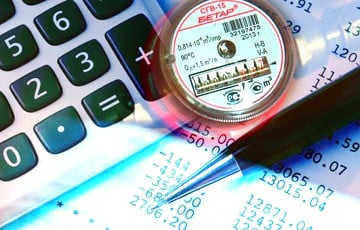
The price increases are far exceeding the original plans.
The authorities' appetite for money to charge Russians for utilities continues to grow. In the government's updated forecast, which formed the basis of the budget for the next three years, the increase in tariffs for citizens for electricity and other utilities was higher than expected after a strong revision in April, writes The Moscow Times.
The total payment for housing and utility services will increase by 9.9% next year, 8.7% in 2027 and 7.1% in 2028. Over three years, the payment will grow by 27.9%, while the inflation forecast assumes its return to the target 4% as early as next year.
The growth of tariffs significantly exceeds not only the original plans (a year ago it was assumed that in 2026 the aggregate payment will grow by 5.4% and by 4.8% in 2027), but also the April projections (9.8% in 2026, 7.9% in 2027 and 5.9% in 2028).
To ensure the reliability of gas supplies, social gasification and connection of the occupied territories to the unified gas supply system, it was decided to index wholesale gas prices for all categories of consumers in 2026-2028 by 3 percentage points (p. p.) above the inflation forecast, the Ministry of Economic Development reminds. The inflation forecast has been slightly lowered, so gas prices will rise slightly less than expected in April - by 9.6%, 9.1% and 7% in the next three years (10.6%, 9% and 7% in the previous version). The total comes to 27.9%.
Electricity, though, will rise more than expected: by 11.3%, 8.6% and 9.1% over the next three years - totaling 31.9%. In the April forecast, the increases were 9.3%, 6.9% and 4.9%, respectively. Money is needed for big investments in the energy system, the MED explains.
Heating bills will rise by 9.9%, 9.3% and 6.8% over the next three years, while water and wastewater bills will rise by 9.8% and 9.3%, 8.9% and 8.6% and 5.9% and 5.8%, respectively. Here, too, money is needed for infrastructure modernization: at the expense of tariffs for utility companies, "targeted additional revenue will be formed for the implementation of investment programs (an additional 1.5% of the revenue annually)," says the Ministry of Economic Development.
"It can't even be called indexation, since the inflation forecast is much lower," complains economist Evgeny Kogan, reminding that if inflation turns out to be higher than the forecasted 4%, "they may raise the communal services even more." The strong growth of tariffs in 2026 can still be explained by the lack of indexation in 2023, he argues: next year, the accumulated increase in tariff prices will be equal to the overall inflation: about 60% from 2019. It's all about worn-out networks, Kogan explains: someone has to pay for the modernization of infrastructure, which has not been dealt with in recent years. There are two options here: the state at the expense of taxes, or the population at the expense of payments for utilities: "We will get everything: both taxes will be raised, and utilities. And all because the collected taxes will be used to support high military expenditures. As a result, the population will have to pay the bills. Businesses, by the way, will have to pay their bills, too.

Bank's name: Bank Millennium S.A.
Address: ul. Stanislawa Zaryna, 2A, 02-593, Warszawa
IBAN: PL97116022020000000216711123
SWIFT: BIGBPLPW
Name of the account holder: Fundacja “KARTA ‘97”
Purpose/title of payment: Donation for statuary aims
You can contact us by the e-mail charter97@gmail.com