
BBC: Will Lukashenko And Putin Dare To Break The Suvalki Corridor?
13- 8.09.2025, 12:03
- 10,848
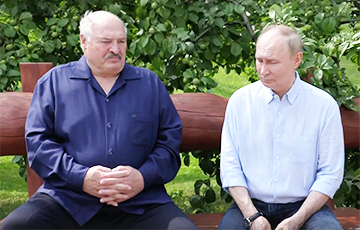
British expert urges to keep an eye on West-2025 exercise.
The tiny strip of land between Lithuania and Poland known as the Suvalki Corridor is often described by military analysts as NATO's "most vulnerable spot" and "most dangerous zone," writes journalist Kagil Kasapoglu Kagil Kasapoglu of the world's BBC service.
If Russia and Belarus use military force to seize the corridor, it would likely cut off the Baltic states - Lithuania, Latvia and Estonia - from their European NATO allies, and the zone itself would become a critical hotspot.
The inspector general of the German armed forces, General Karsten Broer, is certain: NATO members should prepare for a potential Russian attack within the next four years.
He made this prediction in a comment to the BBC in June 2025.
What is the Suwalki Corridor
The Suwalki Corridor is a 65-kilometer strip of land that:
through Lithuania and Poland connects the Baltic states to the rest of Europe;
divides Russia's ally Belarus from Kaliningrad, Russia's heavily fortified semi-exclave.
The Suwalk Corridor is the only land route for NATO forces to Lithuania, Latvia and Estonia, three countries considered the Alliance's Achilles' heel because of their relatively limited military capabilities compared to other NATO members.
"Currently, the only way Kaliningrad is directly connected to Russia is by air, across the Gulf of Finland to St. Petersburg. So the Suwalki Corridor is the closest point that could create a land corridor between Kaliningrad and (Russia's ally - ed.) Belarus," explains Mikey Kay, BBC Security Brief presenter, former British Army pilot and military strategist.
The Kaliningrad region and the Suwalki Corridor are considered potentially dangerous zones, as it is through them that Russia could try to blockade the Baltic states: from one side - from the sea, from the other - by land.
At the same time, the Suvalki Corridor is forests, hills and lakes, which makes it difficult to conduct large-scale military operations and can make defense more successful than offense.
"Crossroads of strategic interests of NATO and Russia"
The strategic location of the Suvalki Corridor makes it extremely important for NATO's defense posture in Central and Eastern Europe.
Professor Dariusz Kożerawski, a member of the Department of National Security at Jagiellonian University in Poland, describes the area as "a sensitive region at the crossroads of NATO and Russian strategic interests."
In December 2015, following Russia's annexation of Crimea, then-Lieutenant General Lieutenant General Ben Hodges, commander of the U.S. Army in Europe, drew attention to the vulnerability of the Suvalka Corridor at a Pentagon briefing, noting in particular an increase in "surprise Russian exercises."
In a 2018 report titled "Suwalk Corridor Security: Strategy, Governance, Deterrence, and Defense," General Hodges called the area a "hot spot" and suggested practical measures to strengthen NATO's presence and capabilities in the region.
"For Poland, the Suwałki Corridor is also extremely important from a political, economic and military point of view," Prof. Korzierawski adds.
The well-developed road and rail infrastructure allows for active trade and is also of great importance for military logistics.
"In peacetime, the Suvalki Corridor allows the movement of military personnel, equipment and ammunition on the territories of Lithuania, Latvia and Estonia, to maintain border security where NATO forces are deployed on a rotational basis, and to conduct joint exercises. In wartime, the corridor will make it possible to provide humanitarian support to the Baltic States," Prof. Korzherawski explains.
Can the threat be reduced?"
Estonia, Latvia and Lithuania are trying to strengthen their most militarily vulnerable territory on NATO's eastern flank. In particular, construction of anti-tank ditches has begun as part of the joint initiative "Baltic Defense Line".
Poland is implementing a similar project called "Eastern Shield" to strengthen its eastern borders with Belarus and Kaliningrad. It involves the construction of barriers, fences and military facilities, which is expected to be completed by 2028.
In April 2025, the European Parliament adopted a resolution recognizing the Eastern Shield and the Baltic Defense Line as flagship joint security projects.
In 2025, Poland plans to spend more than 4.7 percent of its budget on defense, the highest share in NATO. Lithuania has increased its defense spending from 3% to 5% for the period from 2026 to 2030.
Professor Korzerawski stresses that this is not enough: "To maintain and develop military capabilities on NATO's eastern flank, including the Suwałki Corridor region, it is necessary to periodically conduct large multinational exercises involving Alliance member states and NATO High Command."
Is Russia ready to launch an attack?
Although military analysts agree that Russia poses a threat, an attack on the Suvalka corridor is still considered unlikely.
"Russia has aggressive ambitions regarding NATO's northeastern flank, but as long as the war in Ukraine continues, the likelihood of a Russian attack on the Baltic states, Poland, Finland, Sweden and other European countries remains low," said Justyna Gotkowska, deputy director of the Center for Eastern Studies (OSW) and head of the Department of Security and Defense.
"If the war in Ukraine ends in Russia's favor, it may be ready to challenge NATO countries as well and launch an armed conventional attack on the Baltic states, Poland, Finland and other countries in the region," Gotkowska adds.
According to TSN and military analytics website Tochnyi, satellite imagery shows that Russia is developing a large electronic surveillance (SIGINT) facility in the Kaliningrad enclave to enhance electronic surveillance capabilities near NATO's eastern flank.
"Russia will be able to monitor tactical transmissions, radar networks and even elements of civilian infrastructure across the Alliance," Tochnyi reported in August 2025.
In the meantime, Belarus and Russia continue to prepare for the Zapad 2025 military exercise near the NATO border.
BBC Security Brief program host, former British Army pilot and military strategist Mikey Kaye warns: these exercises may mask Russia's military build-up, as it did before the annexation of Crimea in 2014 and the invasion of Ukraine in 2022.
He adds that there is no certainty that "the US will support any response within NATO to any aggression from Putin."

Bank's name: Bank Millennium S.A.
Address: ul. Stanislawa Zaryna, 2A, 02-593, Warszawa
IBAN: PL97116022020000000216711123
SWIFT: BIGBPLPW
Name of the account holder: Fundacja “KARTA ‘97”
Purpose/title of payment: Donation for statuary aims
You can contact us by the e-mail charter97@gmail.com