


The Son Of The Last Shah
16- 10.01.2026, 8:57
- 9,734
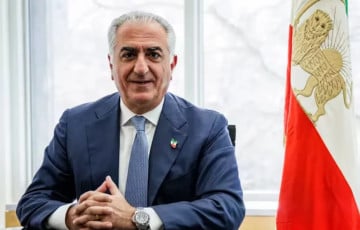
What Reza Pahlavi, whose name the rebellious Iranians are chanting, is known for.
Many protesters across Iran are calling for the return to the country of Reza Pahlavi, the exiled son of the last Shah of Iran. Pahlavi himself has called on Iranians to take to the streets and oppose the ayatollahs' regime. What the former heir to the throne represents, and how popular he is in Iran, writes BBC .
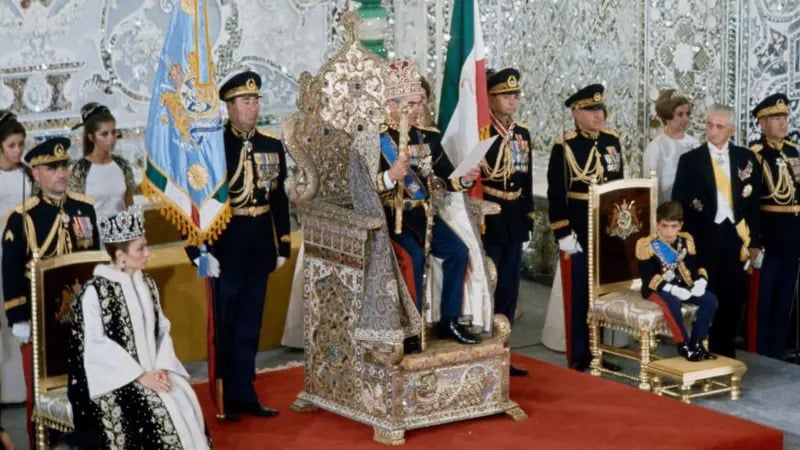
Shahzadeh ("son of the shah," crown prince) Reza Pahlavi had been preparing since childhood to take over his father's throne when the time came. But in 1979, the Islamic Revolution took place in the country. Reza Pahlavi was 19 years old at the time and studying in the United States to become a military pilot.
From this American faraway place, the Crown Prince watched as his deposed father, Mohammad Reza Shah Pahlavi, fled the country, sought refuge abroad and soon, as early as 1980, died of cancer in Egypt.
The Crown Prince and his family were suddenly left without a homeland, in exile. There was nowhere to wait for help. They were surrounded only by fellow monarchists and sympathizers, whose numbers were gradually decreasing.
In the next few decades, the Shah's family suffered two tragedies. Reza's younger sister and brother committed suicide, and he remained the only symbolic head of a dynasty that many thought was finally history.
But now 65-year-old Reza Pahlavi has renewed hope of playing some role in shaping his country's future.
He lives in the United States, in a quiet suburb of Washington. His supporters say he lives quietly, but very openly: he often goes to local cafes, often with his wife, and without visible security.
When asked in 2022, during a previous wave of protests in Iran, whether he saw himself as the leader of the protest movement at home, he and his wife, Yasmin, responded in unison: "Change must start from within!"
Reza Pahlavi was born in October 1960 in Tehran. He was the Shah's first son: the monarch's previous two wives had failed to produce an heir. From childhood Reza was raised as heir to the throne.
At the age of 17, he was sent to the United States, in Texas, to study to be a military pilot. There he was caught up in the revolution and the overthrow of his father.
Since then, Reza Pahlavi has lived in the United States. There he attended university and earned a bachelor's degree in political science, there he married Yasmin, a doctor of law and also a refugee from Iran, in 1986, and there they had three daughters, Noor, Iman and Farah.
But lately the tone of his statements has become more forceful. After Israeli strikes on Iran last year, Reza Pahlavi told a news conference in Paris that if the Islamic Republic collapsed, he was prepared to lead a transitional government. He then outlined a plan of action for that transitional government for the first 100 days.
Pehlevi explains that this increased self-confidence is based on the lessons he learned while living in exile and a desire, he claims, to continue his father's work.
"This is not about going back to the past," he told reporters in Paris. - It's about ensuring a democratic future for all Iranians."
In exile all these years, Reza Pahlavi has been an important symbolic figure for Iranian monarchists.
For many Iranians, the Pahlavi era was an era of modernization and close ties with the West. Others remember it as an era of censorship and repression by the shah's secret police, SAVAK.
In 1980, Reza Pahlavi held his own coronation in Egypt and declared himself shah. The ceremony had little practical significance, but Pahlavi's opponents now claim that the coronation raises doubts about the sincerity of his current claims of democratic reform.
Reza Pahlavi has tried several times to form a coalition of the Iranian opposition in exile. In 2013, for example, he announced the formation of the National Council of Iran for Free Elections. But these coalitions have usually been riven by internal divisions and have had little influence inside Iran.
In contrast to some other Iranian organizations in exile, Pahlavi has always rejected violent methods and distanced himself from groups such as the left-wing Mojahedin Organization of the Iranian People.
Pehlavi repeatedly called for a peaceful transition of power and the organization of a referendum on Iran's future political structure.
In recent years, the Pahlavi dynasty has been increasingly remembered in Iran. At protests in 2017, people chanted the name of Reza Shah, Reza Pahlavi's grandfather.
In the fall of 2022, the killing of Mahsa Amini by vice police set off a wave of protests across Iran, and Reza Pahlavi's name made headlines again.
He attempted to unite Iran's fractured opposition, which attracted some attention from abroad, but ultimately failed to capitalize on the momentum.
Reza Pahlavi's opponents say that during four decades in exile, he never managed to create a viable organization or an independent Iranian media outlet.
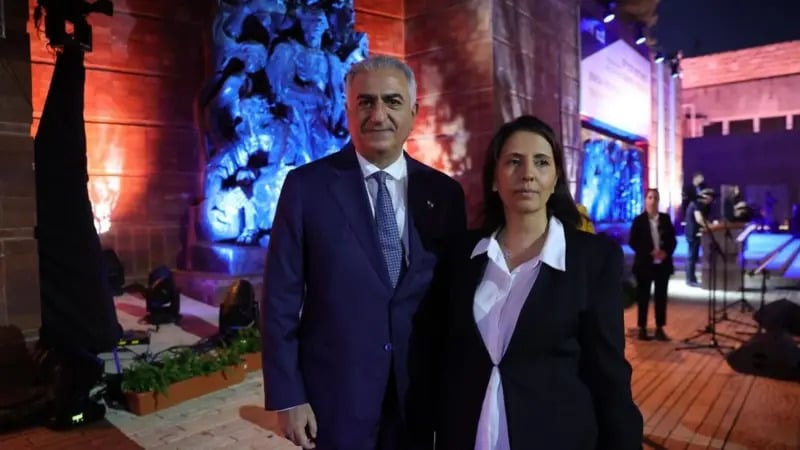
In 2023, he traveled to Israel, where he attended a Holocaust remembrance event and met with Prime Minister Binyamin Netanyahu. Controversy erupted again over the visit, with some Iranians seeing it as a pragmatic attempt to mend relations with the Israelis, while others felt the gesture would alienate Arab and Muslim allies.
After recent Israeli strikes on Iran, Reza Pahlavi had to answer tough questions.
Laura Kuenssberg of the BBC asked him whether he supported the Israeli strikes on Iran, even though Iranian civilians may have been targeted.
He said that Iranian civilians were not the targets of the strikes, and that anything that weakens the Iranian regime is welcomed by many, including in Iran itself. Heated controversy has again erupted around these statements.
Supporters and critics
Now Reza Pahlavi is positioning himself not as a monarch waiting to return to the throne, but as a figure around whom national reconciliation can take place.
He says he wants to help lead Iran toward free elections, the rule of law and equal rights for women - and he believes Iranians should decide whether to restore the monarchy or establish a republic in a referendum.
His supporters see him as the only recognizable figure in Iran's opposition, and one who favors peaceful change.
Critics argue that he is too dependent on foreign countries, and that the Iranian population is unlikely to trust a leader who comes from exile.
How popular Reza Pahlavi really is in the country is impossible to know at the moment: there are no independent polls in Iran. Some people still remember the Pahlavi dynasty with respect, others do not like the idea of replacing one leader elected by no one with another, even under democratic slogans.
Reza's father is buried in Cairo. Monarchists hope that one day he will be ceremonially reburied in his homeland.
Whether the son of Shah Mohammad Reza Pahlavi will live to see that day, or the day when Iran becomes free, is a question the country, still dealing with its past, does not yet have an answer to.

Bank's name: Bank Millennium S.A.
Address: ul. Stanislawa Zaryna, 2A, 02-593, Warszawa
IBAN: PL97116022020000000216711123
SWIFT: BIGBPLPW
Name of the account holder: Fundacja “KARTA ‘97”
Purpose/title of payment: Donation for statuary aims
You can contact us by the e-mail charter97@gmail.com