
WSJ: Pressure On The Kremlin Is Intensifying
- 12.01.2026, 9:20
- 4,362
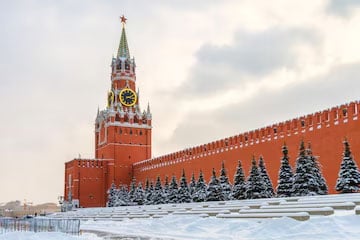
The US can make 2026 even worse for Putin than the previous year.
The year 2025 has brought Putin no notable successes in the war against Ukraine, and prospects for improvement look unlikely, writes The Wall Street Journal.
According to the publication, Russian troops occupied less than 1 percent of Ukraine's territory last year. At the current pace of the offensive, it will take Russia at least another year to reach the administrative border of the Donetsk region and establish control over the territories that Putin has put forward as a precondition for peace talks.
An additional blow to the Kremlin's image was the swift capture by the U.S. military of Venezuelan dictator Nicolas Maduro and his wife, which analysts say demonstrated Russia's military weakness. Russian political scientist Abbas Galliamov noted, "The brilliant success of the Americans, who showed by the example of Venezuela what a 'special military operation' should really look like, further demoralizes both ordinary Russians and the elite." The situation is exacerbated by the fact that Maduro was considered one of the Kremlin's key allies.
Another unpleasant episode for Moscow was the U.S. seizure of an oil tanker that was traveling under escort of the Russian navy.
The WSJ notes that disillusionment is also growing among those who had previously consistently supported the war. Russia's military spending in 2025 is estimated at 15.5 trillion rubles - five times more in nominal terms than in 2021. At the same time, these figures do not include the costs of maintaining the occupied Ukrainian territories, as well as payments to military personnel and their families. At the same time, revenues from oil and gas exports in November 2025 fell by 34% year-on-year.
To cover the record budget deficit and to continue financing the war, the authorities raised the VAT rate: from January 1, it rose from 20% to 22%. "This increases the cost of living for ordinary Russians, who are increasingly in favor of ending the conflict in Ukraine," the publication notes. According to a Levada Center poll, public sentiment has changed markedly: while in December 2024, 37% of respondents supported the continuation of the war and 54% favored peace talks, a year later only 25% favored the continuation of the conflict, while 67% supported the start of negotiations.
High interest rates imposed to curb inflation caused by the war have sharply reduced investment activity. An additional source of irritation for the Kremlin elite remains the inability to access billions of dollars worth of private assets frozen in European banks.
And while Putin is still able to quell popular discontent through harsh repressive mechanisms, it will be increasingly difficult for him to continue the war without the support of his inner circle, the WSJ emphasizes. "That support could be undermined if the U.S. provides Ukraine with the weapons needed to effectively counter Russian drones and missiles. In that case, war-weary officials and close oligarchs might well press Putin to sit down at the negotiating table with a peace plan that Ukraine could accept."

Bank's name: Bank Millennium S.A.
Address: ul. Stanislawa Zaryna, 2A, 02-593, Warszawa
IBAN: PL97116022020000000216711123
SWIFT: BIGBPLPW
Name of the account holder: Fundacja “KARTA ‘97”
Purpose/title of payment: Donation for statuary aims
You can contact us by the e-mail charter97@gmail.com