


Russia Failed To Sell 35 Million Barrels Of Oil Because Of Trump's Sanctions
- 13.01.2026, 22:37
- 1,534
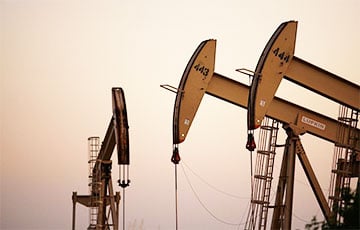
Indian and Chinese refineries began to refuse cargoes.
Russian oil companies continue to face difficulties in selling barrels to India and China and are forced to accumulate unsold crude on tankers turned into floating storage facilities.
Since late November, when the U.S. imposed sanctions on Rosneft and Lukoil and Indian and Chinese refineries began refusing cargoes, 35 million barrels of Russian crude have settled on tankers at sea, according to calculations by Bloomberg.
The total volume of Russian oil sitting on tankers has reached a record 216 million barrels. At least 12 ships loaded with Urals have been anchored off the coast of Oman since mid-December, waiting for buyers. New tankers with Russian oil arrive in the area and anchor almost every day, Bloomberg writes.
India, the main buyer of Urals offshore shipments, cut imports to a three-year low in December: 1.1 million barrels per day against 1.7 million in November. Due to the inability to sell oil, Russian oil companies have started to cut production, despite the fact that the OPEC+ quota allows them to increase it. In December, Russia pumped 9.326 million barrels per day - 100,000 less than in November and 250,000 below the authorized level under the OPEC+ deal.
Russian oil companies appear to be running out of oil storage capacity, while sanctions against Rosneft and Lukoil are creating problems for exports, said Janis Kluge, an expert at the German Institute for International Security Affairs.
Russia is already trying to create a new network to circumvent sanctions - in the form of intermediary companies from which feedstock will be bought by Indian refineries, notes Homayoun Falakshahi, head of oil market analysis at Kpler. Most likely, the volume of supplies to India will be restored, he believes: discounts of almost $30 per barrel make Russian oil attractive and allow saving up to $4 billion a year.
The average price of Urals in December fell below $40 per barrel for the first time in 5 years. And this promises Russia a loss of both export and budget revenues, warns economist Dmitry Polevoy.
According to his estimates, revenue from oil and gas exports from discounts on Urals may decrease this year by $30-35 billion, to $185-190 billion. And oil and gas budget revenues may fall short of the plan of 1.1-1.4 trillion rubles. As a result, the treasury deficit may grow to 2.7% of GDP instead of the planned 1.6% of GDP, Polevoy estimates, and the government will have to print out the National Natural Reserve Fund again, which has about $50 billion of liquid assets left - 2.5 times less than before the war.
In rubles, the liquid assets of the National Natural Reserve Fund are estimated at 4.1 trillion. This amount will be enough for 1.5-2 years of unfavorable oil conditions, Polevoy believes.

Bank's name: Bank Millennium S.A.
Address: ul. Stanislawa Zaryna, 2A, 02-593, Warszawa
IBAN: PL97116022020000000216711123
SWIFT: BIGBPLPW
Name of the account holder: Fundacja “KARTA ‘97”
Purpose/title of payment: Donation for statuary aims
You can contact us by the e-mail charter97@gmail.com