


Russian Oil And Gas Revenues Collapse To Lowest Since The Pandemic
- 15.01.2026, 20:33
- 1,556
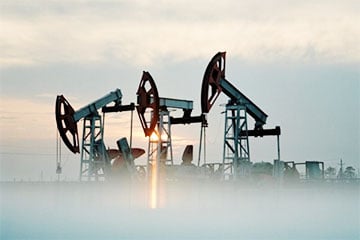
The Russian budget is rapidly losing raw material rent.
Oil and gas revenues amounted to 448 bln rubles in December and 8.48 trillion Russian rubles by the end of the year, the Finance Ministry said. The last time the budget received less from oil and gas in pandemic 2020: 405 billion rubles in August and 5.2 trillion for the entire year, reports The Moscow Times.
Then the average price of Russian oil was $41.7. It returned to that level late last year: $44.9 a barrel in November and $39.2 in December, according to the Ministry of Economic Development. MMI analysts call the shortfall in oil and gas revenues a "budget disaster."
This year's budget includes an average price of $59 per barrel of Urals. Therefore, in January oil and gas revenues of the budget will be significantly below the plan - by 232 billion rubles, according to the Ministry of Finance. To compensate for the difference, it will have to sell foreign currency and gold from the National Welfare Fund (NWF) - by Rb 192bn, or Rb 12.8bn per day from January 16 to February 5. The difference of Rb 40bn is caused by the fact that in December the shortfall was less than the Ministry of Finance expected.
The National Welfare Fund had Rb 4.1 trillion of liquid assets as of December 1, and at this rate the fund may soon be exhausted. Oil and gas revenues this year are planned at 8.9 trillion rubles, but many experts doubt that they will be able to collect that much.
Oil and gas revenues in 2026 "may be closer to 7.5-7.8 trillion rubles," or 1.1-1.4 trillion below the plan, economist Dmitry Polevoy estimated. If both Russian oil prices and the exchange rate remain at the current levels, oil and gas revenues in 2026 may be about 3.5 trillion rubles below the plan, the analysts of Solid Figures estimated. This is comparable to the shortfall last year, if we compare the final result with the Rb 10.9 trillion of oil and gas revenues envisaged in the first version of the budget, adopted at the end of 2024. MMI analysts assume that if the current oil prices persist, the shortfall of oil and gas revenues of Rb 3 trillion at the end of the year and the exhaustion of the National Wealth Fund. According to Polevoy's estimation, under the current conjuncture, the coffers will be sufficient for 1.5-2 years.
Minfin does not expect to spend the fund's resources to cover the budget deficit, but if oil and gas revenues are less than the base revenues, the difference will be compensated from the NWF. In addition, the government continues to invest hundreds of billions of rubles in infrastructure projects (0.5-0.7 trillion rubles a year, according to Polevoy's calculations). Experts from INP RAS and Plekhanov Russian Economic University are confident that lobbyists will not give up their attempts to get to the National Wealth Fund: "There will be a discussion around the use of this Fund throughout 2026," their presentation said. - A significant (up to leveling) depletion of its funds cannot be ruled out."
They are confident that the budget will be "significantly adjusted" in the spring, just like last year. Then, due to falling oil prices and strengthening of the ruble, oil and gas revenues were reduced by 2.6 trillion rubles.
If Russian oil prices do not rise this year, it will be necessary to reduce the budgeted oil price, the Central Bank leaders said. It advises to determine it on the basis of a conservative assessment, otherwise "the risk of exhausting reserves and the growth of the budget deficit will increase."
The government does not follow this advice. The Finance Ministry intends to reduce the budgeted price by $1 a year to $55 in 2030. The forecast of the Ministry of Economic Development assumes that the average price of Brent oil in 2026-2028 will be $70-72 barrel, while the discount of Russian Urals will decrease. This year, the price of Brent fluctuates in the range of $60-65, and the discount on Russian oil due to sanctions exceeds $20.
The matter is not only in oil prices. A significant risk remains the reduction in exports of oil and oil products as a result of possible strengthening of sanctions, warned INP RAS. Polevoy estimated that oil and gas exports could fall from $220 billion in 2025 to $185-190 billion this year.

Bank's name: Bank Millennium S.A.
Address: ul. Stanislawa Zaryna, 2A, 02-593, Warszawa
IBAN: PL97116022020000000216711123
SWIFT: BIGBPLPW
Name of the account holder: Fundacja “KARTA ‘97”
Purpose/title of payment: Donation for statuary aims
You can contact us by the e-mail charter97@gmail.com