
Ukrainians Do Not Believe In Peace Through Negotiations, Nor In Putin's Voiced Goal Of War
1- 16.01.2026, 15:14
- 1,806
Survey.
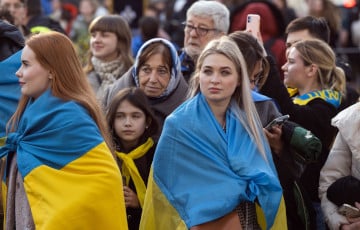
69% of Ukrainians living in Ukraine do not believe that the war waged by the aggressor country Russia will be stopped through negotiations. This is evidenced by a poll conducted by the Kiev International Institute of Sociology (KMIS), the results of which were published on January 16.
"The overwhelming majority of respondents - 69% - do not believe that the current negotiations will lead to an established peace in Ukraine. 26% believe in the success of the negotiations. Another 5% could not decide on their opinion," the material says.
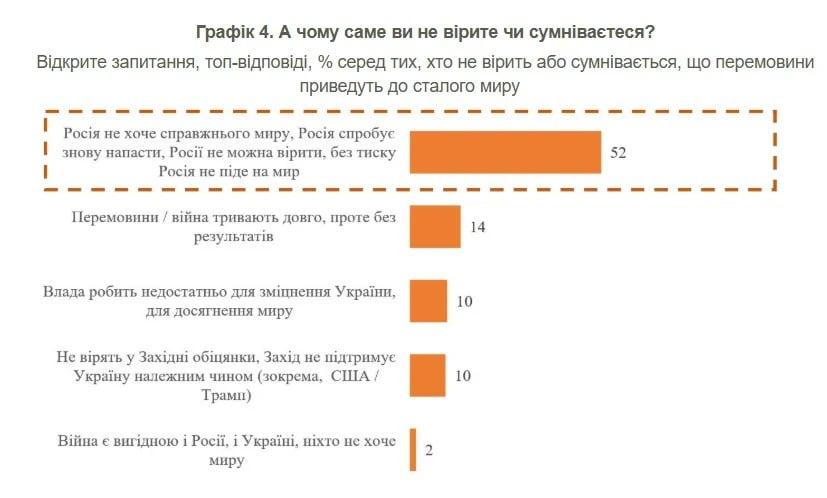
Sociologists noted that survey participants who do not believe in negotiations or are undecided about it were openly asked why they think so.
"The majority of such respondents (52%) explain [...] by the fact that Russia does not want real peace, that Russia plans to continue the war further, etc. For example, the direct speech of several respondents: "Russia's goal is to destroy Ukraine, they will not rest", "As long as the Russians have resources left, they will move forward", "Because verbal arguments do not force Russia to act"," KMIS writes.
The respondents also stated that the war will continue because peace is not needed by the illegitimate Russian President Vladimir Putin, and because the agreements with Russia "are not worth the paper they are written on".
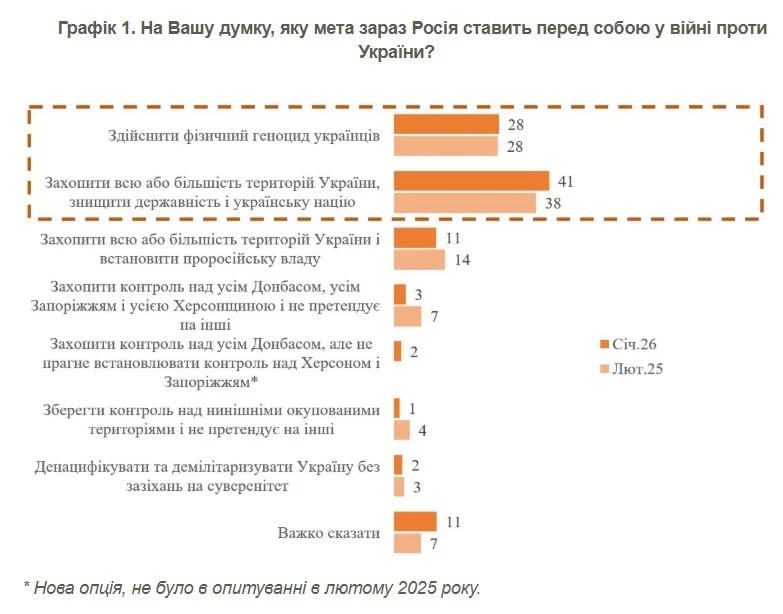
Respondents were also asked what they believe Russia's real goal in the war against Ukraine is.
41% chose the answer, "To seize all or most of Ukraine's territories and install pro-Russian authorities." 28% believe that Russia's war is being waged for the sake of physical genocide of Ukrainians.
The option of "denazification" and "demilitarization" of Ukraine (which Putin declared at the beginning of a full-scale invasion in February 2022) "without encroaching on sovereignty" was chosen by only 2% of respondents in January 2026.
The sociological survey was conducted from January 9 to 14 by telephone interviews based on a random sample of mobile numbers in all Ukrainian-controlled regions. 601 respondents aged 18 and older were interviewed. The statistical error of the sample does not exceed 5.3 percent.

Bank's name: Bank Millennium S.A.
Address: ul. Stanislawa Zaryna, 2A, 02-593, Warszawa
IBAN: PL97116022020000000216711123
SWIFT: BIGBPLPW
Name of the account holder: Fundacja “KARTA ‘97”
Purpose/title of payment: Donation for statuary aims
You can contact us by the e-mail charter97@gmail.com