
British Marines Simulate War With Russia In Norway
3- 16.01.2026, 15:22
- 1,580
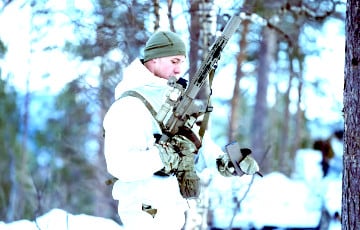
They sleep in the snow, jump in an ice hole, and toast King Charles III.
In the Arctic, British marines are preparing for a possible armed conflict with Russia. At Camp Viking in northern Norway, Britain's elite units are undergoing extreme training that simulates war scenarios in the High North against Russia. The Marines sleep in the snow in temperatures below 20 degrees Celsius, and the program also includes jumping into an ice hole, somersaulting in the snow, sipping rum and toasting King Charles III. These rituals are part of a tradition of preparing Marines for extreme environments, reports Politico.
The UK has been conducting such training in Norway since the Cold War, but Camp Viking itself is a new facility. It was opened in 2023 after Russia's war with Ukraine began. The base is actively expanding - the number of military personnel at the base is set to reach 2,000 next year. According to British Foreign Secretary Yvette Cooper, London is doubling the number of Marines in Norway in three years. She said Russia's Northern Fleet, ships, underwater infrastructure and threats to communications cables directly affect transatlantic security.
The exercises at the camp are close to real combat missions that NATO troops would have to perform if Article 5 on collective defense were activated. British General Jamie Norman has stated that "we are no longer living in peace," he describes the current situation in Europe as an intermediate state between peace and war.
The Arctic confrontation has another side. While in Europe, allies are focused on containing Russia, at the other pole of the Arctic, US President Donald Trump is creating tensions around Greenland by insisting on control of the island. Norwegian Foreign Minister Espen Barth Eide, who recently returned from Ukraine, made no secret of his irritation that attention was shifting from the war in Eastern Europe to the dispute over Greenland. Nevertheless, he said, European leaders have no choice. He pointed out that the threat to Norway is close by. The Kola Peninsula and Murmansk, a key base for Russian submarines, are close to the borders. In the event of a crisis, he emphasized, tensions here could quickly escalate into a military confrontation.
London and Oslo are creating a NATO mission called Arctic Sentry. This format of military cooperation is aimed at deterring Russia and signaling to Washington that Europe is ready to take significant responsibility for the security of the entire region. Cooper stressed that there is no fundamental difference between the eastern and western Arctic in terms of security.
In Europe, fears are growing that Trump is pushing allies toward independent defense and reducing the role of the United States. Experts say European countries have to act with extreme caution. Rachel Ellehous, director of the RUSI think tank, believes that it is important for Europe to demonstrate presence and solidarity in the Arctic without confronting the United States. According to her, NATO as an organization is behaving with restraint: Secretary General Mark Rutte has not made harsh statements in support of Denmark and Greenland, which could undermine the alliance's credibility and reinforce the trend toward bilateral and regional security formats. One British official noted on condition of anonymity that London sees three possible motives for Trump in Greenland. The first is concern about Arctic security, the second is an interest in the region's economic opportunities. And the most radical is a desire to expand the territory and "make America bigger."

Bank's name: Bank Millennium S.A.
Address: ul. Stanislawa Zaryna, 2A, 02-593, Warszawa
IBAN: PL97116022020000000216711123
SWIFT: BIGBPLPW
Name of the account holder: Fundacja “KARTA ‘97”
Purpose/title of payment: Donation for statuary aims
You can contact us by the e-mail charter97@gmail.com