


The WSU Is Raising The Price For Putin
- 17.01.2026, 18:01
- 5,442
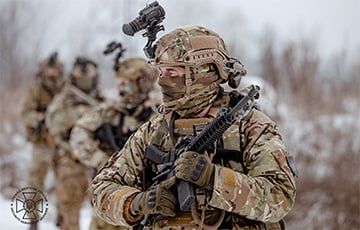
Russians are falling into traps.
Russian forces continued their offensive in Ukraine in 2025, but suffered huge losses with minimal territorial gains. This unfavorable balance reflects the effectiveness of the Ukrainian army's fortifications, which include multi-layered fortification lines reinforced by drones. Together, they have turned much of the front into a controlled "kill zone" where large-scale attacks become extremely risky and costly for the enemy, writes Atlantic Council (translated by Charter97.org).
Ukraine has focused on fortifying its fronts and preventing further Russian advances. In many areas, "massive fortification systems" up to 200 meters deep have been created. Anti-tank ditches, barbed wire, and concrete obstacles slow the advance, and the lines are spaced within firing distance of each other, allowing Ukrainian forces to counterattack vulnerable enemy groups.
The defense strategy includes not only static barriers, but also extensive hidden positions, often underground or in forest belts, supported by remote fire and decoys. Each such "nodal" point directs the enemy into prepared "traps," increasing enemy casualties. According to Commander Alexander Syrsky, this approach is particularly effective in the Pokrovskoye direction, where fortifications allowed for maximum defeat of Russian forces even when the enemy was numerically superior.
In some parts of the front, fortifications are not just an additional measure, but the basis for survival on the battlefield, especially with constant drone surveillance. Drones have become a key element of defense, providing frontline control and delivery of ammunition and food. However, fortifications are no substitute for manpower. Even the most advanced lines require soldiers to respond to threats and mop up urban areas.

Bank's name: Bank Millennium S.A.
Address: ul. Stanislawa Zaryna, 2A, 02-593, Warszawa
IBAN: PL97116022020000000216711123
SWIFT: BIGBPLPW
Name of the account holder: Fundacja “KARTA ‘97”
Purpose/title of payment: Donation for statuary aims
You can contact us by the e-mail charter97@gmail.com