
Putin Broke The Silence
- Petro Oleshchuk
- 18.01.2026, 16:00
- 5,518
But it didn't help the Allies.
On January 15, 2026, Russian President Vladimir Putin finally made comments after an unusually long public silence. However, contrary to expectations, he did not say anything specific about the capture of Venezuelan leader Nicolas Maduro by the United States or the recent detention of Russian-flagged tankers. This evasiveness only confirmed Russia's reputation as an unreliable ally of little use to its partners.
In the first days of the new year, the United States conducted a daring operation in Venezuela. Special forces captured self-proclaimed President Nicolas Maduro right in his residence. The Venezuelan leader, long considered a close ally of Moscow, was taken to New York, where he faces drug trafficking charges. Almost simultaneously, U.S. forces began a hard crackdown on Venezuela's oil exports. A Russian-flagged tanker carrying Venezuelan oil was intercepted and detained in the Atlantic, and soon a second tanker was seized. Formally, Russia was considered the defender of Venezuela and even the owner of some of these vessels (the tankers were re-registered under the Russian flag), so it was logical to expect a decisive reaction from the Kremlin.
The reality, however, turned out to be different. Moscow's official agencies limited themselves to duty statements. The Ministry of Foreign Affairs condemned the U.S. "armed aggression" and the "pirate" seizure of the ship, and the Ministry of Transport published a legal-case report on the "violation of maritime law." But Putin himself remained silent. He habitually "crawled under a snag" in a difficult situation and waited.Only on January 15 did the Russian leader speak publicly. And that was on general topics, avoiding direct assessments of the U.S. operation in Venezuela. In fact, no clear position on the fate of Maduro or the seizure of Russian tankers was voiced.
This position disappointed many. Even the most ardent pro-Kremlin "war correspondents" and bloggers were outraged. They demanded a tough response. From demonstrative withdrawal from peace talks on Ukraine to forceful actions against American ships in the Caribbean Sea.
The story with Maduro and the tankers once again demonstrates that reliance on Moscow does little for its partners. Russian propaganda likes to repeat the slogan "we do not abandon our own," but the reality is just the opposite. Nicolas Maduro is only the latest in a long list of Kremlin allies left without support at a critical moment. Others preceded him: Libyan leader Muammar Gaddafi, whom Moscow effectively abandoned. Ukrainian president Viktor Yanukovych fled to Rostov in 2014, losing power despite claims of "friendship" with Moscow. Syrian ruler Bashar al-Assad, whom Russia rescued with a military intervention in 2015, had to flee to Moscow in a panic in late 2024 when his regime fell to rebel onslaught. The Russian army did not get dragged into a new war for him. The list could go on. Every "friend" of the Kremlin, when faced with a real threat, ended up being left to fend for themselves. Especially now, when Moscow is tightly "stuck" in the war against Ukraine and cannot help anyone even if it wants to. And in Maduro's case, it seems, there was no desire to do so. It was clearly not in the Kremlin's plans to enter into a confrontation with the United States for the sake of some Venezuelan dictator.
With the Venezuelan events in the background, Cuba, a longtime friend of Moscow, whose economy is closely linked to Venezuelan oil supplies, has also become alarmed. The fall of the Maduro regime threatens Havana with serious shocks, but it has to rely only on itself. Russian aid to Cuba is limited to rare diplomatic gestures and promises, but in no way compensates for the consequences of the U.S. operation in Venezuela. The Kremlin has not even bothered to publicly discuss the situation of the Cuban authorities, who, because of the collapse of their Venezuelan ally, may lose energy resources and face unrest.
But Putin did "express solidarity" with "the people of Cuba" and expressed support for their intentions to "defend their sovereignty". All this, of course, is in words. So he will do nothing real.
Although he is not shy about using Cuba, turning the "island of freedom" into another recruiting ground for mercenaries for his war.
So Russia under Putin's leadership has proven itself to be a frankly bad ally. It eagerly uses the rhetoric of "friendship" and reaps the benefits of partnership (be it military bases, arms contracts, or political influence), but when allies need real help, Moscow washes its hands of it.
Neither Russia's military might nor its diplomatic weight has been brought to bear to protect Maduro. Allies see that at a critical moment, the Kremlin prefers to save its own prestige and avoid the risks of leaving them in the lurch. As a result, trust in Russia is falling even among traditional partners. Of course, each country pursues its own interests first and foremost, but in the case of the Russian-Venezuelan crisis, Moscow's one-sided advantage is particularly striking. It needed oil and geopolitical points, and when the time came to pay for the support, there was none.
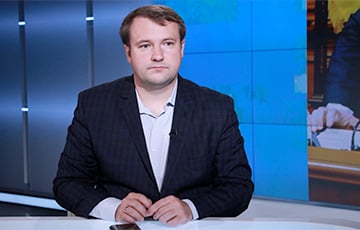
Petr Oleshchuk, Doctor of Political Sciences, Professor of Taras Shevchenko National University, specially for Charter97.org.

Bank's name: Bank Millennium S.A.
Address: ul. Stanislawa Zaryna, 2A, 02-593, Warszawa
IBAN: PL97116022020000000216711123
SWIFT: BIGBPLPW
Name of the account holder: Fundacja “KARTA ‘97”
Purpose/title of payment: Donation for statuary aims
You can contact us by the e-mail charter97@gmail.com