


"Hole" In Russian Budget Set A Record Since The Pandemic
1- 19.01.2026, 20:51
- 1,888
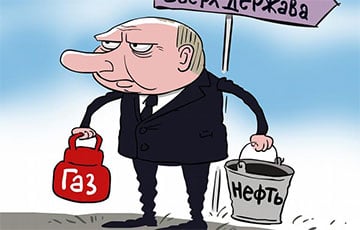
Russian oil and gas revenues collapsed 24% year over year.
Russia's federal budget in 2025 was reduced to a deficit for the fourth consecutive year: government revenues fell short of expenditures by 5.645 trillion Russian rubles, the Finance Ministry reported on Monday.
Compared to 2024 (3.471 trillion rubles), the "hole" in the treasury became 1.6 times bigger, and in relative terms - 2.6% of GDP - set a record since 2020 (3.8% of GDP).
Non-oil and gas revenues collapsed by 24% over the year, to 8.393 trillion rubles, according to the data of the Ministry of Finance: the budget was prepared on the assumption that oil would cost $70 per barrel, but due to the strengthening of sanctions in December, its price fell below $40, and the average for the year amounted to $52. Non-oil and gas revenues rose 13% year-on-year to 28.807 trillion rubles, but fell short of the Finance Ministry's original plan by almost 552 billion rubles, The Moscow Times reports.
Last year, the government raised income tax (from 20% to 25%), introduced a differentiated personal income tax scale, increased duties and excise taxes, promising to raise Br3.6 trillion in additional money for the budget and reduce the budget deficit to Br1.2 trillion. In fact, revenues increased only by Br575 billion (1.6%), while in real terms - taking into account inflation - began to decline. As a result, the "hole" is five times larger than the original projections.
The revenues of the entire budget system of Russia, including regional budgets, the Pension Fund and the MHI fund, practically do not grow for the third year in a row, draws the attention of economist Viktor Tunev: last year it was 91 trillion rubles, a year earlier - 89 trillion, in 2023 - 87 trillion. "Every year we raise taxes, but they bring nothing to the treasury," Tunev states. - Revenues are steadily declining in real terms and relative to GDP."
Factual revenues on key items were significantly below the plan due to "worsening economic conditions," notes Emil Ablaev, an expert at the Center for International Cooperation and Development (CICA): economic growth slowed to almost zero, corporate profits began to decline, and revenues from foreign trade sagged due to the strengthening of sanctions.
As a result, instead of reduction, the budget deficit increased, and in comparison with the size of the economy it became one of the top record-breaking for the last two decades: in addition to the year of the pandemic, the budget deficit has increased to a record-breaking level. But the government's expectations for oil and gas revenues may again prove too optimistic, warns Sergei Konygin, chief economist at Sinara Bank.
The budget includes an Urals price of $59 per barrel (compared to $39 now) and a dollar exchange rate of 92.2 rubles (77.7 rubles now). This promises a shortfall in revenues and a deficit 1.5 times higher than the plan - about Br5.2 trillion, Konygin estimates. If oil and the ruble remain at current levels, the Ministry of Finance will have to "print out" the National Wealth Fund and take Br2.5 trillion from it, analysts at Solid Figures say. This is almost 60% of the remaining free money in the fund (4.1 trillion rubles).
If the Central Bank keeps interest rates high and oil and gas revenues decline, Russia will face a tough choice - to raise taxes again, cut spending or increase debt, Konygin warns.

Bank's name: Bank Millennium S.A.
Address: ul. Stanislawa Zaryna, 2A, 02-593, Warszawa
IBAN: PL97116022020000000216711123
SWIFT: BIGBPLPW
Name of the account holder: Fundacja “KARTA ‘97”
Purpose/title of payment: Donation for statuary aims
You can contact us by the e-mail charter97@gmail.com